What is Salinity?
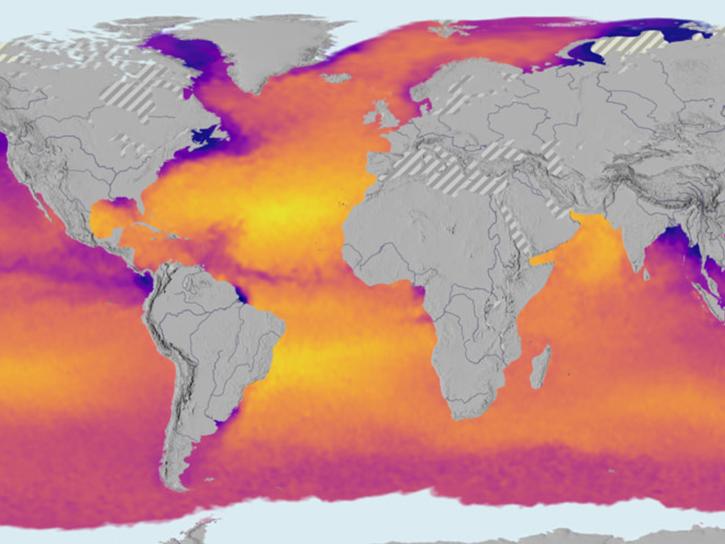
Salinity is defined as the amount of dissolved salt in a body of water: 1 gram of salt per 1000 grams of water is defined as 1 practical salinity unity (PSU). The salinity range of the ocean is generally about 32 to 37 PSU.
Salinity throughout the ocean is influenced by precipitation and evaporation, river runoff, and ice melt. These patterns influence the global water cycle, nutrient cycling, ocean currents, and the health and distribution of marine ecosystems.
How do Scientists Study Salinity?
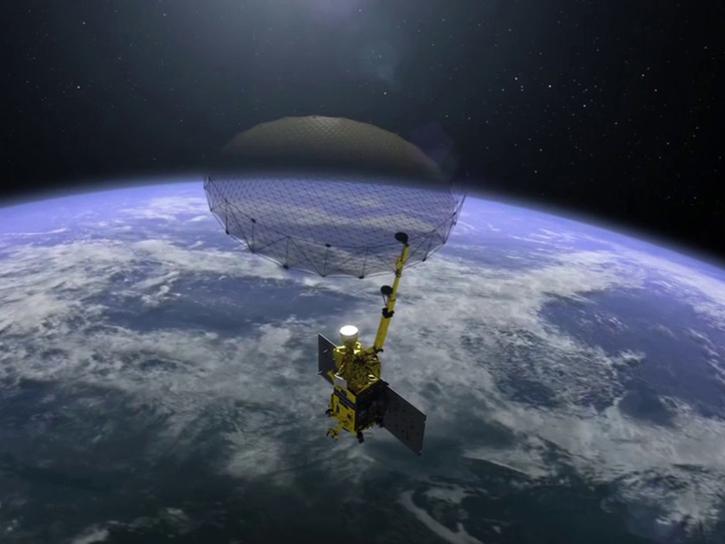
NASA missions like Soil Moisture Active Passive (SMAP) provide a global picture of ocean salinity, detecting tiny variations in the return of radio waves to satellites in order to assess the salt content in seawater. The Suomi National Polar-orbiting Partnership (Suomi NPP) also measures ocean salinity using multispectral infrared sensors.
While both of these sensors can only observe the ocean surface, the data they provide supports models like Estimating the Circulation and Climate of the Ocean (ECCO), a global model of ocean circulation supported by decades of remote sensing and in situ measurements. Models like ECCO help researchers examine trends in ocean temperature and salinity, and project how these might change in the decades to come.
How do Scientists Use Salinity Data?
Understanding salinity is crucial to our understanding of the ocean as a whole. It shapes the patterns of circulation and vertical overturning that influence weather around the globe. It also illuminates the effects of sea level rise and polar ice melt on ocean conditions, and the impacts they may have on marine ecosystems.