
NASA supports full and open sharing of data. We ask that if you provide Land, Atmosphere Near real-time Capability for Earth observation (LANCE) data to a third party, you follow the guidelines below.
- AIRS NRT
Near real-time (NRT) data products from the Atmospheric Infrared Sounder (AIRS) instrument aboard NASA’s Aqua satellite provide 3D measurements of temperature, water vapor, trace gases, and surface and cloud properties through the atmospheric column. NRT AIRS data are available through NASA LANCE generally within 75 to 140 minutes of satellite observation. AIRS is a key tool for weather forecasts and research on greenhouse gas distribution. Data products are available for distribution through Earthdata Search, or by direct access to the NRT HTTPS sites below; many products can also be visualized in NASA Worldview.
- Comparison between NRT and Standard AIRS products
- AIRS NRT Products
- Subscribe/Unsubscribe from the LANCE AIRS mailing list. Leave subject and body blank
- Data provider: NASA's Goddard Earth Sciences Data and Information Services Center (GES DISC)
- Download data from either https://disc.gsfc.nasa.gov/datasets?keywords=AIRS%2BNRT&page=1
- ICESat-2 NRT
The Advanced Topographic Altimeter System (ATLAS) on the Ice, Cloud and Land Elevation Satellite-2 (ICESat-2) measures surface heights across the world’s frozen regions, forests, lakes, urban areas, and more. The standard product latency is 45 days, on average. Sea ice height (ATL07QL), land and vegetation height (ATL08QL), atmospheric layer characteristics (ATL09QL), sea ice freeboard (ATL10QL), and inland surface water data (ATL13QL) are available through NASA LANCE at an expedited latency (Quick Looks) of approximately three days. Quick Look data support a variety of users and applications, including sea ice forecasting and decision-making related to vegetation, surface water and flooding, and land surface deformation. Data products are available for distribution through Earthdata Search; many products can also be visualized in NASA Worldview.
- MLS NRT
The Microwave Limb Sounder (MLS) instrument aboard NASA’s Aura satellite acquires measurements of atmospheric composition, temperature, humidity, and cloud ice. Near real-time (NRT) MLS data are available through NASA LANCE generally within 45 to 140 minutes of satellite observation. Data products are available for distribution through Earthdata Search, or by direct access to the NRT HTTPS sites below; many products can also be visualized in NASA Worldview.
- Comparison between NRT and Standard MLS products
- MLS NRT Products
- Subscribe/Unsubscribe to the LANCE MLS email list. Leave subject and body blank.
- Data Provider: NASA's Goddard Earth Sciences Data and Information Services Center (GES DISC)
- Download MLS data directly from either:
- MODIS NRT
Near real-time (NRT) data from the Moderate Resolution Imaging Spectroradiometer (MODIS) onboard the Terra and Aqua satellites include land surface temperature, land surface reflectance, radiances, clouds/aerosols, water vapor, active fire, snow cover, and sea ice. They are made available through LANCE generally within 60 to 125 minutes after a satellite observation. Data products are archived in a rolling archive for 7+ days and are available for distribution through Earthdata Search and by direct access to the NRT HTTPS sites; many products can also be visualized in NASA Worldview.
- Data provider: MODIS Adaptive Processing System (MODAPS)
- Subscribe/unsubscribe to the LANCE MODIS / VIIRS email list. Leave the subject and body blank.
- Data and Tools link for MODIS NRT Products
- Download: nrt3.modaps.eosdis.nasa.gov or nrt4.modaps.eosdis.nasa.gov
HTTPS Directory path for C6.1: archive/allData/61/<product>/<year>/<dataday> or allData/61/<product>/Recent
Note: LANCE Near Real Time (NRT) production maintains data products from both VIIRS and MODIS. VIIRS will provide continuity data products that will replace MODIS upon its end of life, continuing the data record through similar data products.
- OMI NRT
The Ozone Monitoring Instrument (OMI) aboard NASA's Aura satellite (launched in 2004) measures ozone from Earth's surface to top-of-atmosphere. OMI also measures sulfur dioxide (SO2), aerosols, and cloud top pressure. Near real-time (NRT) OMI data are available through NASA LANCE generally within 100 to 165 minutes after a satellite observation. Data products are available for distribution through Earthdata Search, or by direct access to the NRT HTTPS sites below; many products can also be visualized in NASA Worldview.
- Comparison between NRT and Standard OMI products
- OMI NRT Products
- Subscribe / Unsubscribe to the LANCE Ozone email list. Leave subject and body blank.
- Data Provider: OMI Science Investigator-led Processing System (OMI SIPS)
- Download OMI data directly from:
- OMI-NRT1
- The directory path is /<data type>/, where <data type> is the specific data type, e.g., OMTO3, OMSO2NRTb, etc.
- Paths to files and directories via https follow similar patterns to ftp, for example the following URL ftp://omisips1.omisips.eosdis.nasa.gov/outgoing/OMCLDRR/ corresponds to https://omisips1.omisips.eosdis.nasa.gov/outgoing/OMCLDRR
- OMPS NRT
Near real-time (NRT) data products from the Ozone Mapping and Profiler Suite (OMPS) aboard the joint NASA/NOAA Suomi National Polar-orbiting Partnership (Suomi NPP) satellite (launched in October 2011) include total column ozone, total column sulfur dioxide (SO2), vertical ozone profile swath, and aerosol index. NRT data are available through NASA LANCE within three hours of satellite observation. Data products are available for distribution through Earthdata Search, or by direct access to the NRT HTTPS sites below; many products can also be visualized in NASA Worldview.
- Comparison between NRT and Standard OMPS products
- OMPS NRT Products
- Subscribe / Unsubscribe to the LANCE Ozone email list. Leave subject and body blank.
- Data Provider: Ozone Science Investigator-led Processing System (OMPS SIPS)
- Download OMPS data directly from:
- PACE NRT
Near real-time (NRT) cloud, aerosol, biogeochemical, surface reflectance, and inherent optical properties data from the Plankton, Aerosol, Cloud, and ocean Ecosystem (PACE) mission are available through NASA LANCE. Launched in 2024, PACE studies global ocean biology, aerosols, and clouds. Its primary instrument is the Ocean Color Instrument (OCI), a highly advanced optical spectrometer that measures properties of light over portions of the electromagnetic spectrum. PACE OCI enables continuous measurement of light at finer wavelength resolution than previous NASA satellite instruments, extending key system ocean color data records. Data products are available for distribution through Earthdata Search; many products can also be visualized in NASA Worldview.
- PACE NRT Products
- Data Provider: NASA’s Ocean Biology DAAC (OB.DAAC)
- SMAP NRT
The Soil Moisture Active Passive (SMAP) platform measures the amount of water in the surface soil everywhere on Earth. Near real-time (NRT) data from SMAP are available through NASA LANCE and support a variety of users and applications, including tropical cyclone imagery display, data assimilation to numerical weather prediction models, agricultural management/forecasting, short-term fire forecasts, risk assessment for landslides, and the identification of saturated soil conditions. SMAP is designed to measure soil moisture every 2-3 days, and SMAP NRT products are available through LANCE generally within 90 to 120 minutes of satellite observation. Data products are available for distribution through Earthdata Search; many products can also be visualized in NASA Worldview.
- SMAP NRT Products
- Subscribe to the SMAP NRT email list; include "Subscribe SMAP NRT" in the subject line
- Data provider: NASA's National Snow and Ice Data Center Distributed Active Archive Center (NSIDC DAAC)
- TEMPO NRT
Near real-time (NRT) tropospheric pollution data from the Tropospheric Emissions: Monitoring of Pollution (TEMPO) instrument are available through NASA LANCE, in addition to other ESDIS data distribution channels and platforms, generally within 180 minutes of satellite observation. The products are funded by the Satellite Needs Working Group (SNWG).
Launched in 2023, the TEMPO instrument is deployed on a commercial geostationary satellite located about 22,000 miles above Earth’s equator at 91.0 West longitude. TEMPO makes hourly observations of tropospheric pollution, including nitrogen dioxide (NO2) and formaldehyde (H2CO) across Greater North America.
With its multi-spectral capabilities, TEMPO characterizes the boundary layer, as well as free tropospheric and stratospheric ozone. These unique measurement capabilities also allow for the retrieval of aerosol and cloud parameters. TEMPO NRT data are used to monitor real-time air quality conditions and track transport of pollution across North America. These data are a key tool for the atmospheric science and air quality management community. Data products are available for distribution through Earthdata Search; many products can also be visualized in NASA Worldview.
- TROPOMI NRT
Near real-time (NRT) atmospheric radiance and composition products from the European Space Agency TROPOspheric Monitoring Instrument (TROPOMI) aboard the Copernicus Sentinel-5 Precursor (S5P) satellite (launched in 2017) are available through NASA LANCE generally within 30 to 180 minutes of satellite observation. TROPOMI provides measurements of hyperspectral radiances from the UV to Near IR that can be used to retrieve atmospheric composition and aerosol properties, and is a key tool for the atmospheric radiation, aerosol/plume forecasting, and air quality community. Data products are available for distribution through Earthdata Search; many products can also be visualized in NASA Worldview.
- TROPOMI NRT Products
- Data Provider: NASA's Goddard Earth Sciences Data and Information Services Center (GES DISC)
Notes
- TROPOMI/S5P Level 1B Version 3 upgrades include: Dynamic straylight correction for Bands 1 – 2; residual background correction for Bands 3 – 6; correction for a sharp detector feature in Band 3; and update of the Calibration Key Data (CKD)
- Sentinel-5P TROPOMI Near-Real-Time (NRT) Tropospheric Ozone Column is an expedited product that is made available within 1 day of satellite observation rather than the average 3 days for the standard product.
- VIIRS Land NRT
Near real-time (NRT) Land data from the Visible Infrared Imaging Radiometer Suite (VIIRS) onboard the Suomi National Polar-orbiting Partnership (S-NPP) and NOAA-20 (formally JPSS-1) satellites include land surface temperature, land surface reflectance, radiances, water vapor, active fire, snow cover, and sea ice. They are made available through LANCE generally within 60 to 125 minutes after a satellite observation. Data products are archived in a rolling archive for 7+ days and are available for distribution through Earthdata Search and by direct access to the NRT HTTPS sites; many products can also be visualized in NASA Worldview.
- Comparison between NRT and Standard VIIRS Land Products
- Subscribe/unsubscribe to the LANCE MODIS / VIIRS email list. Leave the subject and body blank.
- VIIRS NRT Products
- Data provider: MODIS Adaptive Processing System (MODAPS)
- Download: nrt3.modaps.eosdis.nasa.gov or nrt4.modaps.eosdis.nasa.gov
- S-NPP C2 Directory path: allData/5200/product/year/dataday or allData/5200/product/Recent
- NOAA-20 (JPSS-1) and NOAA-21 (JPSS-2) C2 Directory path: allData/5200/product/year/dataday or allData/5200/product/Recent
- NOAA-20 (JPSS-1) and NOAA-21 (JPSS-2) C21 Directory path: allData/5201/product/year/dataday or allData/5201/product/Recent
Note: LANCE Near Real Time (NRT) production maintains data products from both VIIRS and MODIS. VIIRS will provide continuity data products that will replace MODIS upon its end of life, continuing the data record through similar data products.
- VIIRS Atmosphere NRT
Near real-time (NRT) Atmosphere data from the Visible Infrared Imaging Radiometer Suite (VIIRS) onboard the Suomi National Polar-orbiting Partnership (S-NPP) and NOAA-20 (formally JPSS-1) satellites include cloud mask and aerosol products. Data products are archived in a rolling archive for 7+ days and are available for distribution through Earthdata Search and by direct access to the NRT HTTPS sites; many products can also be visualized in NASA Worldview.
- VIIRS Atmosphere NRT Products
- Data provider: Atmosphere SIPS
- Subscribe/unsubscribe to the LANCE VIIRS-Atmosphere email list. Leave the subject and body blank.
- How to download data using scripts
Note: LANCE Near Real Time (NRT) production maintains data products from both VIIRS and MODIS. VIIRS will provide continuity data products that will replace MODIS upon its end of life, continuing the data record through similar data products.
Differences between LANCE NRT and Standard Products
Acknowledgments
We acknowledge the use of data and/or imagery from NASA's Land, Atmosphere Near real-time Capability for Earth observations (LANCE) (https://earthdata.nasa.gov/lance), part of NASA's Earth Science Data and Information System (ESDIS).
Disclaimer
LANCE is operated by the ESDIS project. The information presented through LANCE, GIBS, Worldview, and FIRMS are provided “as is” and users bear all responsibility and liability for their use of data. Please read the full disclaimer.
Read an Earthdata article celebrating LANCE's Top 10 milestones over a decade of service.
History
NASA’s Earth Observing System Data and Information System (EOSDIS) provides a wealth of data and products supporting scientific research of the atmosphere, oceans, and land. Data from the Earth Observing System (EOS) instruments aboard the Terra, Aqua, and Aura platforms make global measurements daily. The measurements are processed into higher-level "standard" products within 8 to 40 hours of observation and then made available to users, primarily Earth science researchers.
However, application users, operational agencies, and even researchers require EOS products to support research and applications, such as numerical weather and climate prediction; forecasting and monitoring natural hazards, ecological/invasive species, agriculture, and air quality; providing help with disaster relief; and homeland security. These users often need data much sooner than routine science processing allows, usually within three hours, and are willing to trade science product quality for timely access. In response to this need, NASA developed LANCE.
Building on the existing EOSDIS near real-time (NRT) capabilities, NASA’s Earth Science Division sponsored the development of LANCE. LANCE consists of special processing elements, co-located with selected EOSDIS Distributed Active Archive Centers (DAACs) and processing facilities. These elements process expedited data from the Earth Observing System (EOS) Data and Operations System (EDOS) using optimized science algorithms to provide data in near real-time. LANCE development is jointly sponsored by the Flight, Research and Analysis, and Applied Sciences Programs within NASA’s Earth Science Division (ESD).
The Lightning Imaging Sensor (LIS) on the International Space Station was decommissioned on November 16, 2023. There will be no further near real-time data from this instrument. Please see the Earthdata article Lightning Imaging Sensor's Nearly 25-Year Data Record Ends.
The processing of Multi-angle Imaging SpectroRadiometer (MISR) NRT products has not resumed since the change in orbit altitude of NASA's Terra platform in October 2022, which required major updates to Level 1 and Level 2 products. The processing of MISR standard products resumed on November 1, 2023. These products are available through Earthdata search.
Near real-time (NRT) refers to data available 1 to 3 hours after an observation by an instrument aboard a space-based platform. Near real-time products refer to data that are made available more rapidly than routine processing allows. They are used for a range of applied sciences, decision and tactical support, monitoring, and early warning of events.
Science quality, or higher-level standard data products, on the other hand, are an internally consistent, well-calibrated record of Earth’s geophysical properties to support science. Due to their increased processing to ensure the highest quality of accuracy and precision, they are generally available 8 to 40 hours after an instrument observation. Standard data products are available in several levels. For more information, see Data Processing Levels.
For more information about data latency, please see the Data Latency page. If latency is not a primary concern, users are encouraged to use standard science products, which are created using the best available ancillary, calibration, and ephemeris information.
Standard products corresponding to the Land, Atmosphere Near real-time Capability for Earth observation (LANCE) NRT products are archived as follows:
- Advanced Topographic Altimeter System (ATLAS) data on ICESat-2 is accessible through the NSIDC DAAC.
- Atmospheric Infrared Sounder (AIRS) and Microwave Limb Sounder (MLS) standard products are available through NASA's Goddard Earth Sciences Data and Information Services Center (GES DISC)
- Microwave Limb Sounder (MLS) standard products are available through GES DISC.
- Moderate Resolution Imaging Spectroradiometer (MODIS) standard atmosphere and Level 1 products are available through NASA's Level-1 and Atmosphere Archive and Distribution System DAAC (LAADS DAAC).
- Moderate Resolution Imaging Spectroradiometer (MODIS) standard land products are available from NASA's Land Processes DAAC (LP DAAC) and NSIDC DAAC.
- Ozone Monitoring Instrument (OMI) standard products are available through NASA's GES DISC
- Ozone Mapping and Profiler Suite (OMPS) standard products are available through NASA's GES DISC
- Visible Infrared Imaging Radiometer Suite (VIIRS) standard land products are available from NASA's LP DAAC and NSIDC DAAC (snow and ice).
- Soil Moisture Active Passive (SMAP) standard products are available through two NASA-designated data centers, Alaska Satellite Facility (ASF DAAC) and NSIDC DAAC.
- VIIRS-Atmosphere standard products are available through NASA's LAADS DAAC via NASA's Suomi National Polar-orbiting Partnership (Suomi NPP) Land SIPS.
The LANCE architecture leverages existing near real-time satellite data processing systems that are managed by the Earth Science Data and Information System (ESDIS) Project at NASA's Goddard Space Flight Center.
LANCE elements are located at the following facilities:
- Advanced Microwave Scanning Radiometer Science Investigator-led Processing System (AMSR SIPS) providing AMSR2 data and Lightning Information System (LIS) on the International Space Station (ISS)
- Atmospheric Science Data Center (ASDC) providing Multi-angle Imaging SpectroRadiometer (MISR) data with support from the MISR Science Computing Facility at NASA's Jet Propulsion Laboratory (JPL)
- Goddard Earth Sciences Data and Information Services Center (GES DISC) providing Atmospheric Infrared Sounder (AIRS), and Microwave Limb Sounder (MLS) data via the MLS SIPS at JPL
- Moderate Resolution Imaging Spectroradiometer (MODIS) Adaptive Processing System (MODAPS) providing MODIS and Visible Infrared Imaging Radiometer Suite (VIIRS) data
- Measurement of Pollution in the Troposphere SIPS (MOPITT SIPS) providing MOPITT data via the National Center for Atmospheric Research
- Ozone Monitoring Instrument SIPS (OMI SIPS) providing OMI data
- Suomi National Polar-orbiting Partnership (Suomi NPP) Ozone Mapping Profiler Suite (OMPS SIPS) providing OMPS data
- Suomi NPP Land SIPS providing VIIRS Land data
- Suomi NPP Atmosphere SIPS providing VIIRS Atmosphere data
NRT Data Applications
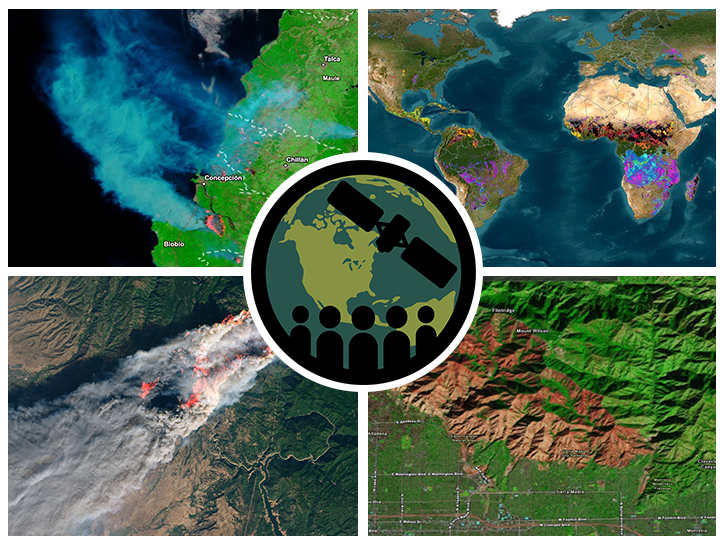
LANCE data are useful for a range of applications in hazards and disasters management, for example, to detect fires, track smoke, ash and dust plumes; to monitor aerosols, carbon monoxide (CO) and sulfur dioxide (SO2), which in turn are useful for air quality assessments; and to determine the extent of sea ice, snow, and flooding which are useful to support shipping in the polar regions and to allow rapid assessment of areas worst affected by snow or flood water. Visualize the data by category in Worldview.
NRT data are available within the following Earth science topics:
Air Quality
Data from space-based platforms have been used to track many aspects of air quality such as propagation of toxic gases like CO from massive fires; accurate early warnings of such pollution spikes are useful because they give people the option to reduce their risk of exposure to poor air by limiting outdoor activity at these times.
Access air quality near-real time data.
Ash Plumes
Data from space-based platforms are useful for identifying and tracking ash plumes from volcanic eruptions. The use of NRT platform data for monitoring volcanic plumes is undergoing further developments to enable quantitative retrievals to be produced, which should enable a global capability for volcanic ash monitoring to be introduced.
Access ash plumes near-real time data.
Droughts
Agro-climatic monitoring programs and global food security risks related to drought are monitored using NRT platform data including the U.S. Agency for International Development (USAID) Famine Early Warning Systems Network (FEWS NET) and GEOGLAM.
Access droughts near real-time data.
Dust Storms
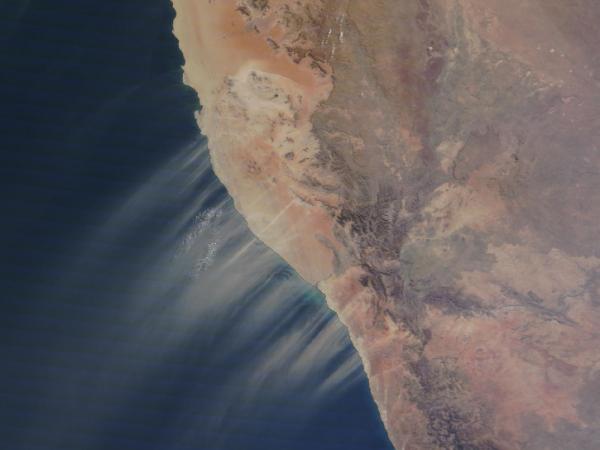
Dust storms can have an impact on human health, weather patterns as well as cause disruption through flight delays and the closure of highways. Data from LANCE are used to monitor and predict dust storms. This information is used by agencies within the Department of Defense to improve resource allocation in remote areas and help promote aircraft safety.
Access dust storms near-real time data.
Fires
Ultra Real-Time (URT), Real-Time (RT), and NRT data and imagery enable people on the ground, including those responsible for mobilizing fire-fighting resources around the world, to access detailed information about the locations of fires. URT, RT and NRT MODIS, VIIRS, and Landsat active fire/hotspot data are available in easy to use formats through the Fire Information for Resource Management System (FIRMS).
Access fires near real-time data.
Floods
Mapping floodwater extent for active floods is critical for local and regional officials and for disaster relief organizations that need to ascertain where to focus their efforts.
Access floods near-real time data.
Severe Storms
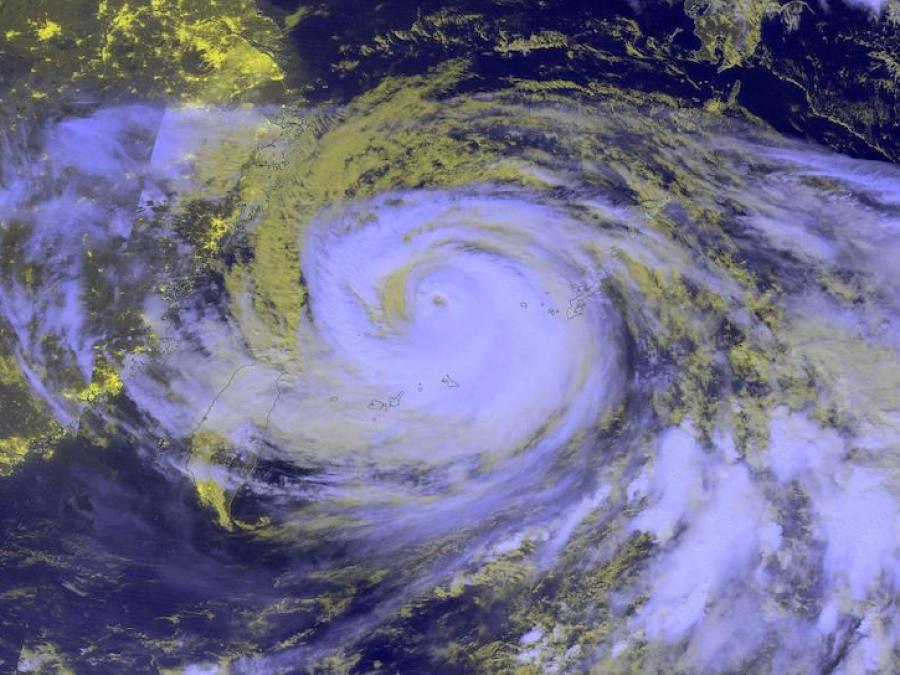
MODIS data are used to revise or confirm 24-hour forecasts related to weather systems approaching the land from the oceans, which in turn provide greater confidence for flood warnings. Images from space-based platforms are also useful in providing everyone with the same 'big picture' of severe storms.
Access severe storms near real-time data.
Shipping
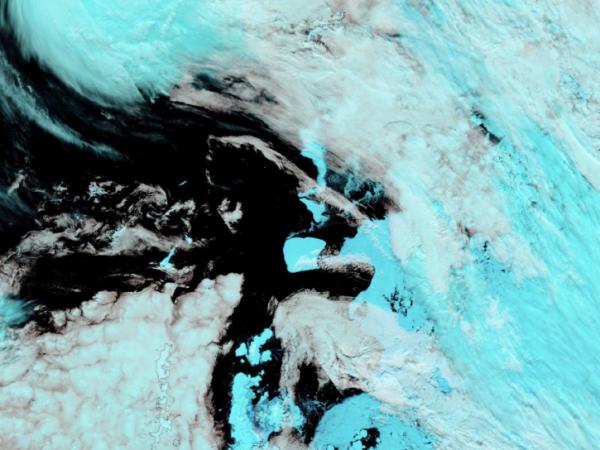
In the polar regions, NRT platform imagery provided by LANCE (in combination with other data) are routinely used to provide up-to-date information on sea ice conditions to ships and research vessels.
Access near real-time data related to ice extent and its effect on shipping.
Smoke Plumes
True color imagery and platform-derived aerosol and carbon monoxide products are frequently used to track the source, duration, and transport of smoke plumes across large areas. Smoke from large wildfires to be lofted high enough into the atmosphere that winds push plumes long distances; a process that can often be tracked in near-real time using data from LANCE.
Access smoke plumes near-real time data.
Vegetation
Normalized Difference Vegetation Index (NDVI) images produced from LANCE data are used to monitor vegetation and crop condition. Groups such as the United Nations (UN) Food and Agriculture Organization (FAO) Desert Locust Information Service flag anomalies in vegetation.
Access vegetation near real-time data.
Related Links
NASA's Disasters Program - including data portal for specific disasters
NASA Earth Observatory - Natural Events
NASA Applied Remote Sensing Training - Disasters
SARVIEWS Hazard Portal - A SAR-based hazard monitoring service
Other NRT Data
The following NRT data are also available from NASA.
Rainfall estimates - IMERG
NASA's Integrated Multi-satellitE Retrievals for GPM (IMERG) algorithm combines data from all passive-microwave instruments in the (Global Precipitation Measurement) GPM Constellation to provide rainfall estimates.
Ocean Biology Ocean Biology Distributed Active Archive Center (OB.DAAC)
Managed by NASA's Ocean Biology Processing Group (OBPG), OB.DAAC is responsible for archiving satellite ocean biology data produced or collected under NASA’s Earth Observing System Data and Information System (EOSDIS). OB.DAAC's holdings include NRT data from both NASA and partner space organizations.
Physical Oceanography DAAC (PO.DAAC)
Visualize and download NRT data for ocean and climate research from the PO.DAAC web portal.
The NRT servers provide an API that lets you access file and product information programmatically. Documentation can be referenced at LAADS Web Service API-V2.
NRT API-V2 REST Examples
- Get a JSON list of files and their attributes (including download links) for the specified search criteria:
- Get an HTML document with a table of HTTPS URLs for the specified search criteria: