Understanding the factors that contribute to near-surface pollution is difficult using only satellite-based observations. The incorporation of surface-level measurements from aircraft and ground-based platforms provides the crucial information necessary to validate and expand upon the use of existing and future satellites.
Deriving Information on Surface Conditions from Column and Vertically Resolved Observations Relevant to Air Quality (DISCOVER-AQ) was a four-year campaign conducted by researchers from NASA Langley Research Center, NASA Goddard Space Flight Center, NASA Ames Research Center, and multiple universities. Through targeted airborne and ground-based observations, the DISCOVER-AQ team set out to enable and improve the use of satellites for monitoring air quality for public health and environmental benefit.
The first objective of DISCOVER-AQ was to determine and investigate correlations between surface measurements and satellite column observations for the trace gases ozone (O3), nitrogen dioxide (NO2), and formaldehyde (CH2O) to understand how satellite column observations can diagnose surface conditions. The research team also gathered surface-level measurements to understand how satellites measure diurnal variability and to understand what factors it. Lastly, DISCOVER-AQ aimed to explore horizontal scales of variability, such as regions with steep gradients and urban plumes.
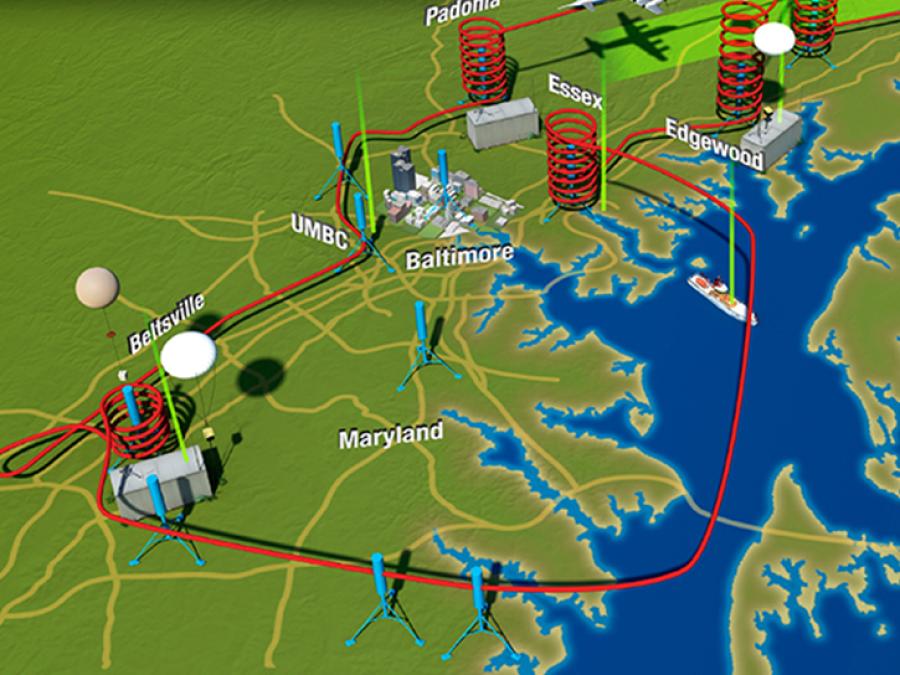
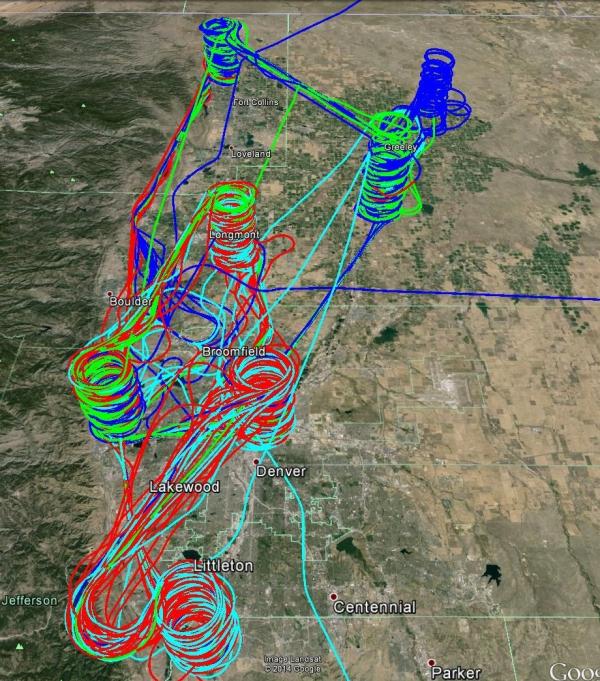
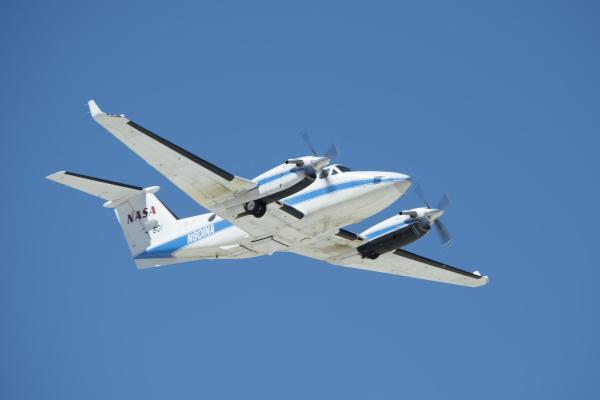
DISCOVER-AQ employed NASA's P-3B and King Air aircraft. The P-3B completed in situ spiral profiling of the atmosphere, including aerosol properties, meteorological variables, and trace gas species. The King Air conducted both passive and active remote sensing of the atmospheric column extending below the aircraft to the surface. The planes conducted flights around Baltimore and Washington, D.C. in 2011, Houston in 2013, California's San Joaquin Valley in 2013, and Denver in 2014. These regions were targeted due to high levels of pollution as determined the National Ambient Air Quality Standards (NAAQS).
Data from an existing network of surface air quality monitors—AERONET sun photometers, Pandora UV/vis spectrometers, and model simulations—were also collected. The DISCOVER-AQ team also employed many surface monitoring sites, with measurements being made on the ground in conjunction with aircraft overflights.