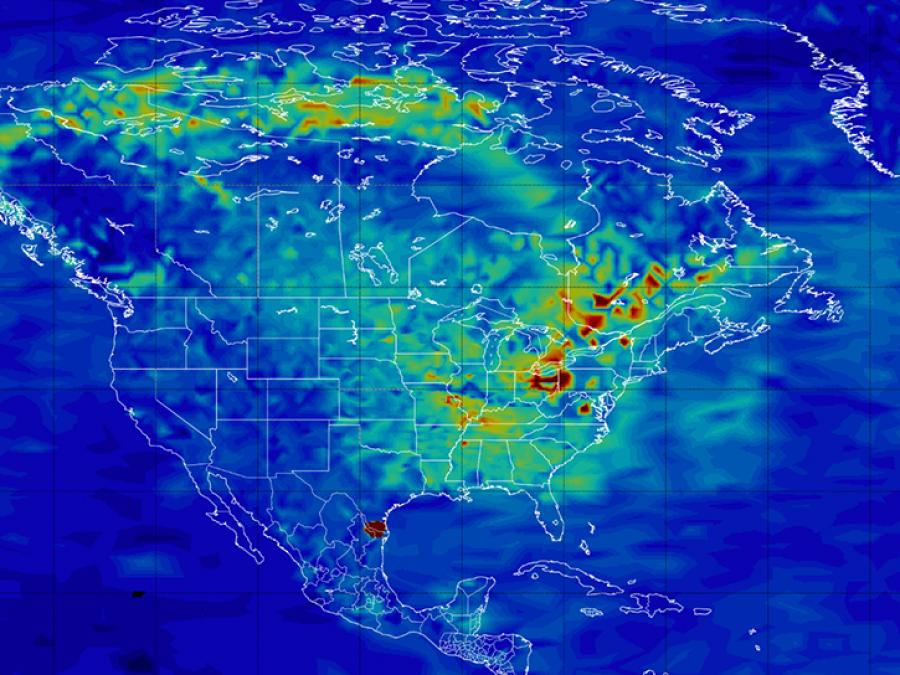
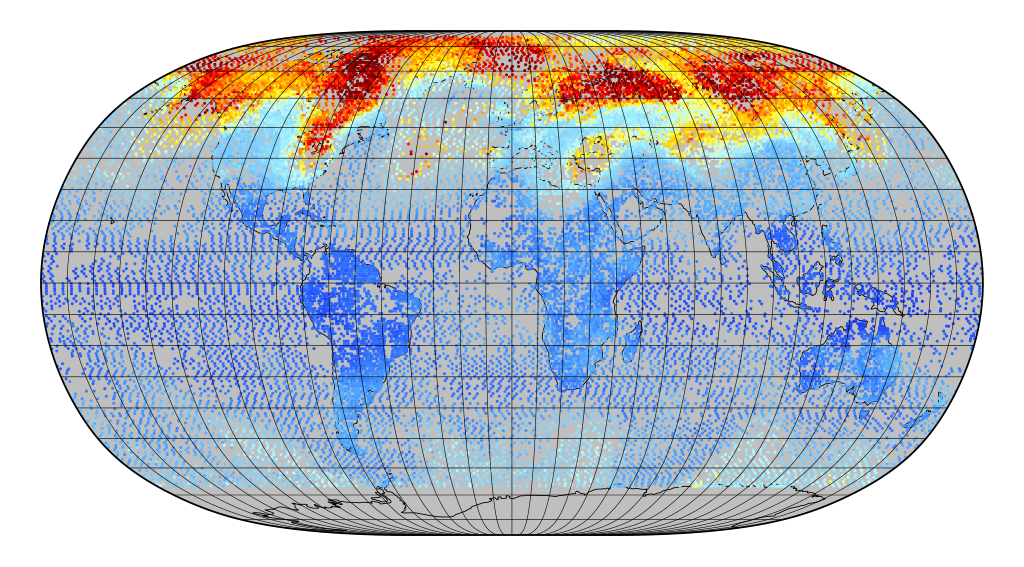
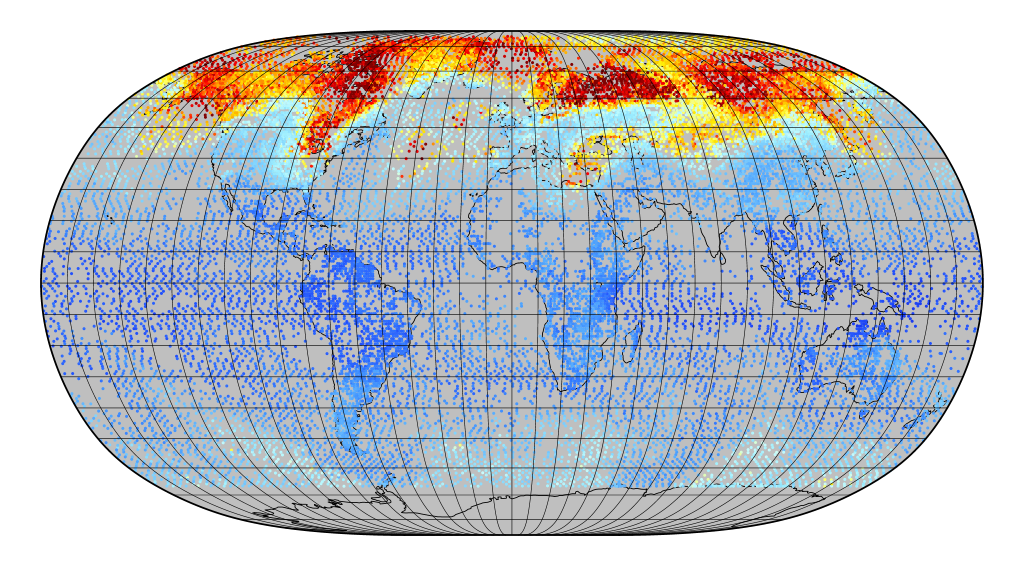
TROPESS measurements of carbon monoxide over North America on June 1, 2023
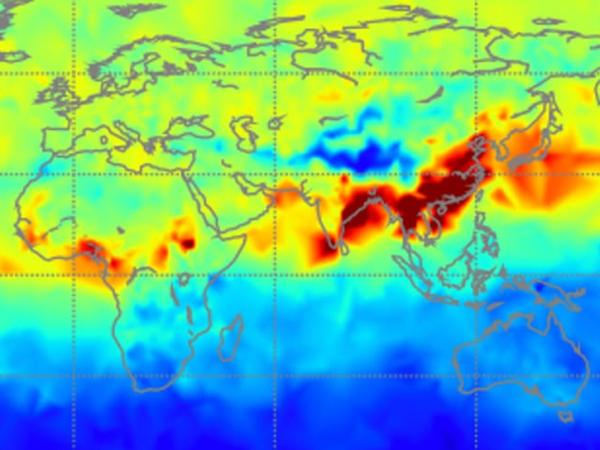
TROPESS global atmospheric data visualization
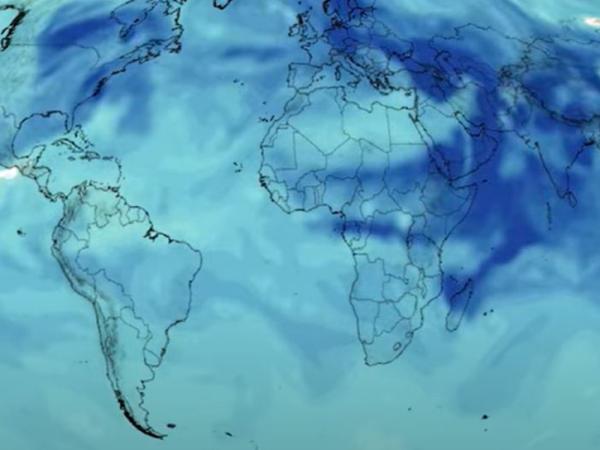
TROPESS global ozone layer data

TROPESS

Tropospheric Ozone and Precursors from Earth System Sounding

The Tropospheric Ozone and Precursors from Earth System Sounding (TROPESS) project generates Earth System Data Records (ESDRs) of ozone and other atmospheric constituents by processing data from multiple satellites through a common retrieval algorithm and ground data system.

TROPESS data products are rigorously validated using uncertainty analysis in connection with independent measurements. The accuracies of the retrieved quantities are quantified to make long-term trends through multi-satellite records and chemical data assimilation. Scientific analysis and evaluation leading to peer-reviewed publications has demonstrated the scientific value of these ESDRs and their utility to the broader community.

TROPESS Project Home Page

Basic steps to find and download data:

  1. All users are required to register with the NASA Earthdata system and link to GES DISC services. New users, please click here for registration instructions, as well as additional required steps when accessing the data via using tools, such as wget for windows or mac, Python, Matlab, and IDV.
  2. Read the TROPESS User Guide for the product of interest carefully and search for any variables of interest to determine which data collection name that contains that variable (e.g., TRPSDL2TATMCRS1FS for TROPESS CrIS-JPSS1 L2 Atmospheric Temperature for Forward Stream, Standard Product).
  3. If you find that the variables of interest are in multiple data collections, please first read the definitions of these collections (e.g., Standard Product or Summary Product), and search possible explanations under the FAQ tab to decide which collection best suits your needs.
  4. Search the data collection name using Earthdata Search, or click on a data collection name on the Data and Tools page to go to the Dataset Landing Page.
  5. Use the data access methods listed on the Dataset Landing Page. Examples of how to use the data services can be found under the FAQ tab. Additional examples for how to programmatically access, subset and analyze TROPESS data using open-source code and Jupyter notebooks. 

Quickstart Tutorials from the NASA TROPESS Github repository provides a combination of snippet-based tutorials referencing open-source utilities, as well as full functioning Jupyter notebooks.

Tutorials are a continued work in progress, and will range from any of the following features/capabilities:

  1. Data search/discovery
  2. Data access/subset/extraction
  3. Data plotting/analysis/visualization
  4. Direct S3 (cloud) access
  5. Cloud-based operation

TROPESS Primer Notebook: NetCDF-4 Metadata/Data Read and Plot

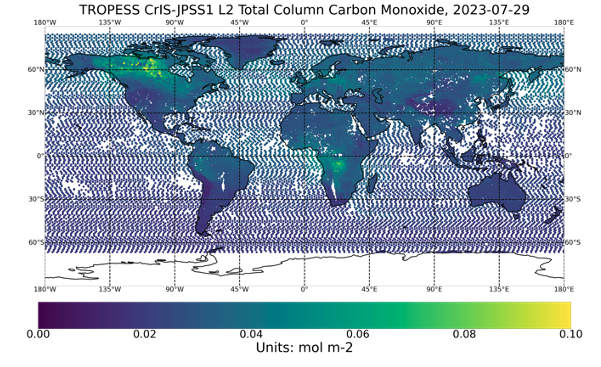
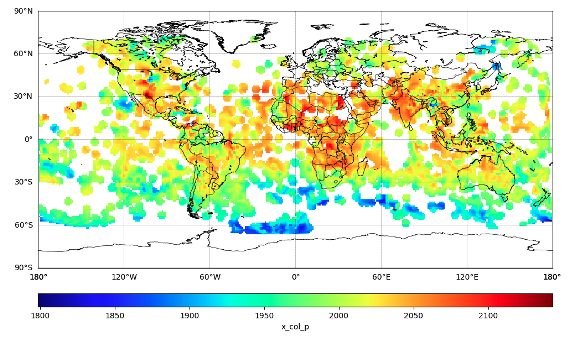
In this tutorial, a local file of the TROPESS CrIS-JPSS1 L2 Carbon Monoxide for Forward Stream, Summary Product V1 dataset is accessed. doi:10.5067/JL1HT3NGEAW3

The data file is accessed from local storage, data variables are loaded  into memory, and the data are plotted on a 2-D global map.

Image

Bulk Data Subscriber and Download Service

This tutorial demonstrates the utilization of a command line-based tool known as the podaac-data-subscriber[downloader] which allows users to either subscribe to datasets (for periodic, continuous updating featuring the latest available data) or one-time "bulk" downloading of one or more data files with a single request.

Create a gridded plot of Methane CH4 partial column retrieved from the CrIS JPSS-1 global observations

In this tutorial, a bias-corrected column-averaged dry air mixing ratio of methane for the partial column is generated.

Image
  • For a given processing stream, there are three types of data products: Summary, Standard, and Archival. Which type(s) of data products should I use? 

    Among the three types of data products (Summary, Standard, Archival), the Summary data product is a good first-look data product for a new user of the TROPESS data products. It contains the retrieved physical parameters of interest with a minimal set of diagnostic parameters. For a user who is looking for more diagnostic information about the retrieved physical parameters, the next data product to use is the Standard data product. If the user is familiar with the TROPESS data products and would like to have the most extensive information about the data, they should use the Archival data product, which contains complete and unfiltered retrieval results and detailed diagnostic parameters at the original vertical resolution.

  • There are many data collections generated from three types of processing streams: Forward, Reanalysis, and Special Collection. How would I determine which data collection is useful for my research and application?

    The data collections generated from the Forward processing stream are useful to study the impacts of recent weather and air quality events and to apply these to data assimilation and forecasting type of work. The Forward-processing data collections are not designed to study a long-term trend, since the software used to generate the products is updated regularly. 

    In contrast, the data collections generated from the Reanalysis processing stream are useful to study a long-term trend, as they provide a long-time coverage (multiple years) of the retrieved parameters with a fixed retrieval configuration and a fixed software version. The data collections generated from the Special-Collection processing stream are designed with a particular target area and a particular event in mind. For example, the Megacities collections were generated to study the air quality and atmospheric components of global big cities for a longer period (2016-2021). The Australian Fire collections were generated to study the 2019-2020 Australian Bushfire season.

  • I would like to download multiple years of TROPESS datasets in a single bulk request. What is the best way to do this?

    There is a free open-source, command line-based tool known as the datasubscriber[downloader] which allows users to either subscribe to datasets (for periodic, continuous updating featuring the latest available data) or one-time "bulk" downloading of one or more data files with a single request. A tutorial with instructions on how to install and use datasubscriber[downloader] is available here.

  • I prefer to do my data analysis in Python and/or iPython/Jupyter notebooks, but this is my first time working with TROPESS data. Do you have any Python code and/or notebook examples to help me get started?

    There are numerous open-source Jupyter notebooks and tutorials based on Python covering a wide variety of TROPESS datasets. These notebooks provide examples of the following features/capabilities: data search/discovery, data access/subset/extraction, data plotting/analysis/visualization. This is an ongoing, collaborative effort between the JPL TROPESS project and ESDIS. More info is available here: Link

The TROPESS data products are Level 2 products with daily granularity. For a given data processing stream (e.g., AIRS+OMI joint retrieval), three types of data products are generated: Standard, Summary, and Archival.

Table 3: TROPESS Level 2 data product types and description of key characteristics and typical file size. 

Product TypeDescription

File Size

(per species, per day, per file)

Archival
  • For users famliar with TROPESS or TES data
  • Products contain complete and unfiltered retrieval results and detailed diagnostic parameters at the original vertical resolution
~10 GB
Standard
  • Includes more diagnostic information about the retrieved physical parameters
~100 MB
Summary
  • Good first-look product for a new user to the TROPESS data products
  • Contains the retrieved physical parameters of interest with a minimal set of diagnostic parameters
~10 M

The Archival data product contains all the retrieval processing output parameters in the original pressure level resolution (67 pressure levels). It also reports the retrieved results from all of the observation data used regardless of the quality of the retrieval result. Note that the Standard data product reports only the retrieved results that passed the quality threshold. Because of the high pressure level resolution and the number of observation samples included, the Archival data product is the largest in data size among the three data products. 

The Standard data product consists of key science data fields expected to be of interest for most users including a retrieved state, a priori state, an averaging kernel matrix, and an observation error matrix. The dimension of the pressure levels is between 14 and 31 depending on the physical variable. With the Standard data product, one can compare the TROPESS retrieved vertical profiles with corresponding aircraft or model fields by constructing an observation operator using the a priori state and the averaging kernel matrix and by applying the observation operator to the model/aircraft fields.

The Summary data product contains the subset of the key science data fields from the Standard data product and the column-integrated vectors from the matrix listed in the Standard data product. For example, the Summary product includes a linearized column averaging kernel instead of an averaging kernel matrix in the Standard product. Because of this, the Summary data product is significantly smaller in data size than the Standard data product. With the Summary data product, one can compare the TROPESS column-averaged retrieved quantity with corresponding aircraft or model fields. The Summary data product is ideal for an initial examination of the key retrieved data fields of the TROPESS data products (e.g., a retrieved vertical profile of a given species).  

The TROPESS data products are generated from three processing streams: Forward, Reanalysis, and Special Collection. The Forward Stream provides low-latency products with a latency less than one week while using the most recent retrieval algorithm. The Reanalysis Stream uses a common retrieval algorithm to produce a multidecadal record. The Special-Collection Stream provides on an as-needed and as-available basis to support NASA field campaigns and individual-investigator requests over specific regions (e.g., Australian Fires, Megacities, FIREX-AQ campaign areas, AEROMMA campaign areas).

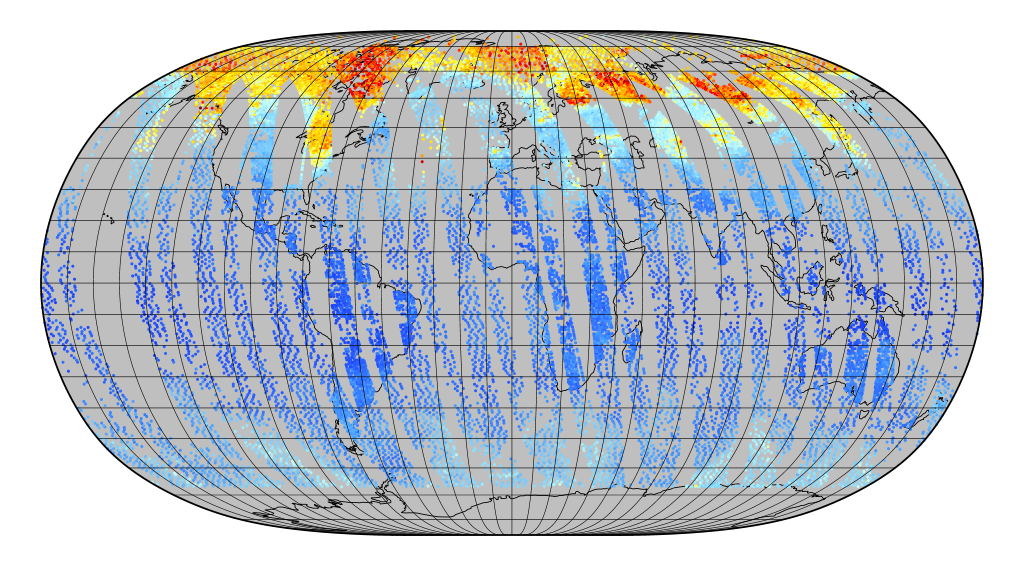
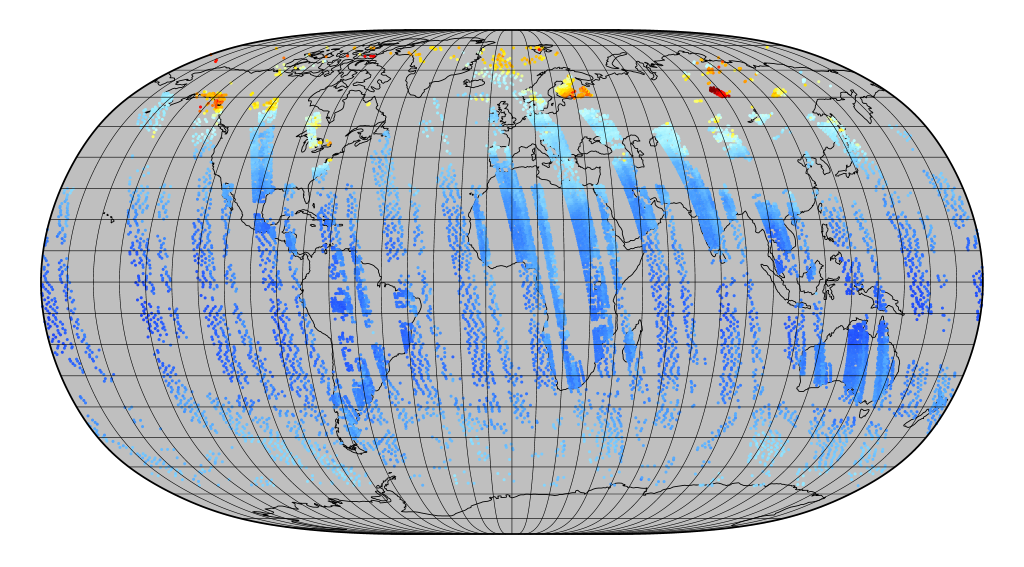
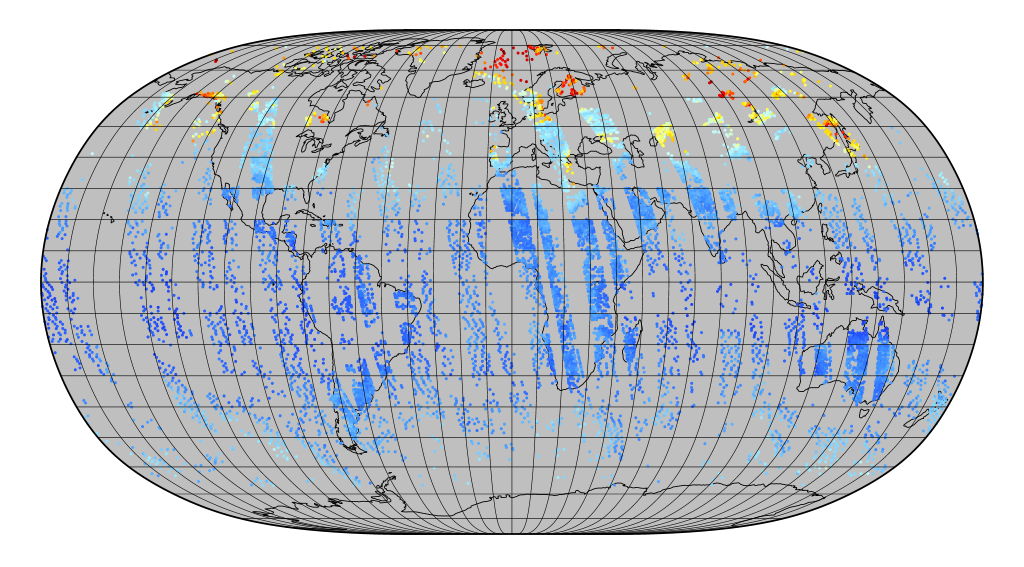
TROPESS uses satellite Level-1B products (calibrated radiances) from multiple satellite sensors including the Atmospheric Infrared Sounder (AIRS) on Aqua, Cross-track Interferometer Sounder (CrIS) on Suomi-NPP and JPSS-1, Ozone Mapping Instrument (OMI) on Aura, and TROPOspheric Monitoring Instrument (TROPOMI) on Sentinel-5P.  Both a single-instrument retrieval stream and a joint two-instrument retrieval stream are used to generate the TROPESS data products. For example, there are five ozone data products retrieved: AIRS single, OMI single,  AIRS+OMI joint, CrIS/Suomi-NPP single, and CrIS/JPSS-1 single.

Image
Image Caption

AIRS

Image
Image Caption

OMI

Image
Image Caption

AIRS + OMI

Image
Image Caption

CriS/Suomi-NPP

Image
Image Caption

CrIS/JPSS-1

The TROPESS data products contain the following retrieved physical variables: ozone (O3), carbon monoxide (CO), water vapor (H2O), hydrogen-deuterium oxide (HDO), methanol (CH4), ammonia (NH3), peroxyacetyl nitrate (PAN), and atmospheric and surface temperature (TATM). The data products also include geolocation information, estimated errors, quality flags, and other information needed for science and application end users.

Table 2: Summary of species included in the TROPESS data processing streams

InstrumentO3COH2OHDOCH4NH3PANTATM
AIRSXXXXXX X
CrIS on SNPPXXXXXXXX
CrIS on JPSS-1XXXXXXXX
OMIX       
AIRS+OMIX       

TROPESS Project Builds on Legacy Instruments' Success to Provide Continuous Records of Atmospheric Composition


Ammonia retrieval related publications:

Cady-Pereira, K. E., Guo, X., Wang, R., Leytem, A., Calkins, C., Berry, E., Sun, K., Müller, M., Wisthaler, A., Payne, V. H., Shephard, M. W., Zondlo, M. A., and Kantchev, V. H. (2024). Validation of NH3 observations from AIRS and CrIS against aircraft measurements from DISCOVER-AQ and a surface network in the Magic Valley, Atmos. Meas. Tech., 17, 15–36, https://doi.org/10.5194/amt-17-15-2024
Bowman, K. W., Rodgers, C. D., Kulawik, S. S., Worden, J., Sarkissian, E., Osterman, G., Steck, T., Lou, M., Eldering, A., Shephard, M., Worden, H., Lampel, M., Clough, S., Brown, P., Rinsland, C., Gunson, M., & Beer, R. (2006). Tropospheric emission spectrometer: Retrieval method and error analysis. IEEE Transactions on Geoscience and Remote Sensing, 44(5), 1297–1307. https://doi.org/10.1109/TGRS.2006.871234
Shephard, M. W., & Cady-Pereira, K. E. (2015). Cross-track Infrared Sounder (CrIS) satellite observations of tropospheric ammonia. Atmospheric Measurement Techniques, 8(3), 1323–1336. https://doi.org/10.5194/amt-8-1323-201
Shephard, M. W., Cady-Pereira, K. E., Luo, M., Henze, D. K., Pinder, R. W., Walker, J. T., Rinsland, C. P., Bash, J. O., Zhu, L., Payne, V. H., & Clarisse, L. (2011). TES ammonia retrieval strategy and global observations of the spatial and seasonal variability of ammonia. Atmospheric Chemistry and Physics, 11(20), 10743–10763. https://doi.org/10.5194/acp-11-10743-2011
Miyazaki, K., Bowman, K. W., Yumimoto, K., Walker, T., and Sudo, K.: (2020a). Evaluation of a multi-model, multi-constituent assimilation framework for tropospheric chemical reanalysis, Atmos. Chem. Phys., 20, 931–967, DOI: https://doi.org/10.5194/acp-20-931-2020
Miyazaki, K., Bowman, K., Sekiya, T., Eskes, H., Boersma, F., Worden, H., Livesey, N., Payne, V. H., Sudo, K., Kanaya, Y., Takigawa, M., and Ogochi, K. (2020b). Updated tropospheric chemistry reanalysis and emission estimates, TCR-2, for 2005–2018, Earth Syst. Sci. Data, 12, 2223–2259, DOI: https://doi.org/10.5194/essd-12-2223-2020


Atmospheric Temperature related publications:
Bowman, K. W., Rodgers, C. D., Kulawik, S. S., Worden, J., Sarkissian, E., Osterman, G., Steck, T., Lou, M., Eldering, A., Shephard, M., Worden, H., Lampel, M., Clough, S., Brown, P., Rinsland, C., Gunson, M., & Beer, R. (2006). Tropospheric emission spectrometer: Retrieval method and error analysis. IEEE Transactions on Geoscience and Remote Sensing, 44(5), 1297–1307. https://doi.org/10.1109/TGRS.2006.871234
Worden, J., Kulawik, S. S., Shephard, M. W., Clough, S. A., Worden, H., Bowman, K., & Goldman, A. (2004). Predicted errors of tropospheric emission spectrometer nadir retrievals from spectral window selection. Journal of Geophysical Research: Atmospheres, 109(D9). https://doi.org/10.1029/2004JD004522
Worden, J., Kulawik, S., Frankenberg, C., Payne, V., Bowman, K., Cady-Peirara, K., Wecht, K., Lee, J.-E., & Noone, D. (2012). Profiles of CH4, HDO, H2O, and N2O with improved lower tropospheric vertical resolution from Aura TES radiances. Atmospheric Measurement Techniques, 5(2), 397–411. https://doi.org/10.5194/amt-5-397-2012
Miyazaki, K., Bowman, K. W., Yumimoto, K., Walker, T., and Sudo, K. (2020a). Evaluation of a multi-model, multi-constituent assimilation framework for tropospheric chemical reanalysis, Atmos. Chem. Phys., 20, 931–967, DOI: https://doi.org/10.5194/acp-20-931-2020, 2020a.
Miyazaki, K., Bowman, K., Sekiya, T., Eskes, H., Boersma, F., Worden, H., Livesey, N., Payne, V. H., Sudo, K., Kanaya, Y., Takigawa, M., and Ogochi, K. (2020b). Updated tropospheric chemistry reanalysis and emission estimates, TCR-2, for 2005–2018, Earth Syst. Sci. Data, 12, 2223–2259, DOI: https://doi.org/10.5194/essd-12-2223-2020


Carbon Monoxide retrieval related publications:
Luo, M., Rinsland, C. P., Rodgers, C. D., Logan, J. A., Worden, H., Kulawik, S., Eldering, A., Goldman, A., Shephard, M. W., Gunson, M., & Lampel, M. (2007). Comparison of carbon monoxide measurements by TES and MOPITT: Influence of a priori data and instrument characteristics on nadir atmospheric species retrievals. Journal of Geophysical Research: Atmospheres, 112(D9). https://doi.org/10.1029/2006JD007663
Luo, M., Rinsland, C., Fisher, B., Sachse, G., Diskin, G., Logan, J., Worden, H., Kulawik, S., Osterman, G., Eldering, A., Herman, R., & Shephard, M. (2007). TES carbon monoxide validation with DACOM aircraft measurements during INTEX-B 2006. Journal of Geophysical Research: Atmospheres, 112(D24). https://doi.org/10.1029/2007JD008803
Fu, D., Bowman, K. W., Worden, H. M., Natraj, V., Worden, J. R., Yu, S., Veefkind, P., Aben, I., Landgraf, J., Strow, L., & Han, Y. (2016). High-resolution tropospheric carbon monoxide profiles retrieved from CrIS and TROPOMI. Atmospheric Measurement Techniques, 9(6), 2567–2579. https://doi.org/10.5194/amt-9-2567-2016
Buchholz, R. R., Worden, H. M., Park, M., Francis, G., Deeter, M. N., Edwards, D. P., Emmons, L. K., Gaubert, B., Gille, J., Martínez-Alonso, S., Tang, W., Kumar, R., Drummond, J. R., Clerbaux, C., George, M., Coheur, P.-F., Hurtmans, D., Bowman, K. W., Luo, M., … Kulawik, S. S. (2021). Air pollution trends measured from Terra: CO and AOD over industrial, fire-prone, and background regions. Remote Sensing of Environment, 256, 112275. https://doi.org/10.1016/j.rse.2020.112275
Worden, H. M., Deeter, M. N., Frankenberg, C., George, M., Nichitiu, F., Worden, J., Aben, I., Bowman, K. W., Clerbaux, C., Coheur, P. F., de Laat, A. T. J., Detweiler, R., Drummond, J. R., Edwards, D. P., Gille, J. C., Hurtmans, D., Luo, M., Martínez-Alonso, S., Massie, S., … Warner, J. X. (2013). Decadal record of satellite carbon monoxide observations. Atmospheric Chemistry and Physics, 13(2), 837–850. https://doi.org/10.5194/acp-13-837-2013
Miyazaki, K., Bowman, K. W., Yumimoto, K., Walker, T., and Sudo, K.: (2020a). Evaluation of a multi-model, multi-constituent assimilation framework for tropospheric chemical reanalysis, Atmos. Chem. Phys., 20, 931–967, DOI: https://doi.org/10.5194/acp-20-931-2020, 2020a.
Miyazaki, K., Bowman, K., Sekiya, T., Eskes, H., Boersma, F., Worden, H., Livesey, N., Payne, V. H., Sudo, K., Kanaya, Y., Takigawa, M., and Ogochi, K. (2020). Updated tropospheric chemistry reanalysis and emission estimates, TCR-2, for 2005–2018, Earth Syst. Sci. Data, 12, 2223–2259, DOI: https://doi.org/10.5194/essd-12-2223-2020 
Byrne, B., Liu, J., Bowman, B.W., Pascolini-Campbell, M., Chatterjee, A., Pandey, S., Miyazaki, K., van der Werf, G.R., Wunch, D., Wennberg, P.O., Roehl, C.M., and Sinha, S. Carbon emissions from the 2023 Canadian wildfires. Nature (2024). DOI: 10.1038/s41586-024-07878-z


Deuterated Water (HDO) water retrieval related publications:
Herman, R. L., Worden, J., Noone, D., Henze, D., Bowman, K., Cady-Pereira, K., Payne, V. H., Kulawik, S. S., & Fu, D. (2020). Comparison of optimal estimation HDO∕H2O retrievals from AIRS with ORACLES measurements. Atmospheric Measurement Techniques, 13(4), 1825–1834. https://doi.org/10.5194/amt-13-1825-2020
Bowman, K. W., Rodgers, C. D., Kulawik, S. S., Worden, J., Sarkissian, E., Osterman, G., Steck, T., Lou, M., Eldering, A., Shephard, M., Worden, H., Lampel, M., Clough, S., Brown, P., Rinsland, C., Gunson, M., & Beer, R. (2006). Tropospheric emission spectrometer: Retrieval method and error analysis. IEEE Transactions on Geoscience and Remote Sensing, 44(5), 1297–1307. https://doi.org/10.1109/TGRS.2006.871234
Rodgers, C. D., & Connor, B. J. (2003). Intercomparison of remote sounding instruments. Journal of Geophysical Research: Atmospheres, 108(D3). https://doi.org/10.1029/2002JD002299
Worden, J., Kulawik, S., Frankenberg, C., Payne, V., Bowman, K., Cady-Peirara, K., Wecht, K., Lee, J.-E., & Noone, D. (2012). Profiles of CH4, HDO, H2O, and N2O with improved lower tropospheric vertical resolution from Aura TES radiances. Atmospheric Measurement Techniques, 5(2), 397–411. https://doi.org/10.5194/amt-5-397-2012
Worden, J. R., Kulawik, S. S., Fu, D., Payne, V. H., Lipton, A. E., Polonsky, I., He, Y., Cady-Pereira, K., Moncet, J.-L., Herman, R. L., Irion, F. W., & Bowman, K. W. (2019). Characterization and evaluation of AIRS-based estimates of the deuterium content of water vapor. Atmospheric Measurement Techniques, 12(4), 2331–2339. https://doi.org/10.5194/amt-12-2331-2019
Worden, J., Bowman, K., Noone, D., Beer, R., Clough, S., Eldering, A., Fisher, B., Goldman, A., Gunson, M., Herman, R., Kulawik, S. S., Lampel, M., Luo, M., Osterman, G., Rinsland, C., Rodgers, C., Sander, S., Shephard, M., & Worden, H. (2006). Tropospheric Emission Spectrometer observations of the tropospheric HDO/H2O ratio: Estimation approach and characterization. Journal of Geophysical Research: Atmospheres, 111(D16). https://doi.org/10.1029/2005JD006606
Shi, M.; Worden, J.R.; Bailey, A. et al: Amazonian terrestrial water balance inferred from satellite-observed water vapor isotopes. Nat. Commun. 13, 2686, May 2022. DOI: 10.1038/s41467-022-30317-4
Risi, C., Noone, D., Worden, J., Frankenberg, C., Stiller, G., Kiefer, M., Funke, B., Walker, K., Bernath, P., Schneider, M., Wunch, D., Sherlock, V., Deutscher, N., Griffith, D., Wennberg, P. O., Strong, K., Smale, D., Mahieu, E., Barthlott, S., … Sturm, C. (2012). Process-evaluation of tropospheric humidity simulated by general circulation models using water vapor isotopologues: 1. Comparison between models and observations. Journal of Geophysical Research: Atmospheres, 117(D5). https://doi.org/10.1029/2011JD016621
Risi, C., Noone, D., Frankenberg, C., & Worden, J. (2013). Role of continental recycling in intraseasonal variations of continental moisture as deduced from model simulations and water vapor isotopic measurements. Water Resources Research, 49(7), 4136–4156. https://doi.org/10.1002/wrcr.20312


Ozone retrieval related publications:
Worden, H. M., Logan, J. A., Worden, J. R., Beer, R., Bowman, K., Clough, S. A., Eldering, A., Fisher, B. M., Gunson, M. R., Herman, R. L., Kulawik, S. S., Lampel, M. C., Luo, M., Megretskaia, I. A., Osterman, G. B., & Shephard, M. W. (2007). Comparisons of Tropospheric Emission Spectrometer (TES) ozone profiles to ozonesondes: Methods and initial results. Journal of Geophysical Research: Atmospheres, 112(D3). https://doi.org/10.1029/2006JD007258
Boxe, C. S., Worden, J. R., Bowman, K. W., Kulawik, S. S., Neu, J. L., Ford, W. C., Osterman, G. B., Herman, R. L., Eldering, A., Tarasick, D. W., Thompson, A. M., Doughty, D. C., Hoffmann, M. R., & Oltmans, S. J. (2010). Validation of northern latitude Tropospheric Emission Spectrometer stare ozone profiles with ARC-IONS sondes during ARCTAS: Sensitivity, bias and error analysis. Atmospheric Chemistry and Physics, 10(20), 9901–9914. https://doi.org/10.5194/acp-10-9901-2010
Nassar, R., Logan, J. A., Worden, H. M., Megretskaia, I. A., Bowman, K. W., Osterman, G. B., Thompson, A. M., Tarasick, D. W., Austin, S., Claude, H., Dubey, M. K., Hocking, W. K., Johnson, B. J., Joseph, E., Merrill, J., Morris, G. A., Newchurch, M., Oltmans, S. J., Posny, F., … Witte, J. C. (2008). Validation of Tropospheric Emission Spectrometer (TES) nadir ozone profiles using ozonesonde measurements. Journal of Geophysical Research: Atmospheres, 113(D15). https://doi.org/10.1029/2007JD008819
Verstraeten, W. W., Boersma, K. F., Zörner, J., Allaart, M. a. F., Bowman, K. W., & Worden, J. R. (2013). Validation of six years of TES tropospheric ozone retrievals with ozonesonde measurements: Implications for spatial patterns and temporal stability in the bias. Atmospheric Measurement Techniques, 6(5), 1413–1423. https://doi.org/10.5194/amt-6-1413-2013
Fu, D., Kulawik, S. S., Miyazaki, K., Bowman, K. W., Worden, J. R., Eldering, A., Livesey, N. J., Teixeira, J., Irion, F. W., Herman, R. L., Osterman, G. B., Liu, X., Levelt, P. F., Thompson, A. M., & Luo, M. (2018). Retrievals of tropospheric ozone profiles from the synergism of AIRS and OMI: Methodology and validation. Atmospheric Measurement Techniques, 11(10), 5587–5605. https://doi.org/10.5194/amt-11-5587-2018
Miyazaki, K., Bowman, K., Sekiya, T., Takigawa, M., Neu, J. L., Sudo, K., Osterman, G., & Eskes, H. (2021). Global tropospheric ozone responses to reduced NOx emissions linked to the COVID-19 worldwide lockdowns. Science Advances, 7(24), eabf7460. https://doi.org/10.1126/sciadv.abf7460
Miyazaki, K., Bowman, K. W., Yumimoto, K., Walker, T., and Sudo, K.: (2020). Evaluation of a multi-model, multi-constituent assimilation framework for tropospheric chemical reanalysis, Atmos. Chem. Phys., 20, 931–967, DOI: https://doi.org/10.5194/acp-20-931-2020
Miyazaki, K., Bowman, K., Sekiya, T., Eskes, H., Boersma, F., Worden, H., Livesey, N., Payne, V. H., Sudo, K., Kanaya, Y., Takigawa, M., and Ogochi, K. (2020). Updated tropospheric chemistry reanalysis and emission estimates, TCR-2, for 2005–2018, Earth Syst. Sci. Data, 12, 2223–2259, DOI: https://doi.org/10.5194/essd-12-2223-2020


Methane retrieval related publications:
Kulawik, S. S., Worden, J. R., Payne, V. H., Fu, D., Wofsy, S. C., McKain, K., Sweeney, C., Daube Jr., B. C., Lipton, A., Polonsky, I., He, Y., Cady-Pereira, K. E., Dlugokencky, E. J., Jacob, D. J., & Yin, Y. (2021). Evaluation of single-footprint AIRS CH4 profile retrieval uncertainties using aircraft profile measurements. Atmospheric Measurement Techniques, 14(1), 335–354. https://doi.org/10.5194/amt-14-335-2021


PAN retrieval related publications:
Payne, V. H., Alvarado, M. J., Cady-Pereira, K. E., Worden, J. R., Kulawik, S. S., & Fischer, E. V. (2014). Satellite observations of peroxyacetyl nitrate from the Aura Tropospheric Emission Spectrometer. Atmospheric Measurement Techniques, 7(11), 3737–3749. https://doi.org/10.5194/amt-7-3737-2014
Bowman, K. W., Rodgers, C. D., Kulawik, S. S., Worden, J., Sarkissian, E., Osterman, G., Steck, T., Lou, M., Eldering, A., Shephard, M., Worden, H., Lampel, M., Clough, S., Brown, P., Rinsland, C., Gunson, M., & Beer, R. (2006). Tropospheric emission spectrometer: Retrieval method and error analysis. IEEE Transactions on Geoscience and Remote Sensing, 44(5), 1297–1307. https://doi.org/10.1109/TGRS.2006.871234
Payne, V. H.,  M. J. Alvarado, K. E. Cady-Pereira, J. R. Worden, S. S. Kulawik and E. V. Fischer (2014). Satellite observations of peroxyacetyl nitrate from the Tropospheric Emission Spectrometer, Atmos. Meas. Tech., 7, 3737-3749
Juncosa Calahorrano, J., Payne, V. H., Kulawik, S. S., Flocke, F., Campos, T., and Fischer, E. V.: Evolution of PAN in wildfire smoke plumes detected by the Cross-Track Infrared Sounder (CrIS) over the western US during summer 2018, Geophys. Res. Lett., 48 (23), e 2021GL093405, 10.1029/2021GL093405
Payne, V. H., Kulawik, S. S., Fischer, E. V., Brewer, J. F., Huey, L. G., Miyazaki, K., Worden, J. R., Bowman, K. W., Hintsa, E. J., Moore, F., Elkins, J. W., and Juncosa Calahorrano, J. (2022) Satellite measurements of peroxyacetyl nitrate from the Cross-Track Infrared Sounder: Comparison with ATom aircraft measurements, Atmos. Meas. Tech., https://doi.org/10.5194/amt-2021-353
Shogrin, M. J., Payne, V. H., Kulawik, S. S., Miyazaki, K., and Fischer, E. V. (2023). Measurement Report: Spatiotemporal variability of peroxy acyl nitrates (PANs) over Mexico City from TES and CrIS satellite measurements, Atmos. Chem. Phys., https://doi.org/10.5194/acp-2022-582
Miyazaki, K., Bowman, K. W., Yumimoto, K., Walker, T., and Sudo, K.: (2020). Evaluation of a multi-model, multi-constituent assimilation framework for tropospheric chemical reanalysis, Atmos. Chem. Phys., 20, 931–967, DOI: https://doi.org/10.5194/acp-20-931-2020, 2020a.

Miyazaki, K., Bowman, K., Sekiya, T., Eskes, H., Boersma, F., Worden, H., Livesey, N., Payne, V. H., Sudo, K., Kanaya, Y., Takigawa, M., and Ogochi, K.: Updated tropospheric chemistry reanalysis and emission estimates, TCR-2, for 2005–2018, Earth Syst. Sci. Data, 12, 2223–2259, DOI: https://doi.org/10.5194/essd-12-2223-2020