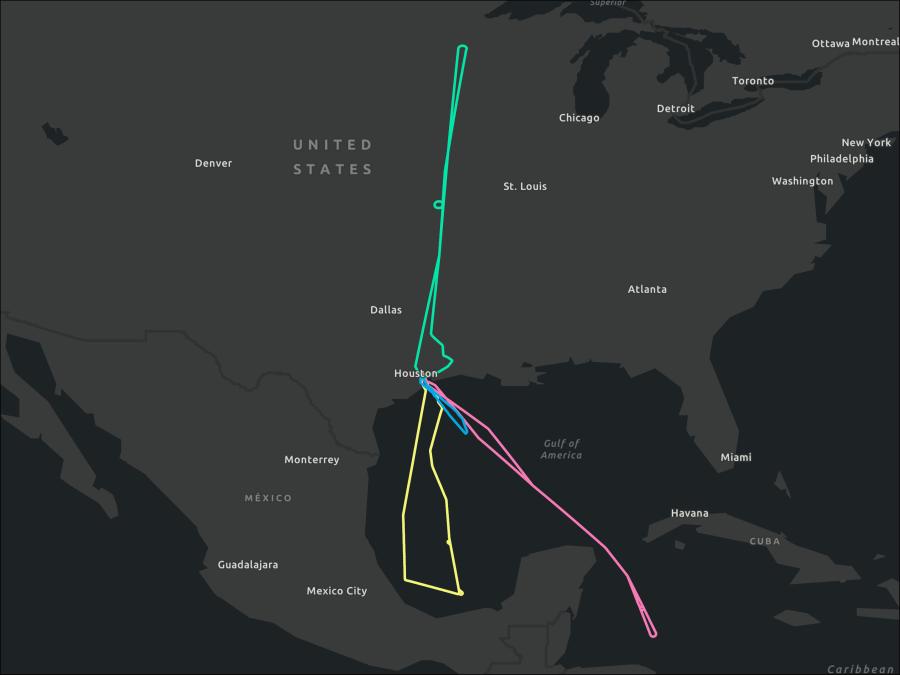
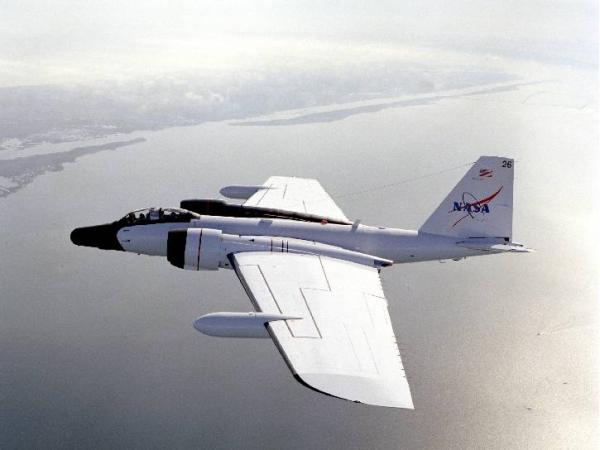
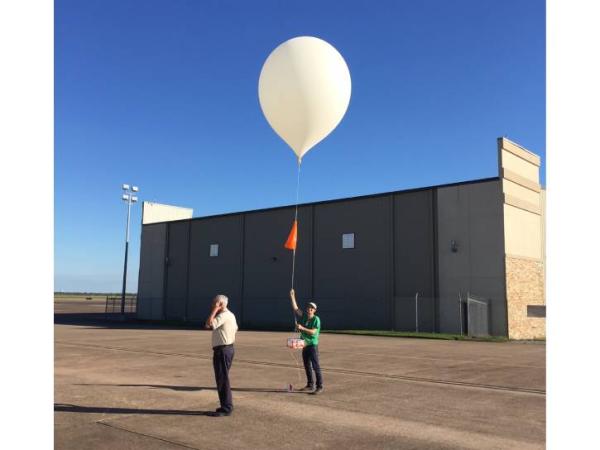
Conducted in October 2015, the Volcano-plume Investigation Readiness and Gas-phase and Aerosol Sulfur (VIRGAS) field campaign had a primary objective to test instrument capability and readiness for deployment in the investigation of major volcanic eruptions. VIRGAS aimed to enable researchers to assess the impact of these volcanic eruptions on stratospheric aerosols and the ozone layer.
As sulfur dioxide is a characteristic component of volcanic emissions, the LIF SO2 instrument was of critical importance to the campaign. VIRGAS was conducted in one deployment consisting of six science flights based from Houston, TX.
The available data products are from the NOAA LASER-Induced Fluorescence (LIF SO2) instrument, the NOAA Unmanned Aircraft System O3 Photometer (UASO3), and NASA’s Meteorological Measurement System (MMS). NASA's Atmospheric Science Data Center houses 1 Hz SO2 data from seven flights, 1 Hz O3 data from ten flights, and 1 Hz and 20 Hz data for temperature, pressure, and three-dimensional winds from five flights.
VIRGAS was led by Karen Rosenlof and Ru-Shan Gao of the NOAA Chemical Sciences Laboratory (NOAA CSL), as well as by Paul Newman of NASA's Godard Space Flight Center. Other participants included researchers from NASA Ames Research Center, the Bay Area Environmental Research Institute (BAERI), and the University of Miami.