After Three Decades, a Key Earth Data System Enters Its Final Chapter

The transition away from ECS represents one of the largest infrastructure changes in the history of NASA Earth science data systems.

Every day, people rely on Earth science data to better understand our changing planet. Scientists use it to study melting glaciers, changing forests, and shifting weather patterns. Emergency responders monitor floods, droughts, and wildfires. Water managers make decisions about reservoirs and water supplies. Teachers bring real-world satellite observations into classrooms.  

Behind their countless research papers, forecasts, decisions, and discoveries is an enormous infrastructure built to collect, manage, and deliver that data.

Image
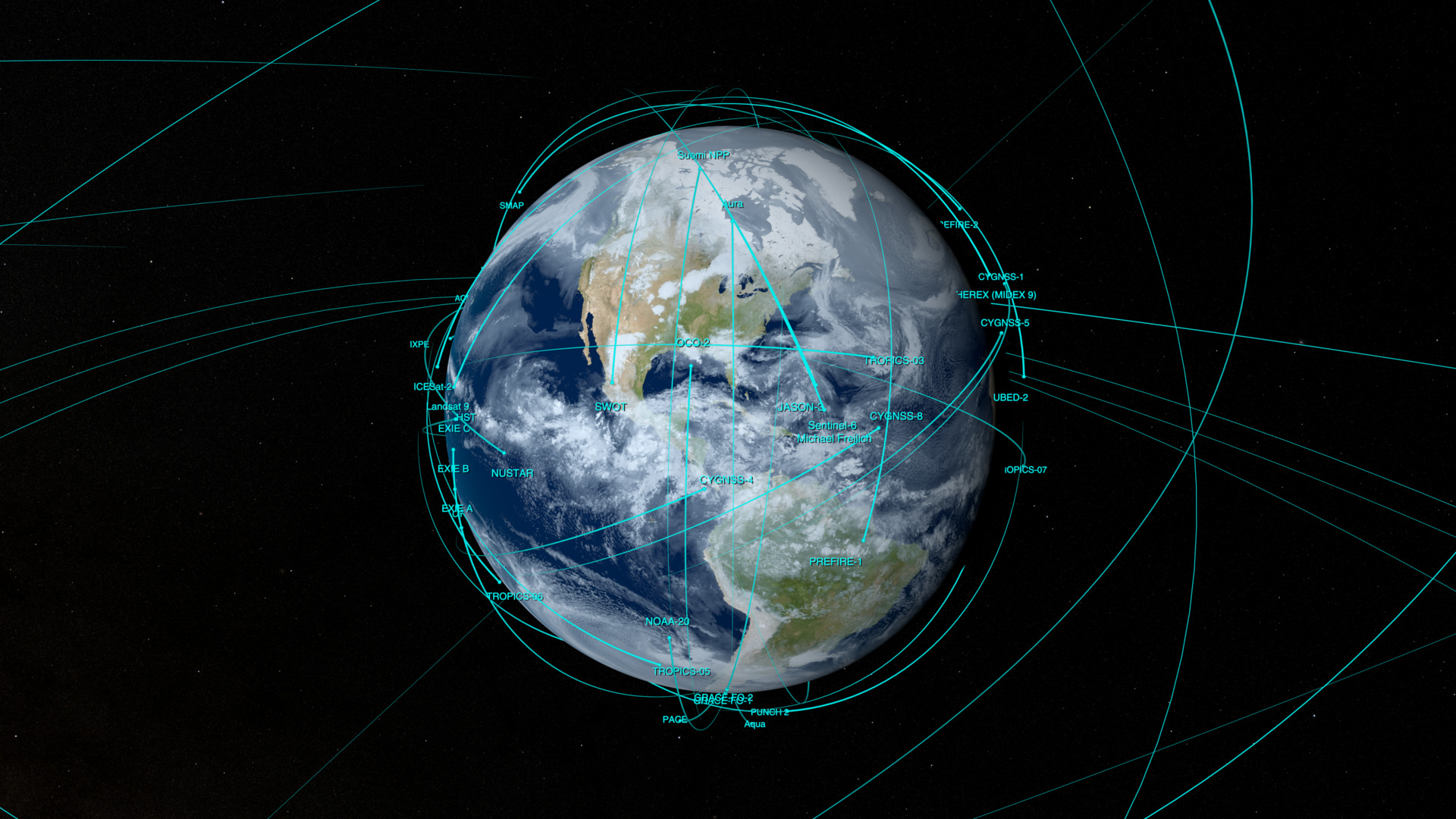
Image Caption

NASA’s fleet of Earth-observing satellites collects vast amounts of information about Earth’s atmosphere, land, oceans, and ice. For more than three decades, ECS helped archive and distribute data from many NASA Earth science missions. Credit: NASA’s Scientific Visualization Studio; visualization by Kel Elkins.

For more than three decades, a software system known as the NASA Earth Observing System Data and Information System (EOSDIS) Core System (ECS) quietly powered much of that work. ECS was the software-based data management system used to ingest, archive, manage, and distribute Earth science data at several NASA archive centers. If NASA's Earth science data enterprise were a transportation network, ECS would be part warehouse, part distribution hub, and part air traffic control tower, helping move information from satellites to archives and into the hands of the people who needed it.  

Operating largely behind the scenes, ECS supported Earth science data handling at the National Snow and Ice Data Center Distributed Active Archive Center (NSIDC DAAC), the Land Processes DAAC (LP DAAC), and the Atmospheric Science Data Center (ASDC). At each center, ECS served as a critical foundation for delivering satellite observations to users around the world.

Over the past few years, those centers have transitioned away from ECS toward cloud-based storage, representing one of the largest infrastructure changes in the history of NASA Earth science data systems. Teams migrated decades of data, services, and workflows into the Earthdata Cloud while maintaining uninterrupted access for tens of thousands of users. The effort required rebuilding systems that had become deeply woven into daily operations, all while continuing to support the scientists, educators, decision-makers, application developers, and others who rely on Earth science data. 

For the teams involved, the milestone represents far more than the retirement of a legacy technology. It marks a major step in a complex modernization effort that will likely shape how Earth science data is accessed and used for decades to come.

Image
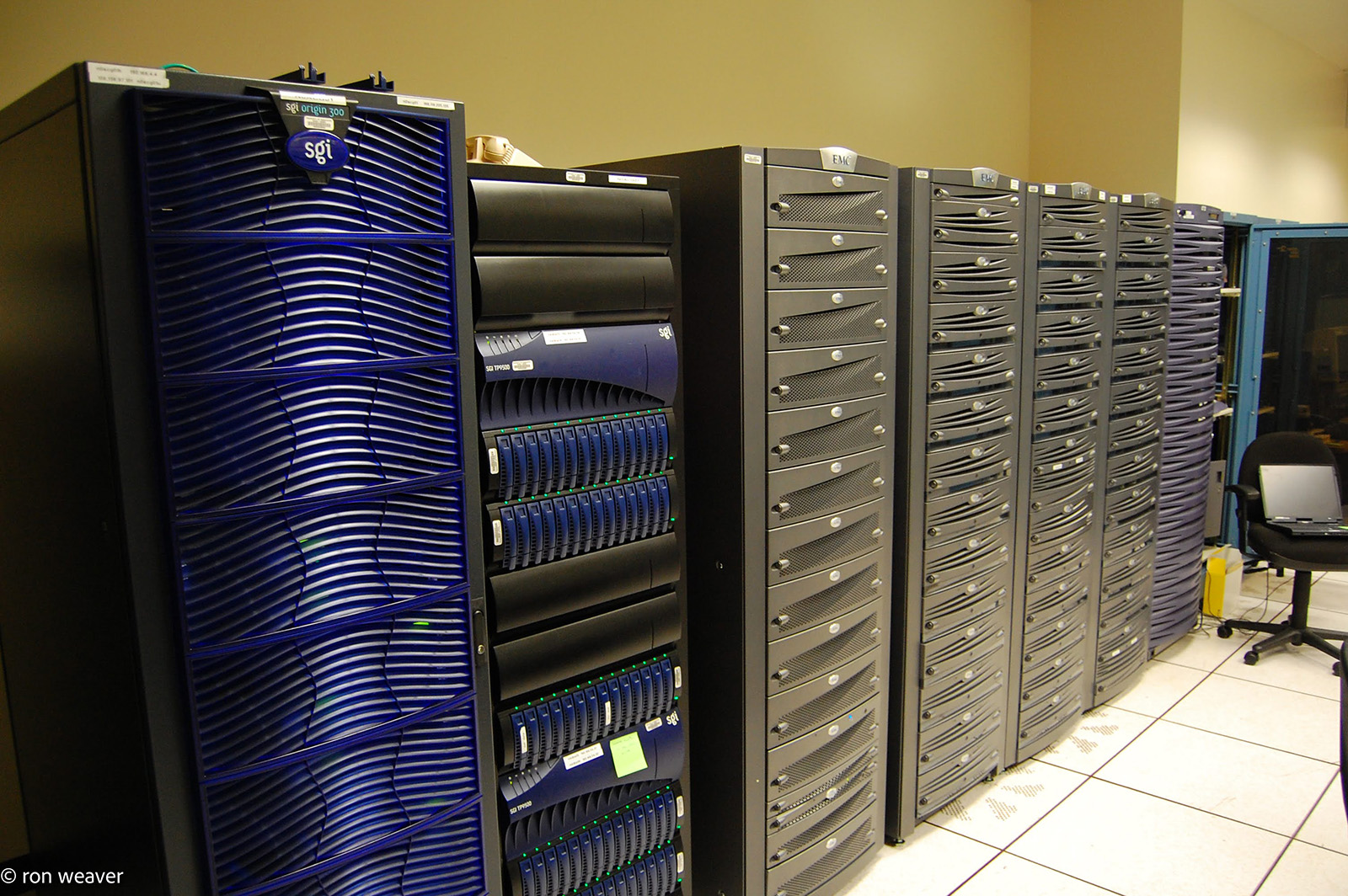
Image Caption

NSIDC’s on-premises data center housed computing infrastructure supporting DAAC operations during the ECS era. Maintaining these systems required substantial local hardware, storage, and supporting infrastructure. Credit: National Snow and Ice Data Center.

Built For One Era, Rebuilding for Another 

At NSIDC DAAC, ECS touched virtually every aspect of operations. The system supported critical functions including data ingest, archive management, discovery, access, and distribution. Similar stories can be found across the Earthdata enterprise. At LP DAAC, ECS formed the data backbone for major missions including Landsat 7, the Moderate Resolution Imaging Spectroradiometer (MODIS), and the Advanced Spaceborne Thermal Emission and Reflection Radiometer (ASTER). ASDC also operated ECS for a portion of its data operations. 

Yet the same science growth fueled by ECS’s success also revealed its limitations. Users increasingly wanted to work with larger datasets, to combine information across disciplines, and to access data more quickly and efficiently. Meeting those expectations required infrastructure that could scale with growing data volumes, support cloud-native analysis, and provide rapid, direct access to data.

The challenge of moving out of ECS and into the cloud was not simply technical. It was organizational. 

The services that scientists, educators, decision-makers, and application developers relied on every day could not simply be paused while the work was underway. Teams had to migrate data, redesign workflows, validate archives, re-train staff, coordinate with mission partners, and learn entirely new cloud-based technologies while ensuring uninterrupted service on the old systems. They had to do this in concert with other DAACs, mission teams, developers, and infrastructure providers in multiple states and time zones while still supporting active science operations.

Image
Image Caption

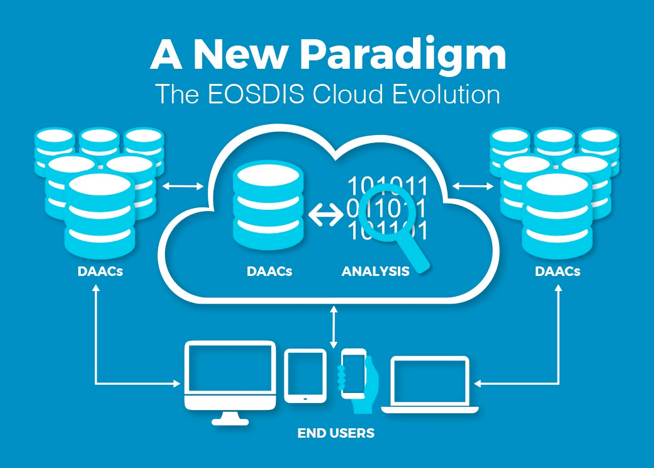
Transitioning from ECS to the Earthdata Cloud required the DAACs that operated ECS to migrate decades of data and workflows while maintaining uninterrupted service for users around the world. Credit: NASA Earthdata/NASA Openscapes.

At ASDC, the team focused on minimizing the impact on users as systems moved to Earthdata Cloud. “My primary goal during the transition was ensuring minimal disruption to the user experience,” said Hazem Mahmoud, ASDC DAAC project scientist. Clear communication with data producers and users, he said, was essential as teams navigated unfamiliar cloud-based infrastructure.

At LP DAAC, teams migrated more than 20 petabytes of data into the cloud while continuing to support an ever-expanding portfolio of missions and users. Teams reconciled cloud archives with existing systems, preserved metadata integrity, and maintained operational continuity throughout the transition.

At NSIDC DAAC, where ECS was woven into nearly every operation, the transition required teams to rethink how systems were built and managed, while navigating the many dependencies of a mature operational system. "The scale of rebuilding it with something new was huge," said Amanda Leon, manager of NSIDC DAAC.

Image
Image Caption

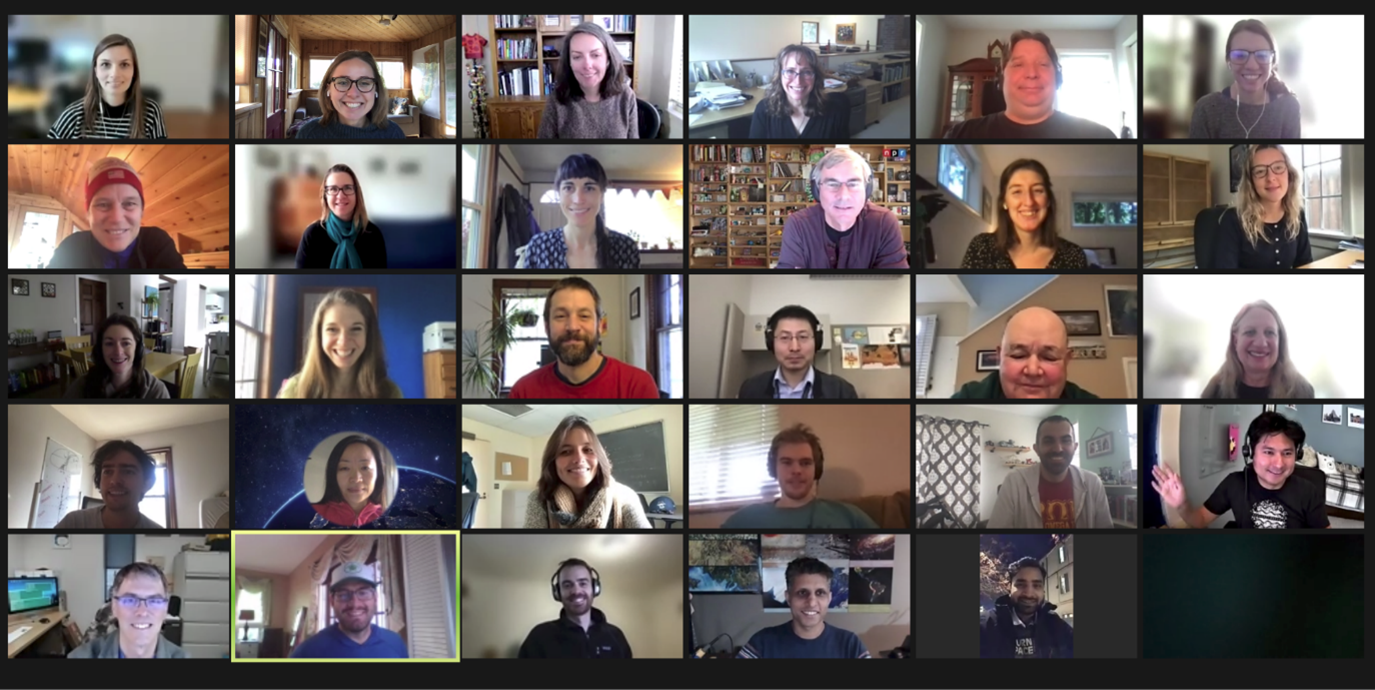
NASA Distributed Active Archive Center mentors and external science research teams meet virtually as part of NASA Openscapes, which supports science teams transitioning to cloud-based workflows. Collaboration across DAACs and science teams has been an important part of NASA’s broader cloud transition. Credit: NASA.

A Shared Effort Across NASA

The success of the migration depended not only on technology. Delivering Earth science data at NASA's scale is a team sport, and the ECS-to-cloud effort made it clear just how interconnected NASA’s archive centers have become. 

NASA’s Earth Science Data and Information System (ESDIS), NSIDC DAAC, LP DAAC, ASDC, and contractor teams—engineers, data managers, system administrators, user support specialists, developers, scientists, project managers, and communications professionals—worked closely together, sharing solutions, lessons learned, and technical expertise.

Although each archive center manages different types of Earth science data, the ECS DAACs spent decades solving many of the same challenges together, noted Chris Torbert, former LP DAAC Project Manager. The archive centers have "a special bond because of our common goals and system," he said, and that foundation of trust and cooperation proved invaluable. Teams frequently shared lessons learned, tools, and solutions such that what began as a shared reliance on ECS evolved into a shared effort to move beyond it.

For example, when ICESat-2, MODIS, and VIIRS data ingest streams transitioned from GridFTP and SFTP to the Science Data Transfer Protocol (SDTP), operators and developers from the three DAACs worked together to test and operationalize the new protocol.
Image
Image Caption

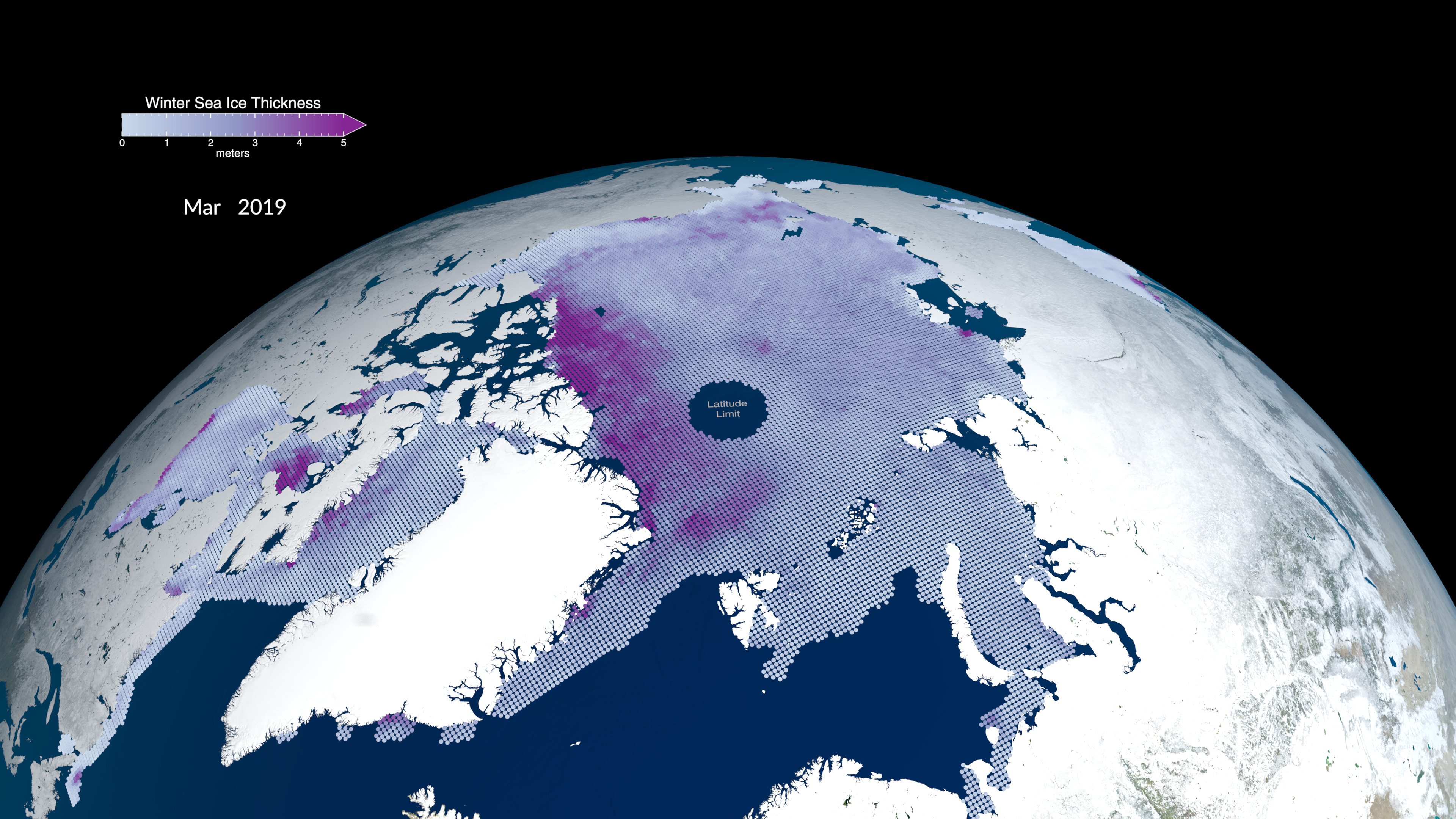
ICESat-2 observations show variations in Arctic winter sea ice thickness. ICESat-2 data are distributed by NSIDC DAAC through NASA Earthdata Cloud, where users can access them alongside other cloud-hosted Earth science data. Credit: NASA’s Scientific Visualization Studio; visualization by Kel Elkins. 

What Users Gain From the Cloud

One of the immediate benefits of moving to the Earthdata Cloud is improved reliability. Users accustomed to scheduled maintenance windows under ECS are finding that data and services are available more consistently than before.

"In the cloud, we rarely have downtime anymore," said Christopher Bond, NSIDC systems engineer. "Data is available to the user all week." 

Cole Krehbiel, project scientist for LP DAAC, similarly pointed to the disappearance of the Wednesday morning outages that had long been associated with ECS operations.

The move to the Earthdata Cloud also has changed how people work with data. Imagine an emergency manager monitoring wildfire conditions across multiple states. Instead of downloading and sorting through large volumes of satellite data from multiple sources, the responder can increasingly access information through shared cloud-based tools and services. The water manager assessing drought conditions, the educator building classroom lessons, the scientist studying decades of environmental change: all benefit from faster, more flexible access to information.

With Earthdata Cloud, users now spend less time moving data and more time working with it. Developers can build their own tools and applications on top of cloud-hosted data rather than waiting for mission-specific tools to be developed. Users can access data through more consistent interfaces across NASA's Earth science archives.

Image
Image Caption

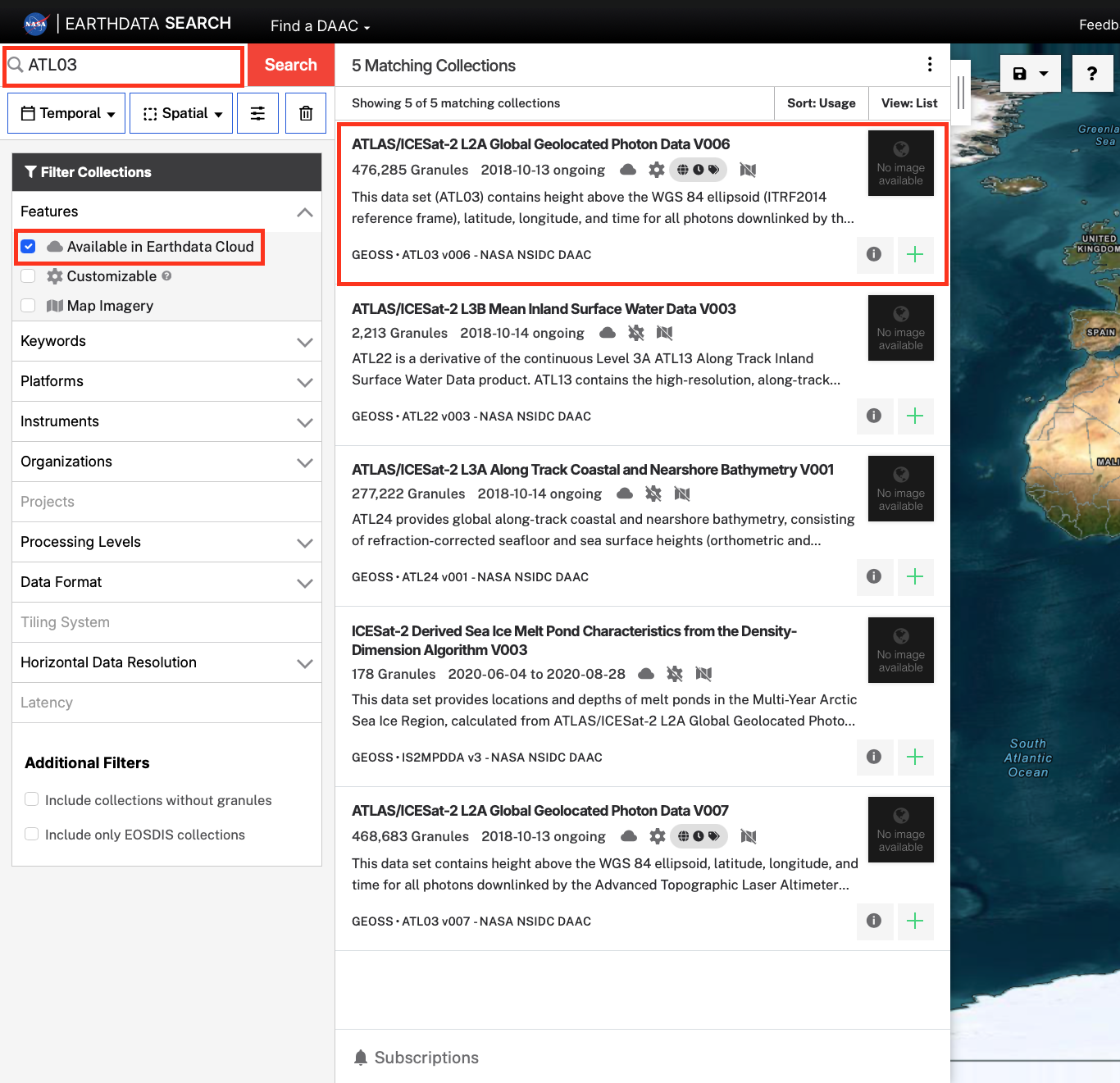
NASA Earthdata Search lets users move from discovering a cloud-hosted data collection to viewing individual granules spatially and temporally. Here, ICESat-2 photon data distributed by NSIDC DAAC are displayed by granule, with their locations shown on the map and timeline. Credit: NASA Earthdata/NSIDC DAAC.

Researchers are already seeing the benefits. 

Zach Fair, a researcher who uses NASA's CryoCloud platform, said cloud-based tools have accelerated both data discovery and analysis. In a recent study of snow depth observations collected during NASA's SnowEx campaigns, Fair and colleagues aggregated multiple datasets— including ICESat-2 observations, airborne lidar measurements, and weather station records—directly through cloud-based services, allowing the team to spend more time on analysis. He also noted that shared cloud environments have strengthened collaboration and reproducibility, particularly during community hackweeks, where participants work from common datasets, tutorials, and workflows.

"Cloud-based systems such as CryoCloud and earthaccess are what allowed me to jumpstart my research and gain a better understanding of package management and efficient coding," Fair said. 

That kind of cross-dataset work reflects what Leon described as increasingly "permeable" boundaries between NASA’s data collections and disciplines, opening new opportunities for discovery, analysis, and collaboration.

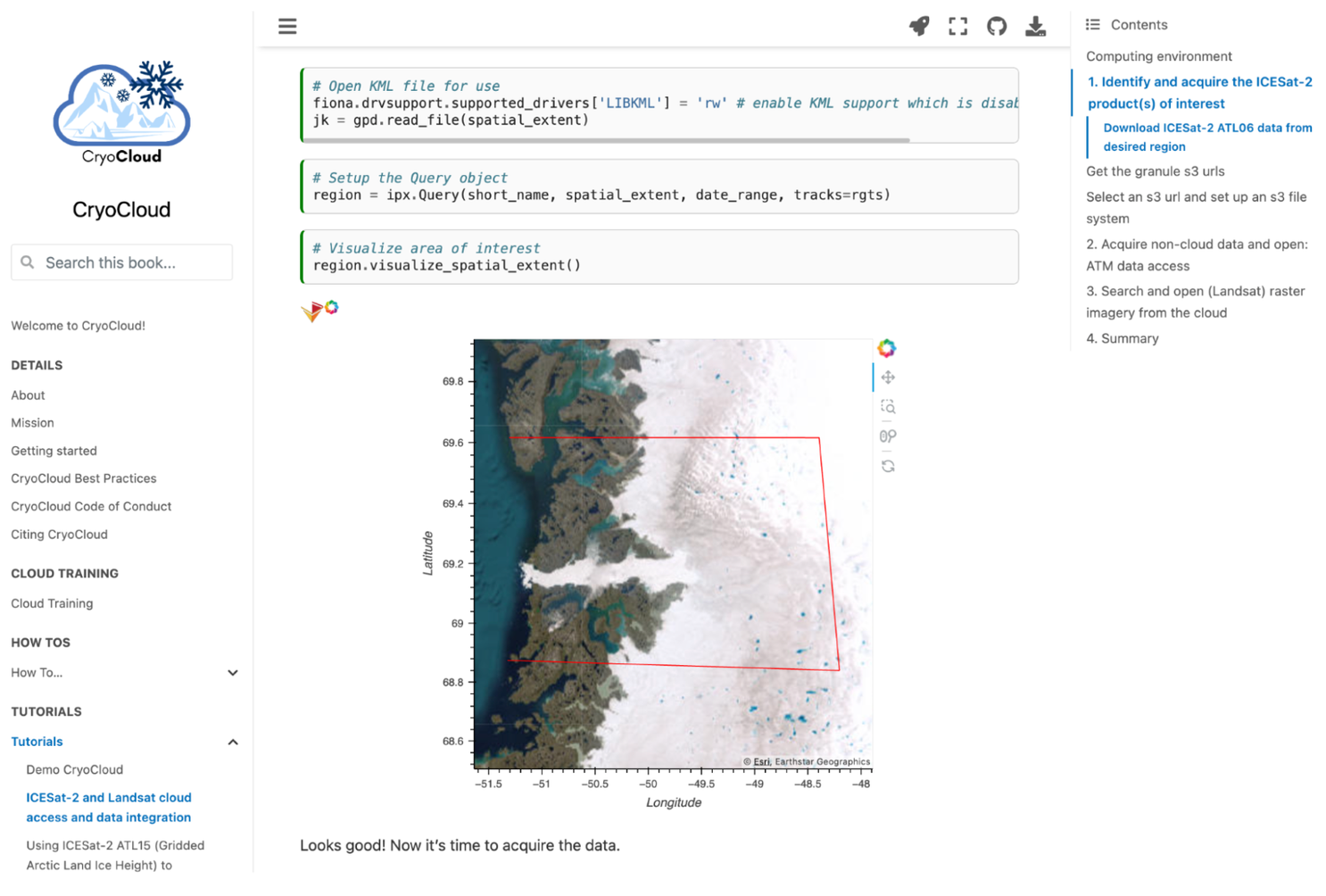
Image
Image Caption

CryoCloud provides a cloud-based computing environment where researchers can work directly with NASA Earth science data. This example uses earthaccess to open cloud-hosted ICESat-2 land ice height data and visualize elevations over the Juneau Icefield without first downloading the data locally. Credit: CryoCloud; tutorial based on work by Luis Lopez, Mikala Beig, Andy Barrett, and Jennifer Roebuck, NSIDC.

The transition from ECS to the cloud is also helping create a more unified experience. Rather than navigating a collection of independent systems, Earthdata users increasingly encounter common tools, services, and access methods across NASA's archive centers.  

"The move opens up immense opportunities for scalability and efficiency that we are still exploring," Mahmoud said. "Features like simplified aggregation, re-gridding, visualization, and the ability to analyze data directly in the cloud demonstrate how modernization continues to benefit users and accelerate scientific progress."  

The full impact of the transition will not be measured by what users can do today, but by what becomes possible in the years ahead.  

"I believe it will be future users with new ideas on how to exploit this data that will benefit most," Torbert added. "With the continuing evolution of access methods, the data will become increasingly valuable."

Details

Last Updated

Oct. 27, 2026

Published

Oct. 26, 2026