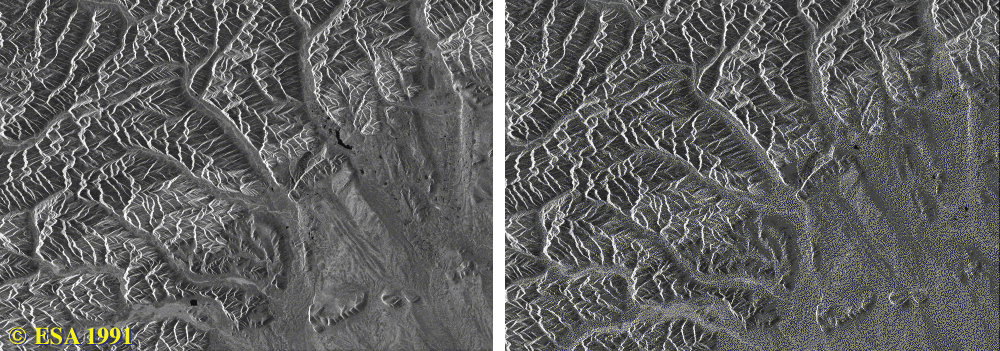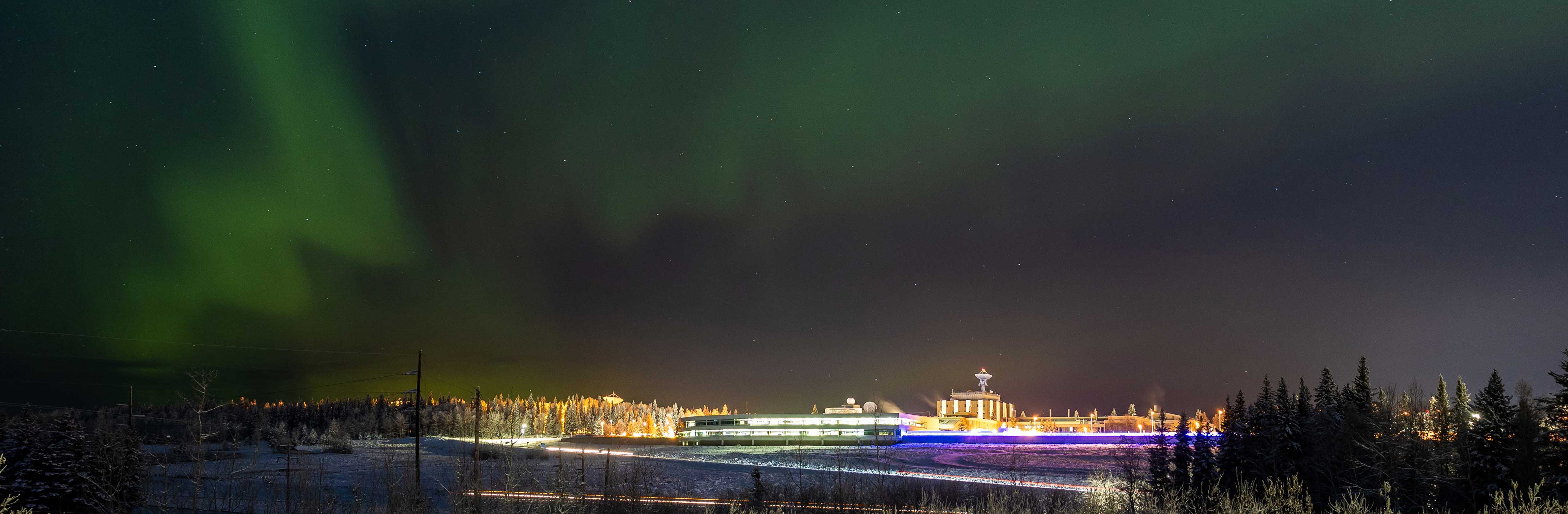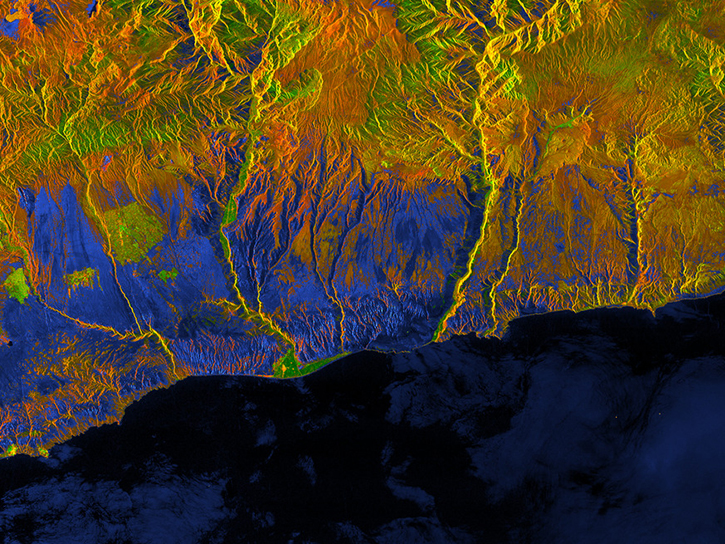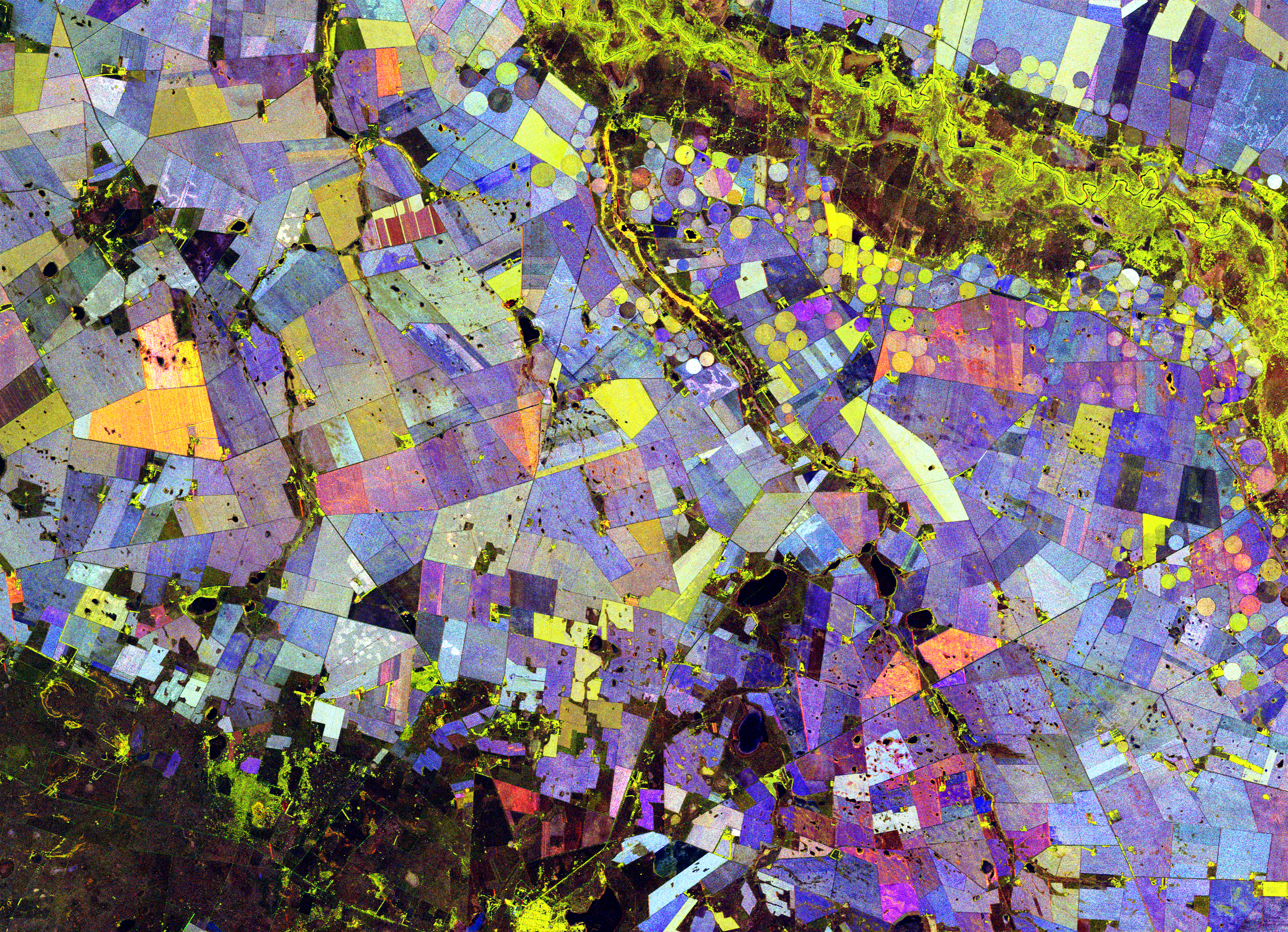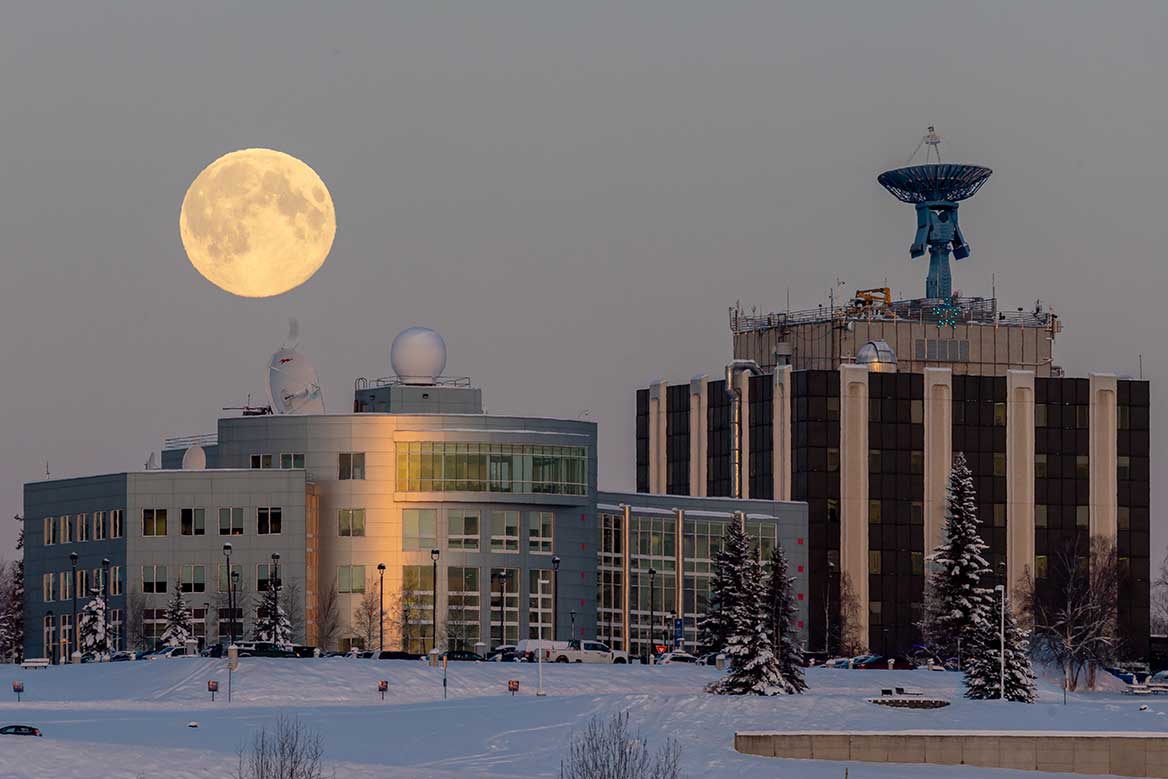
In August 1991, an antenna on the University of Alaska–Fairbanks campus tracked the European Remote-Sensing Satellite 1 (ERS-1) as it passed over interior Alaska. During that pass, the Alaska Satellite Facility (ASF) received its first satellite data downlink. ERS-1 had launched just a few weeks earlier. The European Space Agency satellite carried a C-band synthetic aperture radar (SAR) that could image Earth's surface through clouds and darkness, making it especially useful for observing Alaska and the polar regions.
At the time, ASF was known as the Alaska SAR Facility, a new ground station built to receive synthetic aperture radar data from satellites passing over Fairbanks.
August 2026 marks 35 years since that first downlink. In the years between ERS-1 and today's missions, the facility has supported a long list of satellites, expanded its ground station, and built an archive that now holds decades of Earth observations.
Some of the satellites that collected those observations have been gone for years. Their data are still being used. And now NISAR is adding to that record.