Dust/Ash/Smoke Data Access and Tools

Dust, ash, and smoke data from NASA range from aerosol indexes to fire and thermal anomaly detections. Our datasets and tools help users find and integrate the data they need to track airborne particles, locate their sources, determine their downstream effects and other important facts.

Commonly Used Dust Score Data at a Glance

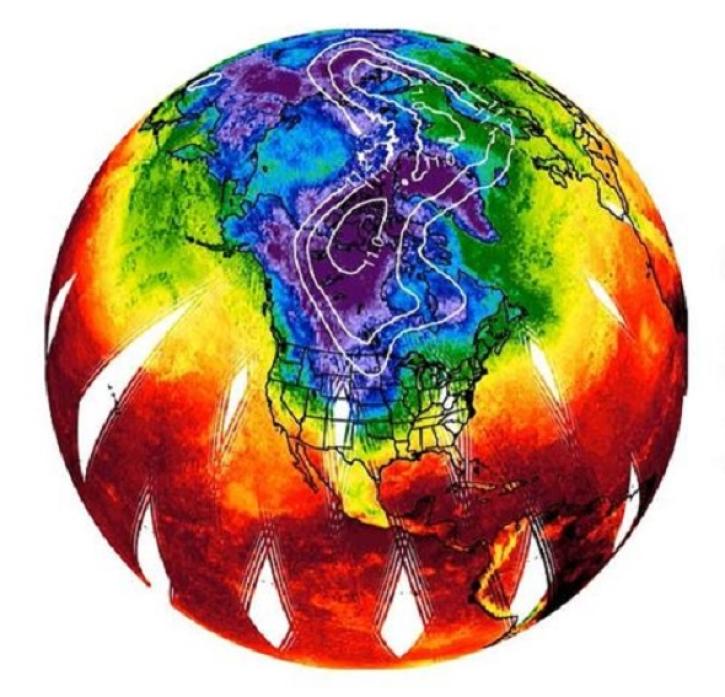
Very large dust storms lasting hours or days can be observed and tracked using satellite imagery. The amount of dust transported by these storms can be quantified using the Dust Score, which is calculated from data acquired by the Atmospheric Infrared Sounder (AIRS) instrument aboard NASA’s Aqua satellite. The AIRS Dust Score indicates the level of atmospheric aerosols in Earth’s atmosphere over the ocean. Dust is probable when the score is above 380, and higher scores indicate more certainty that dust is present. The numerical scale is a qualitative representation of the presence of dust in the atmosphere, an indication of where large dust storms may form, and the areas that may be affected.

An asterisk (*) next to an entry indicates that near real-time (NRT) data products are available through NASA's Land, Atmosphere Near real-time Capability for EOS (LANCE). While not intended for scientific research, NRT data are good resources for monitoring ongoing or time-critical events. For more information about the differences between NRT and Standard Science Products, please see Near Real-Time versus Standard Products.

Spatial ResolutionSpatial CoverageTemporal ResolutionTemporal CoverageSpectral ResolutionSatellite/ PlatformName (Sensor, Model, etc.)Observation, Model, or ReanalysisFile Format
50 kmGlobal6 min, hourly, 3-hourly, 6-hourly2016-present for NRT, 2002 for other2,378 infrared channels in the 3.74 to 15.4 micron spectral rangeAqua*AIRSObservationHDF-EOS

Dust/Ash/Smoke Datasets

Dataset Version Sort ascending Platforms Instruments Temporal Extent Spatial Extent Spatial Resolution Data Format
DSCOVR EPIC Level 2 EPICAERUV-Fast 01 DSCOVR EPIC 2020-09-01 to Present HDF-EOS5
SBUV2/NOAA-11 Level 2 Daily Ozone Profile and Total Column from CD-ROM V008 (SBUV2N11O3) at GES DISC 008 NOAA-11 SBUV/2 1988-12-01 to 2001-03-27

N: 90 S: -90 E: 180 W: -180

SBUV2/NOAA-16 Level 2 Daily Ozone Profile and Total Column from CD-ROM V008 (SBUV2N16O3) at GES DISC 008 NOAA-16 SBUV/2 2000-10-03 to 2003-12-31

N: 90 S: -90 E: 180 W: -180

Shuttle SBUV (SSBUV) Level 2 Ozone Profile and Total Column, Aerosol Index, and UV-Reflectivity V008 (SSBUVO3) at GES DISC 008 STS-34, STS-41, STS-43, STS-45, STS-56, STS-62, STS-66, STS-72 SSBUV 1996-01-12 to 1996-01-18

N: 23 S: -29 E: 180 W: -180

,

N: 58 S: -57 E: 180 W: -180

,

N: 39 S: -28 E: 180 W: -180

,

N: 56 S: -57 E: 180 W: -180

,

N: 57 S: -36 E: 180 W: -180

,

N: 29 S: -25 E: 180 W: -180

,

N: 28 S: -29 E: 180 W: -180

,

N: 34 S: -7 E: 180 W: -180

SBUV2/NOAA-9 Level 2 Daily Ozone Profile and Total Column from CD-ROM V008 (SBUV2N09O3) at GES DISC 008 NOAA-9 SBUV/2 1985-02-02 to 1998-02-19

N: 90 S: -90 E: 180 W: -180

SBUV/Nimbus-7 Level 2 Daily Ozone Profile and Total Column from CD-ROM V008 (SBUVN7O3) at GES DISC 008 Nimbus-7 SBUV 1978-10-31 to 1990-06-21

N: 90 S: -90 E: 180 W: -180

AIRS/Aqua L1B Near Real Time (NRT) Infrared (IR) geolocated and calibrated radiances V005 (AIRIBRAD_NRT) at GES DISC 005 Aqua AIRS 2015-12-15 to Present

N: 90 S: -90 E: 180 W: -180

AIRS/Aqua L1B Infrared (IR) geolocated and calibrated radiances V005 (AIRIBRAD) at GES DISC 005 Aqua AIRS 2002-08-30 to Present

N: 90 S: -90 E: 180 W: -180

AIRS/Aqua L1B Near Real Time (NRT) Infrared (IR) geolocated and calibrated radiances in BUFR format V005 (AIRIBRAD_NRT_BUFR) at GES DISC 005 Aqua AIRS 2015-12-15 to Present

N: 90 S: -90 E: 180 W: -180

AIRS/Aqua L1B Near Real Time (NRT) Infrared (IR) geolocated and calibrated radiances V005 (AIRIBRAD_NRT) at GES DISC 005 Aqua AIRS 2015-12-15 to Present

N: 90 S: -90 E: 180 W: -180

SHOWING 10 OF 121

Dust/Ash/Smoke Data Tools

No Results

Frequently Asked Questions

Earthdata Forum

Our online forum provides a space for users to browse thousands of FAQs about research needs, data, and data applications. You can also submit new questions for our experts to answer.

Submit Questions to Earthdata Forumand View Expert Responses

Earthdata
Forum