Access a range of datasets and data tools to further your ocean wind research.
Wind is atmospheric motion relative to Earth's surface. Ocean winds influence waves, nutrient circulation, storm systems, and atmospheric particle transport, making wind measurement crucial for climate forecasting, fisheries management, and shipping.
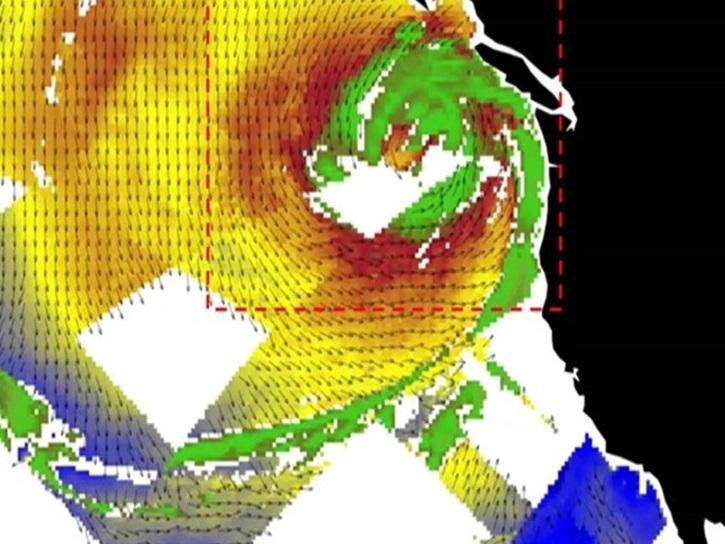
Traditionally measured with anemometers (small turbine-based instruments), ocean winds are now monitored by satellite systems like the Cyclone Global Navigation System (CYGNSS). Rather than measuring air movement directly, CYGNSS uses Doppler radar to track wind-generated capillary waves—tiny ocean surface ripples that indicate wind speed.
These observations enhance climate and weather models, support severe weather preparation, track long-term climate changes, and aid maritime navigation.
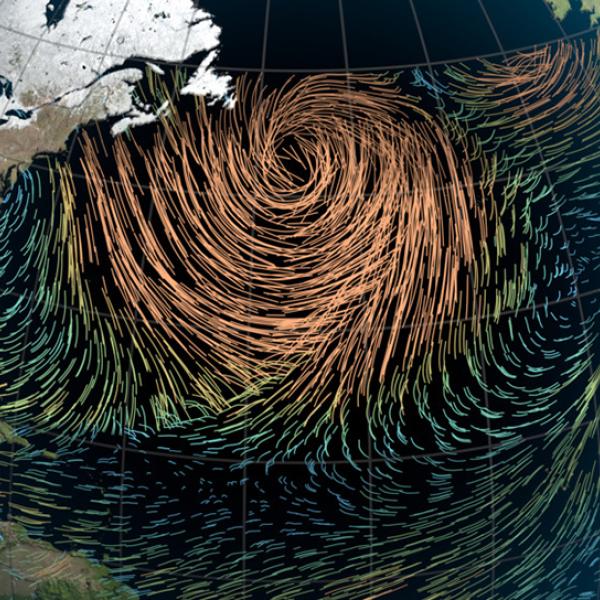
Animation of daily wind speed measurements from the Compact Ocean Wind Vector Radiometer (COWVR) instrument during its first year of operation. COWVR was developed at the Jet Propulsion Laboratory and is installed on the International Space Station, where it has been collecting measurements since January 2022. COWVR aims to demonstrate new low-cost microwave sensor technologies for weather applications. This animation uses the first public release of the data which includes wind speed, wind direction, and moisture parameters. Credit: PO.DAAC
Learn How to Use Ocean Winds Data
Join Our Community of NASA Data Users
While NASA data are openly available without restriction, an Earthdata Login is required to download data and to use some tools with full functionality.
Learn About the Benefits of Earthdata LoginFrequently Asked Questions
Earthdata Forum
Our online forum provides a space for users to browse thousands of FAQs about research needs, data, and data applications. You can also submit new questions for our experts to answer.
Submit Questions to Earthdata Forumand View Expert Responses