Delivery of Suomi National Polar-orbiting Partnership (Suomi NPP) satellite data products will cease on November 1, 2026. Data users should transition now to alternative products from NOAA-21 and NOAA-20.
Suomi NPP data announcement
Terra Resources
Terra Documents
| Name Sort descending | Description | File Type | Date Published | |
|---|---|---|---|---|
| Data Product Specification for the MISR Cloud Motion Vector Product | Data Product Specification for the MISR Cloud Motion Vector Product | PDF (972.92 kb) | Sept. 2, 2014 | |
| Data Product Specification for the MISR Cloud Top Height-Optical Depth Product | Data Product Specification for the MISR Cloud Top Height-Optical Depth Product | PDF (5.7 mb) | Oct. 3, 2019 | |
| Data Product Specification for the MISR Level 2 Aerosol Product | Data Product Specification for the MISR Level 2 Aerosol Product | PDF (16.28 mb) | Jan. 25, 0218 | |
| Data Product Specification for the MISR Level 2 Cloud Product | Data Product Specification for the MISR Level 2 Cloud Product | PDF (1.25 mb) | April 26, 2012 | |
| Data Product Specification for the MISR Level 2 Land Surface Product | Data Product Specification for the MISR Level 2 Land Surface Product | PDF (13.81 mb) | Jan. 25, 2018 | |
| Data Product Specification for the MISR Level 3 Component Global Land Surface Product | Data Product Specification for the MISR Level 3 Component Global Land Surface Product | PDF (7.8 mb) | Jan. 25, 2018 | |
| Data Product Specification for the MISR Level 3 Joint Aerosol Product | Data Product Specification for the MISR Level 3 Joint Aerosol Product | PDF (1004.73 kb) | Oct. 30, 2012 | |
| Data Product Specifications | Detailed file format descriptions for various MISR data products. | PDF (970.54 kb) | July 25, 2024 | |
| Data Product Specifications | Data Product Specifications for all MISR products. | PDF (33.98 mb) | Nov. 29, 2007 | |
| Data Products Specifications | Data Products Specifications | PDF (27.7 mb) | April 15, 2011 | |
| Data Products Specifications for the MISR Level 2 Classifiers Product | Data Products Specifications for the MISR Level 2 Classifiers Product | PDF (1.01 mb) | June 25, 2014 | |
| Data Products Specifications for the MISR Cloud Fraction by Altitude Product | The DPS_CFbA.pdf is an earlier version of the JPL Data Products Specification document (JPL D-92238, dated September 4, 2014) that describes the format and data fields of the MISR Level 3 Cloud Fraction by Altitude (CFbA) product, which reports the frequency of cloud occurrence in 500 m cloud top height bins on a global 0.5° × 0.5° grid, including additional fields such as nearest-neighbor interpolated cloud fractions and their standard deviations. | PDF (386.86 kb) | Sept. 4, 2014 | |
| Data Products Specifications for the MISR Cloud Fraction by Altitude Product Revision B | The DPS-CFbA.cmm10_24July2019.pdf is a Data Products Specification document from JPL that describes the format and contents of the MISR Level 3 Cloud Fraction by Altitude (CFbA) product, which provides the frequency of cloud occurrence partitioned into cloud top height bins (at 500 m vertical resolution) on a global 0.5° × 0.5° latitude/longitude grid at daily, monthly, quarterly, and yearly temporal scales, using cloud top heights retrieved by the MISR stereoscopic technique. | PDF (4.87 mb) | July 24, 2019 | |
| Data Quality Statement for the MISR Level 2 Aerosol Produc | Data Quality Statement for the MISR Level 2 Aerosol Produc | PDF (7.66 mb) | Feb. 7, 2018 | |
| Data Quality Statement for the MISR Level 2 Aerosol Product | PDF (2.17 mb) | April 30, 2021 | ||
| Development of GHRSST L2Pcore for MODIS (PDF) | Development of GHRSST L2Pcore for MODIS | PDF (1.19 mb) | March 31, 2006 | |
| Development of GHRSST L2Pcore for MODIS (PPT) | Development of GHRSST L2Pcore for MODIS | PPT (1.36 mb) | Nov. 16, 2005 | |
| Discover and Access NASA's Near Real-Time Global Flood Products | This presentation provides an introduction to NASA's near real-time global flood products available through NASA's Land, Atmosphere Near real-time Capability for Earth observation. Information about how to discover, access, and use these NRT products is also provided. | PDF (16.77 mb) | Sept. 17, 2025 | |
| Global Processing of MODIS for Operational SST, Ocean Color, and GHRSST (PDF) | Global Processing of MODIS for Operational SST, Ocean Color, and GHRSST | PDF (1.01 mb) | May 30, 2007 | |
| Global Processing of MODIS for Operational SST, Ocean Color, and GHRSST (PPT) | Global Processing of MODIS for Operational SST, Ocean Color, and GHRSST | PPT (2.73 mb) | Dec. 1, 2005 | |
| GOMACCS Local Mode Sites | Path and Block sites for GOMACCS locations Cameron LA, Gulf Shelf E, Gulf Shelf W, Houston, and La Copita | PDF (90.37 kb) | March 24, 2021 | |
| High Resolution MODIS Ocean Color | High Resolution MODIS Ocean Color | PPT (1.63 mb) | April 5, 2006 | |
| Maturity Level Definitions | Maturity Level Definitions | PDF (62.28 kb) | March 25, 2021 | |
| MISR Aerosol Climatology Product Quality Statement | Here is a description of the document: This document is a Quality Statement for the MISR Aerosol Climatology Product (ACP), dated December 1, 2007, authored by Ralph Kahn and Michael Bull. It describes the ACP, which is a key input to the MISR (Multi-angle Imaging SpectroRadiometer) aerosol retrieval algorithm. The ACP defines mixtures of up to three component aerosol types—characterized by particle size (small, medium, large), single-scattering albedo (dirty, clean), and shape (spherical, nonspherical)—that are compared against observed radiances to retrieve aerosol optical depth. The product consists of three parts: the Aerosol Physical and Optical Properties (APOP) file describing individual aerosol components, the Aerosol Mixture file specifying component mixtures, and the Aerosol Clim-Likely file providing a global monthly climatology of aerosol amount and type. The statement highlights major changes, known problems, and limitations in the product version, including updates to dust models, revised particle size thresholds, and the removal of fields related to particle hydration state. |
PDF (130.58 kb) | Dec. 1, 2007 | |
| MISR ARCTAS Images | This document is a daily image catalog for the MISR (Multi-angle Imaging SpectroRadiometer) instrument in support of the ARCTAS (Arctic Research of the Composition of the Troposphere from Aircraft and Satellites) campaign during 2008. It is organized as a tabular index of MISR observations over several Arctic and sub-Arctic sites—including Cold Lake, Great Slave Lake, Fairbanks, and NSA Barrow—spanning from April through July 2008. For each observation date, the document lists the orbit number, orbital path, and target site, along with links to downloadable imagery in JPEG and TIFF formats across multiple data products: standard-resolution nadir and 70° aft camera images, local-mode full-resolution nadir and aft camera images, aerosol optical depth maps at 17.6 km resolution, stereo height retrievals at 1.1 km resolution, and composite images. The catalog also notes where data were unavailable or where no local mode acquisitions occurred for a given overpass. | PDF (923.47 kb) | Aug. 20, 2024 |
Terra Learning Resources
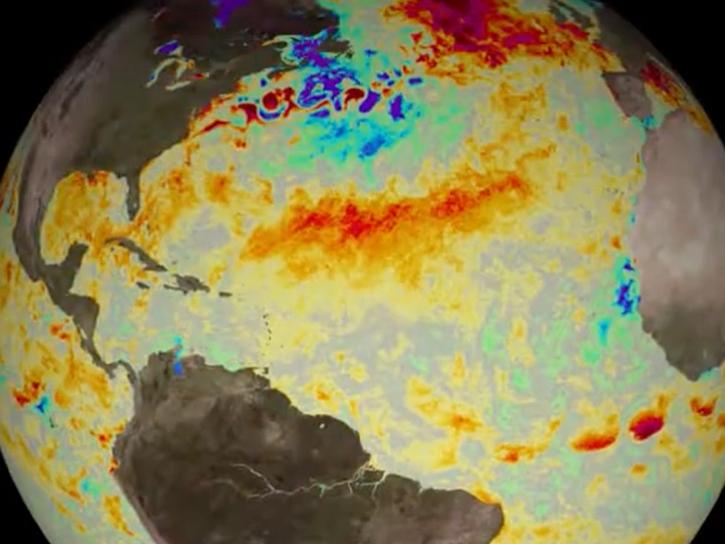
Evaluating the evolution of ocean response to the 2019 Atlantic tropical cyclones.
Data in Action
April 2, 2020

This ARSET training focuses on how to apply the UN Biodiversity Lab and NASA satellite data to conservation and SDG goals.
Training
March 24 - April 7, 2020
Cette formation ARSET est axée sur l'utilisation des données du Laboratoire de biodiversité des Nations Unies et des données satellitaires de la NASA.
Training
March 24 - April 7, 2020
Esta capacitación de ARSET se centra en cómo aplicar los datos del UN Biodiversity Lab y satélites de la NASA a las metas de los ODS.
Training
March 24 - April 7, 2020
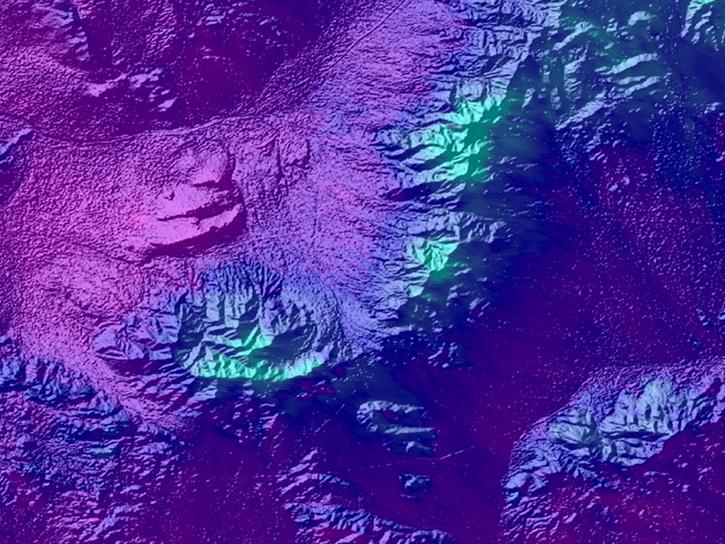
See how a DEVELOP project team employed Earth observation data to examine and predict the location of bighorn sheep habitat in the Mojave Desert.
Data in Action
Feb. 24, 2020
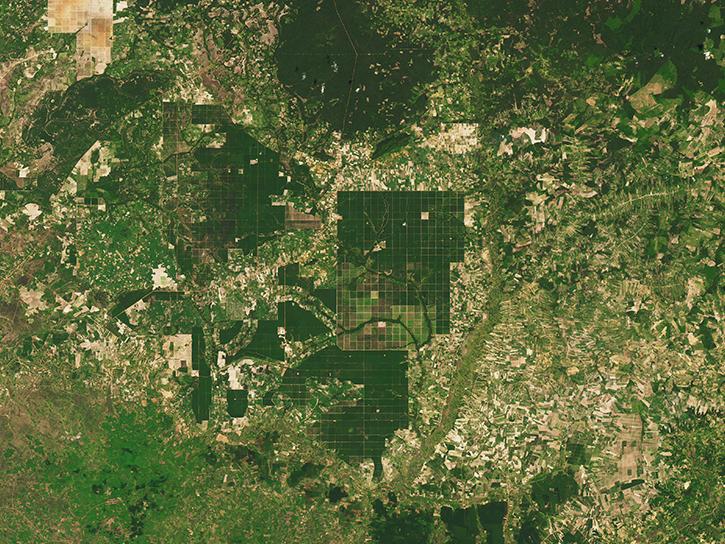
See how NASA's Land Processes Distributed Active Archive Center (LP DAAC) uses land cover and vegetation continuous fields data to highlight land cover changes.
StoryMap
Jan. 16, 2020
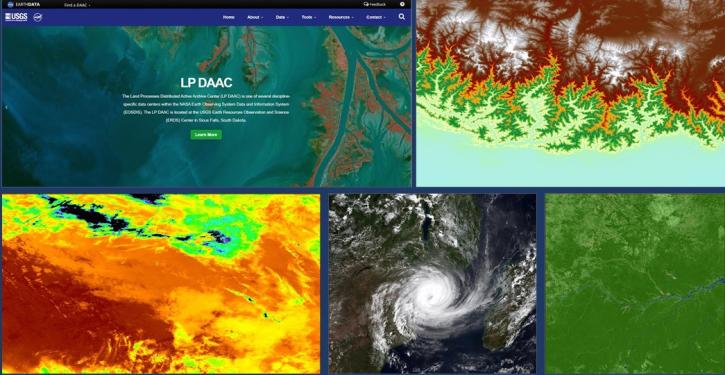
During this webinar we will provide answers to commonly asked questions about NASA land processes data, services and tools, and show you how to navigate the new LP DAAC website to discover data resources.
Webinar
Jan. 15, 2020
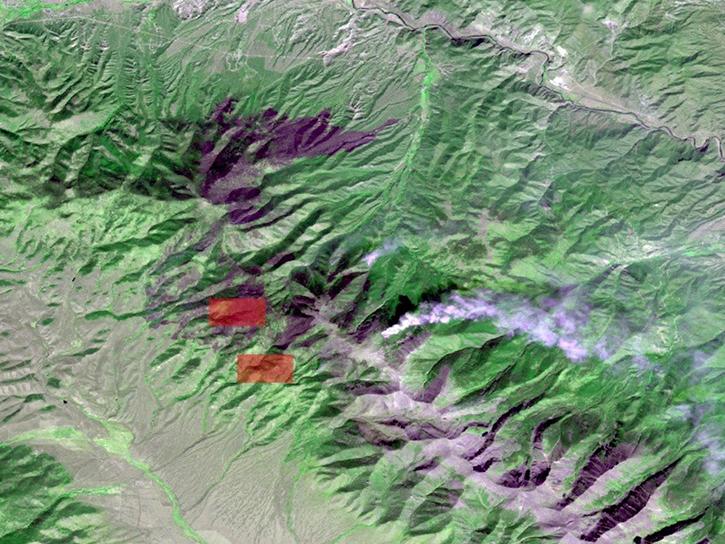
Explore how NASA remote sensing data and satellite imagery are used to monitor the evolution of fires.
Data in Action
Dec. 2, 2019
SHOWING 8 OF 240
Terra News
View All News
Filters

Successive heatwaves and drought are fueling wildfires in France and the rest of Europe.
Worldview Image of the Week
July 24, 2026

NASA's Fire Information for Resource Management System now provides swath outlines, showing the extent of Earth's surface within view of a sensor.
Blog
June 25, 2026
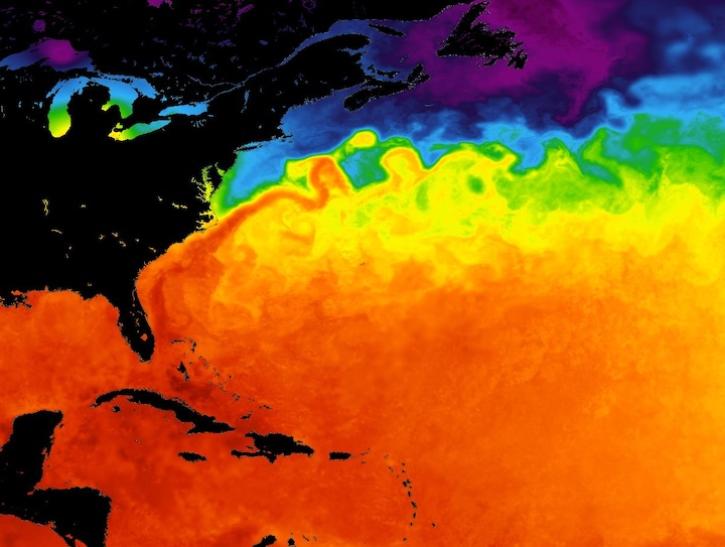
Major ocean current systems are revealed by these sea surface temperature images from June 10, 2026.
Worldview Image of the Week
June 12, 2026

Data and reanalysis models from May 2026 show signs that an El Niño event may be developing.
Worldview Image of the Week
May 29, 2026
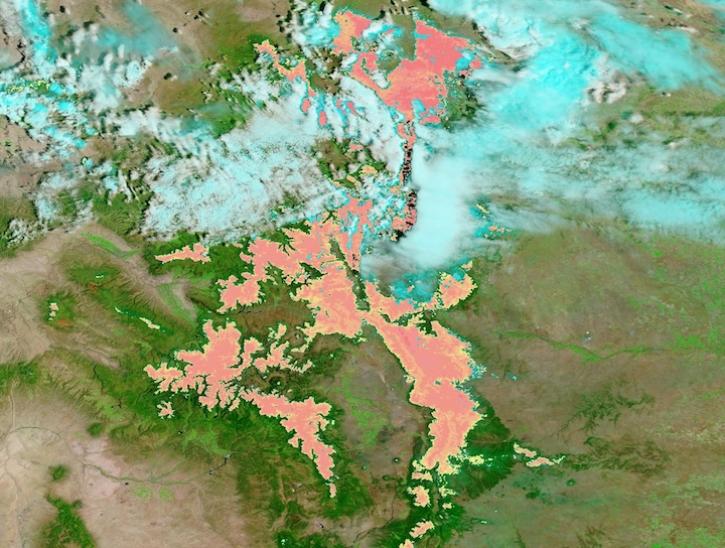
False-color Terra MODIS imagery and a snow cover index help distinguish clouds from snow on May 7, 2026.
Worldview Image of the Week
May 8, 2026

The MODIS instrument aboard the Terra platform captured this image on April 27, 2026.
Worldview Image of the Week
May 1, 2026

NASA significantly enhanced its MODIS and VIIRS near real-time flood products, enabling users to distinguish between unusual and recurring flooding.
Blog
April 10, 2026

Image captured February 9, 2026, by the MODIS instrument aboard the Terra platform.
Worldview Image of the Week
Feb. 12, 2026
SHOWING 8 OF 454
Frequently Asked Questions
Earthdata Forum
Our online forum provides a space for users to browse thousands of FAQs about research needs, data, and data applications. You can also submit new questions for our experts to answer.
Submit Questions to Earthdata Forumand View Expert Responses