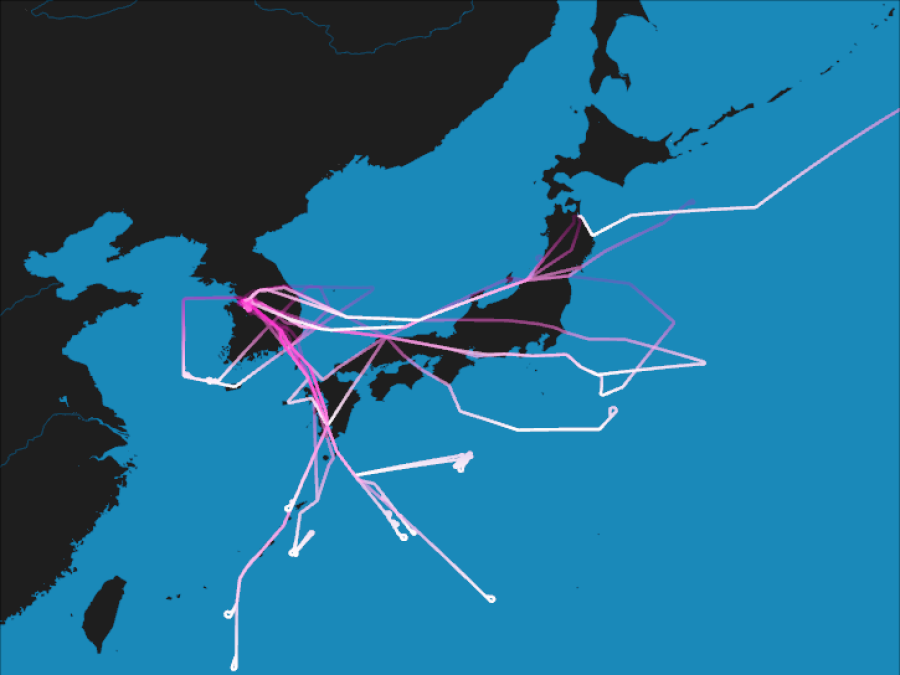
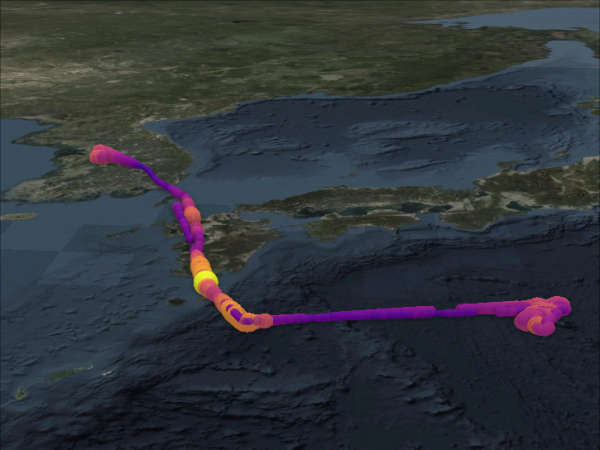
The Asian Summer Monsoon Chemical & Climate Impact Project (ACCLIP) was an international, multi-organizational suborbital campaign that aimed to study aerosols and chemical transport that are associated with the Asian Summer Monsoon (ASM) in the Western Pacific region. The campaign lasted from July 15 to August 31, 2022.
The ASM is the largest meteorological pattern in the Northern Hemisphere during the summer and is associated with persistent convection and large anticyclonic flow patterns in the upper troposphere and lower stratosphere (UTLS). This leads to significant enhancements in the UTLS of trace species that originate from pollution or biomass burning.
Convection connected to the ASM occurs over South, Southeast, and East Asia, a region with complex and rapidly changing emissions due to its high population density and economic growth. Pollution that reaches the UTLS from this region can have significant effects on the climate and chemistry of the atmosphere, making it important to have an accurate representation and understanding of ASM transport, chemical, and microphysical processes for chemistry-climate models to characterize these interactions and for predicting future impacts on climate.
The ACCLIP campaign was conducted by NASA and the National Center for Atmospheric Research (NCAR) with the primary goal of investigating the impacts of Asian gas and aerosol emissions on global atmospheric chemistry and climate. The NASA WB-57 and NCAR G-V aircraft were outfitted with state-of-the-art sensors to accomplish this.
ACCLIP addressed four scientific objectives related to its main goal. The first was to investigate the transport pathways of ASM uplifted air from inside of the anticyclone to the global UTLS. Another objective was sampling the chemical content of air processed in the ASM in order to quantify the role of the ASM in transporting chemically active species and short-lived climate forcing agents to the UTLS, as well as to determine their impact on stratospheric ozone chemistry and global climate.
For the third objective, researchers gathered data on aerosol size, mass, and chemical composition that are necessary for determining the radiative effects of the ASM to constrain models of aerosol formation and for contrasting the organic-rich ASM UTLS aerosol population with that of the background aerosols. Last, ACCLIP measured the water vapor distribution associated with the monsoon dynamical structure to evaluate transport across the tropopause and to determine the role of the ASM in water vapor transport in the stratosphere.