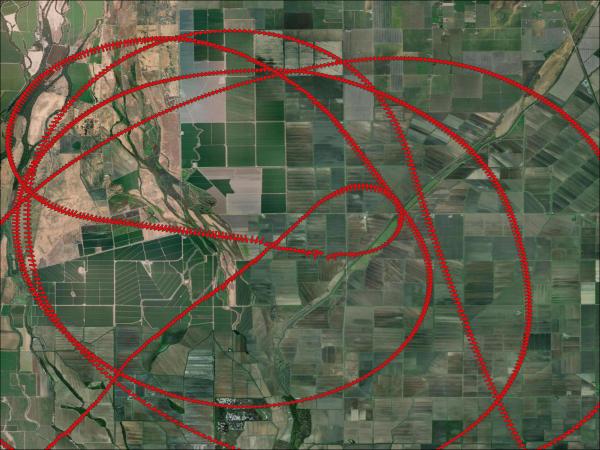
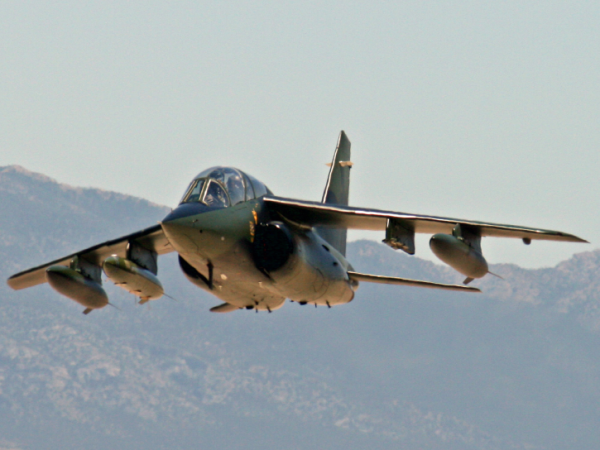
The Alpha Jet Atmospheric eXperiment (AJAX) was a long-term partnership between NASA's Ames Research Center and H211, L.L.C., facilitating routine in-situ measurements over California, Nevada, and the coastal Pacific in support of satellite validation. The standard payload complement included rigorously-calibrated ozone (O3), formaldehyde (HCHO), carbon dioxide (CO2), and methane (CH4) mixing ratios, as well as meteorological data including 3-D winds. Multiple vertical profiles (to ~8.5 km) could be accomplished in each 2-hr flight.
The AJAX project collected trace gas data on a regular basis in all seasons for over a decade, helping to assess satellite sensors' health and calibration over significant portions of their lifetimes, and complementing surface and tower-based observations collected elsewhere in the region.
AJAX supported NASA's Orbiting Carbon Observatory (OCO-2/3) and Japan's GOSAT and GOSAT-2, and collaborated with many other research organizations (e.g. CARB, NOAA, USFS, EPA). AJAX celebrated its 200th science flight in 2016, and studies have investigated topics as varied as stratospheric-to-tropospheric transport, forest fire plumes, atmospheric river events, long-range transport of pollution from Asia to the western US, urban outflow, and emissions from gas leaks, oil fields, and dairies.
For more information regarding data collected to investigate wildfires, please visit the AJAX Wildfire Compendium.