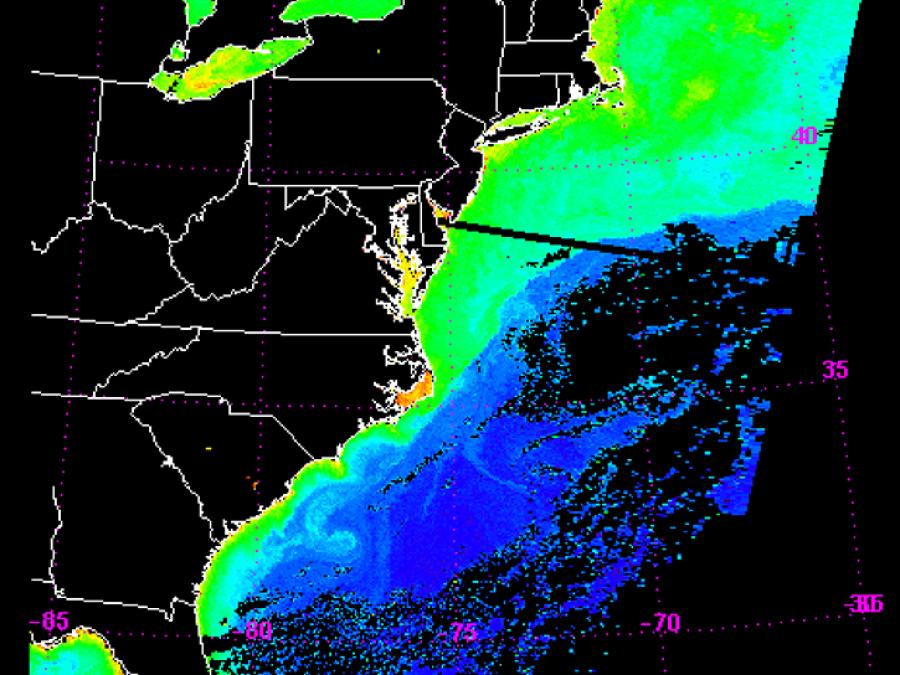
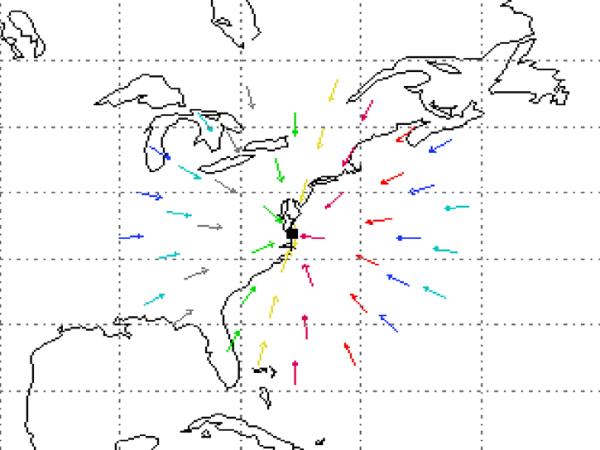
The Chesapeake Lighthouse and Aircraft Measurements for Satellites (CLAMS) field campaign was conducted from July 10 to August 2, 2001, from NASA Wallops Flight Facility. CLAMS was a part of the Global Aerosol Climatology Project, a project which is sponsored by NASA and the Global Energy and Water Cycle Experiment (GEWEX).
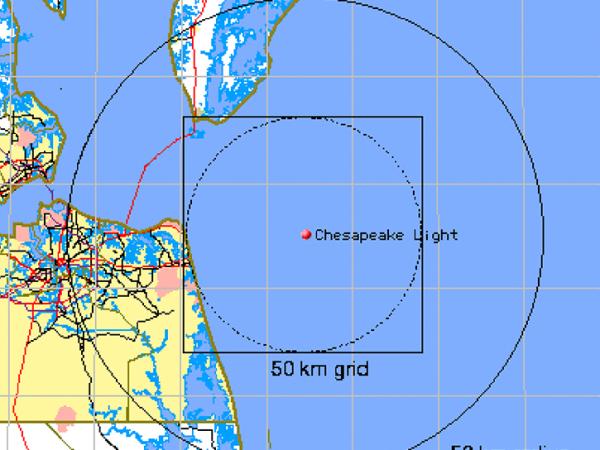
CLAMS collected data from the area surrounding the Chesapeake Lighthouse station, a sea platform 20 kilometers east of Virginia Beach that served as the location of the Clouds and the Earth’s Radiant Energy System (CERES) Ocean Validation Experiment (COVE). For 17 years, COVE provided continuous measurements of radiation, meteorology, and ocean waves for the validation of CERES and other satellite products.
This field campaign data was used to validate satellite observations from CERES, the Multi-angle Imaging SpectroRadiometer (MISR), and the Moderate Resolution Imaging Spectrometer (MODIS). CLAMS incorporated COVE measurements into an airborne field campaign to improve the methodology of atmospheric data collection and validation.
CLAMS was designed to improve the understanding of atmospheric aerosols and to address key issues involved in the methodology of atmospheric data collection. CLAMS sought to improve interpretation of COVE data. By obtaining measurements of ocean optics and aerosol properties, The CLAMS research team aimed to understand the impacts of platform obstructions and sea variations on COVE data and to improve the scale of that data so that it could be better used with satellite data.
CLAMS also set out to validate satellite observations of aerosol properties using data collected during the field campaign. The team collected information that would improve satellite retrievals in various conditions which could be compared with in-situ measurements from aircraft and surface-based measurements or sensors.
CLAMS conducted nine coordinated aircraft missions using the NASA ER-2, the University of Washington Convair 580 (UW CV-580), Cessna 210, Lear 25C, and Proteus aircraft — all deployed from NASA Wallops Flight Facility to collect in-situ and remotely sensed measurements. Wallops Flight Facility offered access to a major plume of urban and industrial haze over the eastern United States and Atlantic Ocean, as well as proximity to several Aerosol Robotic Network (AERONET) stations and other surface sites.
The ER-2 served as a high-altitude remote sensing platform. The UW CV-580 was equipped with an in situ aerosol profiler, various nephelometers, and the NASA GSFC Cloud Absorption Radiometer to obtain aerosol measurements. The Cessna 210 was equipped with a research scanning polarimeter. The Lear 25C was equipped with an A-band Spectrometer. The Proteus configuration included the NAST-M and NAST-I instruments.
The NASA Langley OV-10 was deployed from NASA Langley Research Center equipped with the CERES Fixed-wing Airborne Radiometer instrument to measure in situ temperature, humidity, and pressure. These airborne measurements targeted the COVE Chesapeake Light Station sea platform. Data from remote sensors carried by the Terra satellite and the GOES-8 satellite were also incorporated.
NASA's Atmospheric Science Data Center (ASDC) houses CLAMS data from the UW CV-580, including Cloud Absorption Radiometer data and aerosol, radiation, chemical, and meteorological data products. Additionally, ASDC houses CLAMS data from the MODIS Airborne Simulator and data from radiosondes deployed near the Chesapeake Lighthouse station.