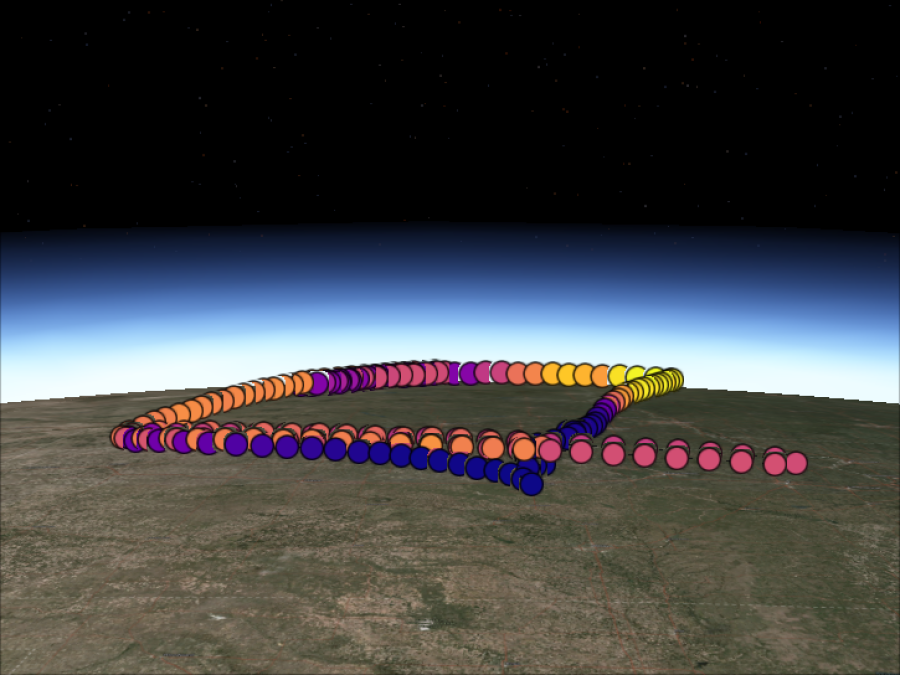
3D Ozone Data taken during the DCOTSS Campaign
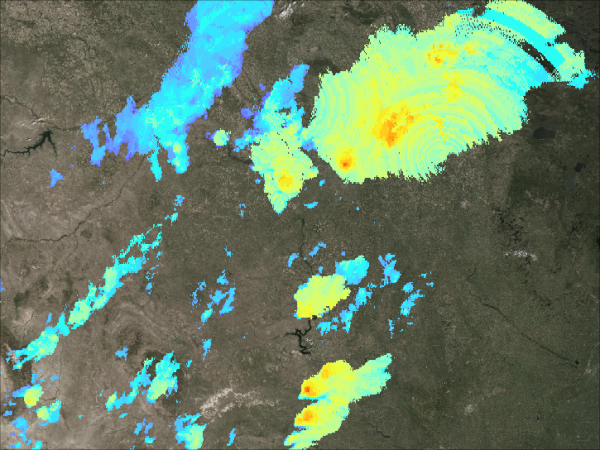
Overshooting Tops as seen by NEXRAD
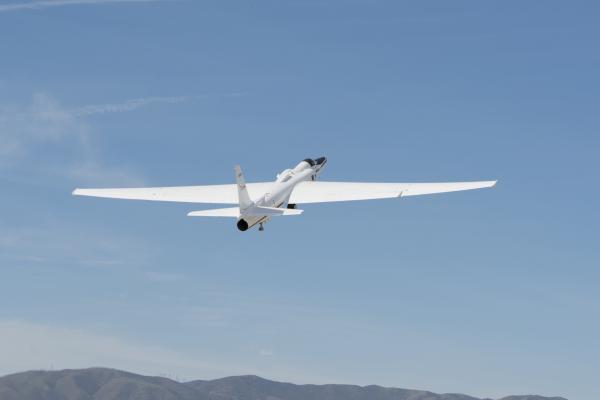
ER-2 Aircraft Flying Away

DCOTSS

Dynamics and Chemistry of the Summer Stratosphere

Principal Investigator

Kenneth Bowman

Data Centers

ASDC

Funding Programs

NASA Earth Venture Suborbital-3 (EVS-3)

Each summer the North American Monsoon Anticyclone (NAMA) dominates the circulation of the North-Western Hemisphere and acts to partially confine and isolate air from the surrounding atmosphere. Strong convective storms in the NAMA regularly reach altitudes deep into the lower stratosphere, with some ascending above 20 km. These storms carry water and pollutants from the troposphere into the otherwise very dry stratosphere, where they can have a significant impact on radiative and chemical processes, potentially including destruction of stratospheric ozone. 

The Dynamics and Chemistry of the Summer Stratosphere (DCOTSS) field campaign was a NASA Earth Venture Suborbital research project aimed at investigating these thunderstorms. DCOTSS utilized NASA’s ER-2 aircraft and conducted two ~8-week science deployments based out of Salina, KS spanning early to late summer.

The ER-2 aircraft was equipped with a payload providing in-situ measurements for trace gases, aerosols, reactive species, and meteorological parameters in the study area. The DCOTSS instrument payload brought together twelve proven instruments for in-situ measurements necessary to complete the objectives of the campaign (instruments listed below). The Next Generation Weather Radar (NEXRAD) network paired with operational modeling, and NASA and NOAA earth observing satellites were used to collect in-situ and remote sensing measurements to study the interaction between the storms and the stratosphere. 

This campaign advances the understanding of changes in the Earth’s radiative balance, air quality, and the ozone layer that result from changes in atmospheric composition. DCOTSS also improves the ability to predict weather and extreme weather events. Results from DCOTSS will be used to determine what dynamical mechanisms lead to irreversible stratospheric injections of air in the NAMA due to convection, and how the air is exported to the global stratosphere.

DCOTSS Project Page

Access the 2021 DCOTSS Photos and Videos and 2022 DCOTSS Photos and Videos at NASA's Airborne Science Program (ASP).
Research Questions:

  • How much tropospheric air and water is irreversibly injected into the stratosphere by convection?
  • What convective source regions impact the NAMA?
  • What chemical changes take place in the stratosphere due to convection in the NAMA?
  • What is the background chemical and thermodynamic state of the Lower Stratosphere (LS) over North America during summer?

Objectives:

  • Advance the understanding of changes in the Earth’s radiation balance, air quality, and the ozone layer that results from changes in atmospheric composition.
  • Improve the capability to predict weather and extreme weather events.
Image

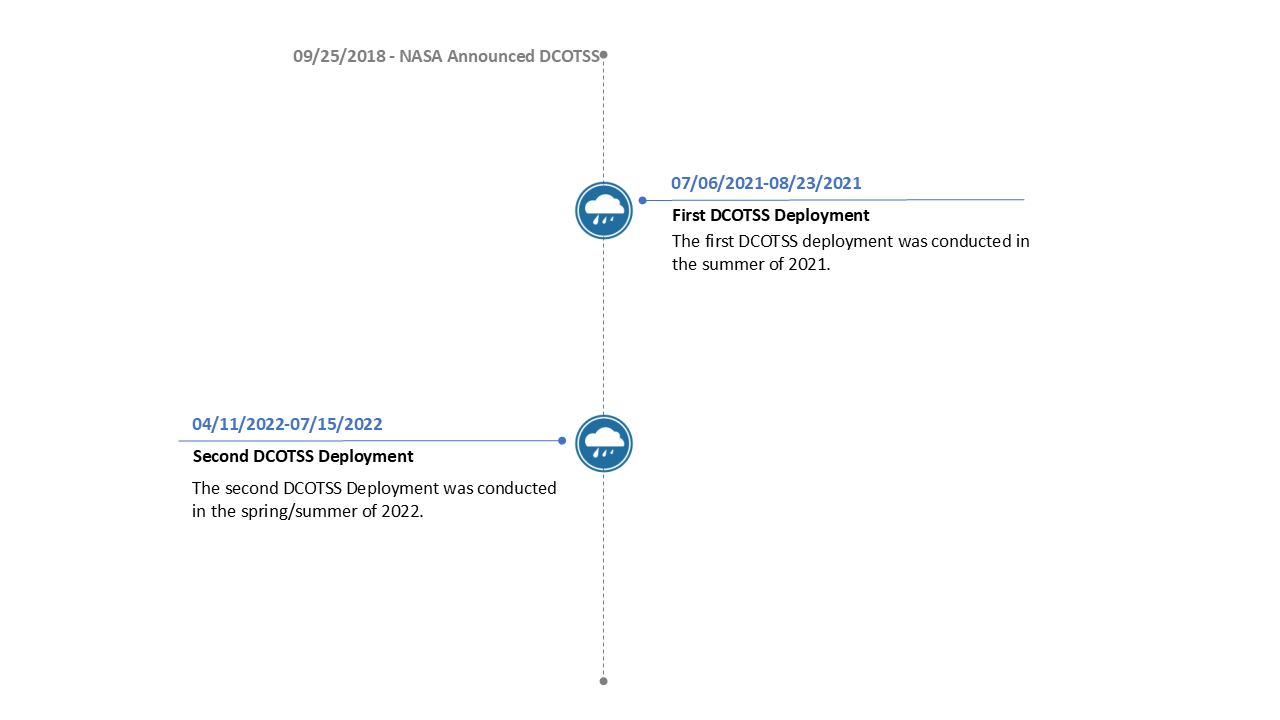
The first deployment of DCOTSS was conducted in the summer of 2021, one year after originally scheduled with delays caused by the COVID-19 pandemic. The goal of the first DCOTSS deployment was to provide much needed observational data for researchers on the impact of summer thunderstorms on stratospheric ozone, water vapor, and aerosols. The aim of these findings is to improve our current scientific understanding of the Earth system and enhance our ability to predict climate, weather, and natural hazards.

The second DCOTSS deployment was a 13-week deployment beginning Late-Spring/Early-Summer 2022. The deployment occurred between April 11 and July 15, 2022. Science flights for this deployment lasted around 4 and a half weeks from May 29 – June 29, 2022.

PlatformsInstruments
ER-2Computer
Meteorological Measurement System (MMS)
Unmanned Chromatograph Airborne System for Atmospheric Trace Species - Gas Chromatography (UCATS-GC)
DCOTSS Portable Optical Particle Spectrometer (DPOPS)
Rapid Ozone Experiment (ROZE)
Harvard Water Vapor (HWV)
Compact Airborne Nitrogen diOxide Experiment (CANOE)
NASA Compact Airborne Formaldehyde Experiment (CAFE)
Harvard Halogens Experiment (HAL)
Harvard University Picarro Cavity Ring Down Spectrometer (HUPCRS)
 
Balloons

RADIOSONDES

OZONESONDES

Frost Point Hygrometer (FPH)

Ground Based ObservationsGridded NEXRAD WSR-88D Radar (GridRAD)
GOES-17Advanced Baseline Imager (ABI)