During 1983-2001, NASA conducted a collection of field campaigns as a part of the Global Tropospheric Experiment (GTE) to develop advanced instrumentation and use those instruments to measure critical atmospheric trace gases to quantify their sources, sinks, and distribution. Among those were the Pacific Exploratory Missions (PEM), which intended to improve the scientific understanding of human influence on tropospheric chemistry.
The first part of the PEM field campaigns (PEM-West) was conducted over the northwestern Pacific region, considered the only major region in the northern hemisphere that is “relatively” free from direct anthropogenic influences. PEM-West was also a component of the East Asian/North Pacific Regional Study (APARE) that was a project within the International Global Atmospheric Chemistry (IGAC) program.
The overarching objectives of PEM-West were:
- To investigate the atmospheric chemistry of ozone (O3) and its precursors over the northwestern Pacific, including the examination of their natural budgets as well as the impact of anthropogenic sources; and
- To investigate the atmospheric sulfur cycle over the region with emphasis on the relative importance and influence of continental vs marine sulfur sources.
The two phases of PEM-West were conducted during differing seasons due to contrasting tropospheric outflow from Asia. The first phase, PEM-West A, was conducted over the western Pacific region off the eastern coast of Asia from September-October 1991, a season characterized by the predominance of flow from mid-Pacific regions. The second phase, PEM-West B, was conducted from February-March 1994, a period characterized by maximum air mass outflow.
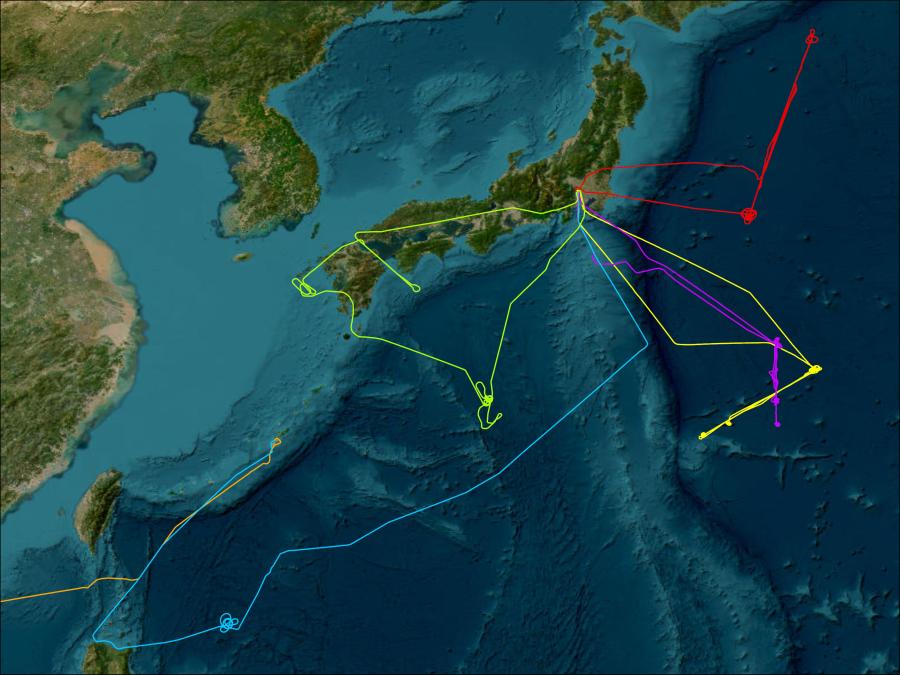
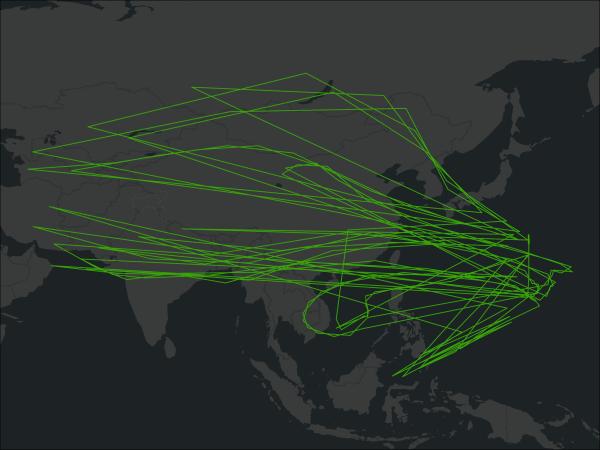
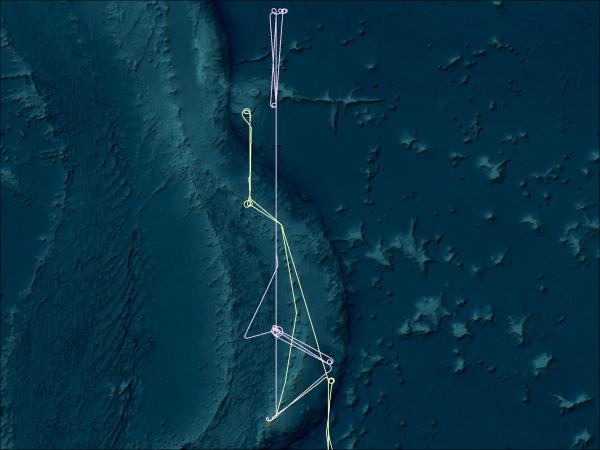
To accomplish its objectives, the PEM-West campaign deployed the NASA DC-8 aircraft across the northwestern Pacific to gather latitudinal, longitudinal, and vertical profile sampling, as well as extensive sampling in both the marine boundary layer and free troposphere.
The aircraft was equipped with a comprehensive suite of in-situ instrument packages for characterization of photochemical precursors, intermediate products, and airmass tracers, including O3, nitric oxide (NO), peroxyacetyl nitrate (PAN), nitrogen oxides (NOy), nonmethane hydrocarbons (NMHCs), hydrogen peroxide (H2O2), acetic acid (CH3OOH), carbon monoxide (CO), and formaldehyde (CH2O).
Collectively, these measurements enabled the analyses of the photochemical production/destruction of O3 and the distribution of precursor species. In addition, the DC-8 was equipped with instruments for collecting sulfur measurements, including dimethyl sulfide (DMS), carbonyl sulfide (COS), sulfur dioxide (SO2), and carbon disulfide (CS2).
Instruments that collected aerosol composition and microphysical properties were also aboard the DC-8. Both missions deployed a Differential Absorption Lidar (DIAL) system for measurements of O3 vertical profiles above and below the aircraft.
One highlight of the project was that flight nine of PEM-West A flew over Typhoon Mireille while it made landfall on the coast of Japan. This allowed for a flight by the DC-8 to study the role of typhoons in the transport of trace gases. Detailed descriptions related to the motivation, implementation, and instrument payloads are available in the PEM-West A overview paper and the PEM-West B overview paper.
A collection of the publications based on PEM-West A and B observations are available in the Journal of Geophysical Research special issues: Pacific Exploratory Mission-West Phase A and Pacific Exploratory Mission-West, Phase B (PEM-West B).