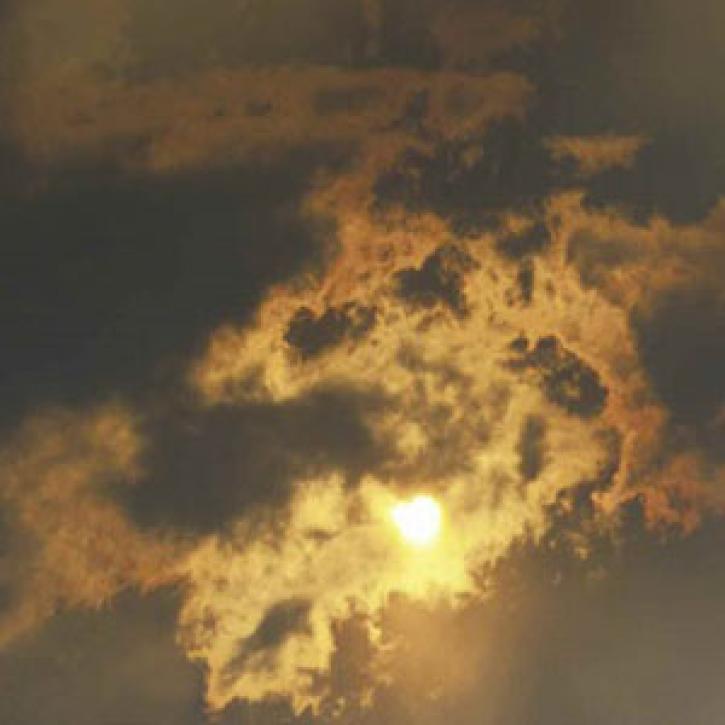
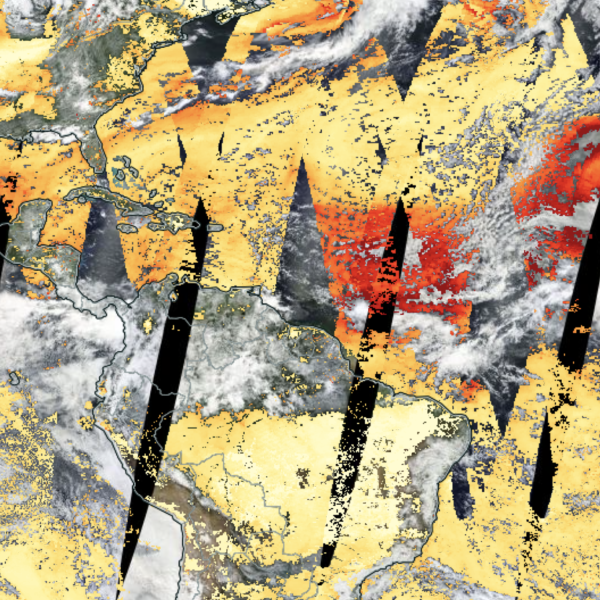
Earth's atmosphere is filled with aerosols - tiny particles of liquid or solid, suspended in the air. There are many, many different kinds of aerosols. Some are naturally occurring, like water vapor and dust, and some can be generated from industry, like soot and smoke. These particles affect the sunlight reaching the earth, as light rays are scattered and redirected as they bounce off of aerosols. This effect is measured by aerosol optical depth, or AOD. At very small AOD values of 0.1 or below, the sky appears clear and the sun bright, but at higher levels, the sky can appear hazy due to high concentrations of particles that affect the path of sunlight. But AOD is about more than just how nice of a view we have. Tracking AOD helps scientists monitor pollution and air quality changes, and AOD in itself is a valuable measurement for calibrating and correcting other data products. 

Many NASA instruments help scientists monitor AOD, including satellite missions like the Visible Infrared Imagine Radiometer Suite (VIIRS) and Ozone Monitoring Instrument (OMI). Combining these satellite observations with ground sensing stations like NASA's Aerosol Robotic Network (AERONET) can illustrate how light is redirected throughout Earth's atmosphere, allowing researchers to estimate the concentration and size of aerosols. 

AOD measurements can help researchers detect changes in air quality from emissions or natural events like volcanic eruptions or wildfires. This makes accurate AOD monitoring a priority for long term climate studies as well as public health research. 

Get Aerosol Optical Depth/Thickness Data

Access a range of datasets and data tools to further your atmospheric research.

Learn How to Use Aerosol Optical Depth/Thickness Data

Access a range of webinars, tutorials, data recipes, and data stories to enhance your knowledge of Earth Observation data.
image of factory, city skyline, and poor air quality
ARSET Trainings on Health and Air Quality
The Applied Remote Sensing Training (ARSET) Program provides hands on online and in-person trainings that cover remote sensing applications for monitoring health and air quality.
Earthdata graphic identifier on top of chart data
Commonly Used Aerosol Optical Depth Datasets
View a list of datasets that are popular with users working in aerosol optical depth research.
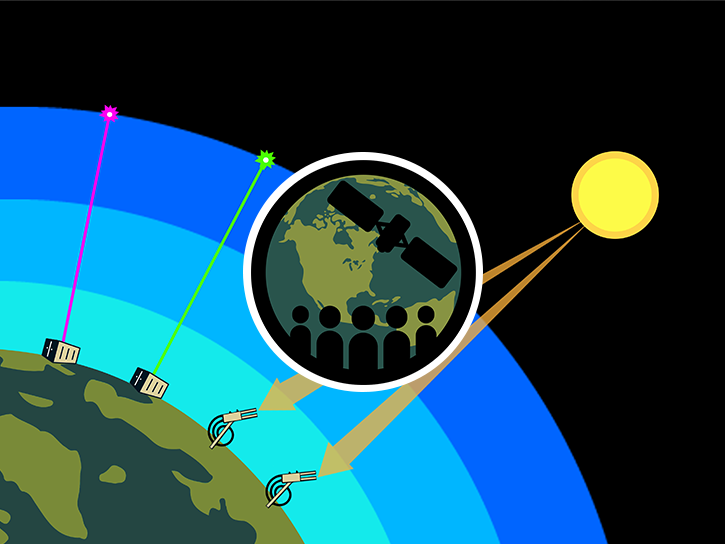
Graphic of Instruments Measuring Atmosphere with Lasers from Earth's Surface
NASA Atmospheric Composition Ground Networks Supporting Air Quality and Climate Applications
This ARSET training provides an overview of aerosol and trace gas measurements using active and passive techniques for ground based remote sensing.
Haze from smoke and dust aerosols can interfere with ultraviolet radiation reaching Earth, an effect that may be increasingly important as global temperatures rise.
Aerosols Over Australia
Researchers explore the links between atmospheric aerosols, climate change, and ultraviolet rays.
Visualize Dark Target and Deep Blue Data with NASA Worldview
The merged Dark Target/Deep Blue aerosol optical depth (AOD) layer provides a more global, synoptic view of AOD over land and ocean.
The non-aerosol signal of surface reflectance needs to be separated from the aerosol signal to accurately obtain AOD. Scientists have developed two algorithms for MODIS data to account for these effects: Dark Target and Deep Blue. In the latest dataset collection, these two algorithms have been merged, using the highest quality for each.
Image
This is a screenshot from NASA Worldview showing the merged Dark Target/Deep Blue aerosol optical depth layer.
Credit: NASA Worldview

Join Our Community of NASA Data Users

While NASA data are openly available without restriction, an Earthdata Login is required to download data and to use some tools with full functionality.

Learn About the Benefits of Earthdata Login

Frequently Asked Questions

Earthdata Forum

Our online forum provides a space for users to browse thousands of FAQs about research needs, data, and data applications. You can also submit new questions for our experts to answer.

Submit Questions to Earthdata Forumand View Expert Responses

Earthdata
Forum