What is Rain?
Rain occurs when water vapor in the atmosphere condenses into liquid droplets and then falls to Earth due to gravity. Rain drives the global water cycle that provides moisture to soils supporting the growth of plants, replenishes surface water such as ponds and lakes, and regulates the planet’s climate. But it can also become a hazard, as intense periods of rainfall can lead to flooding that can threaten both life and property.
How do Scientists Study Rain?
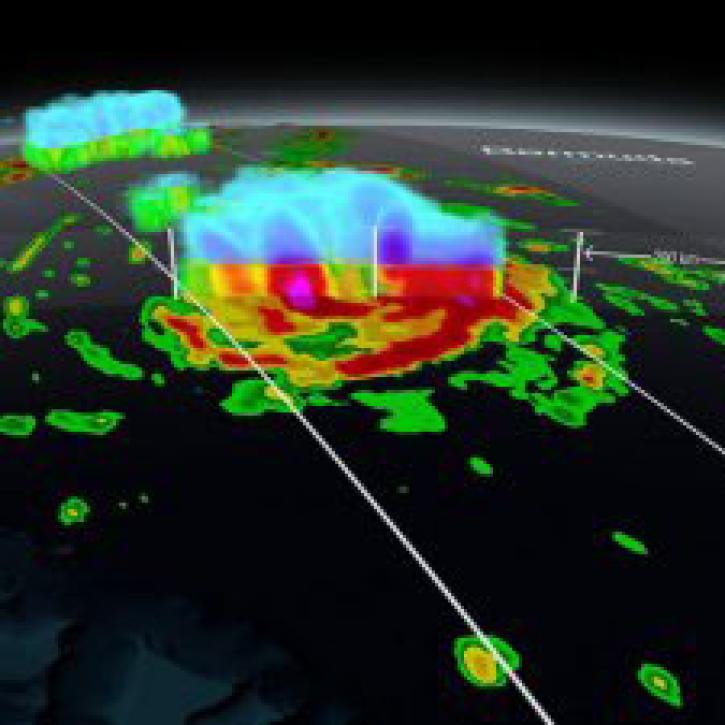
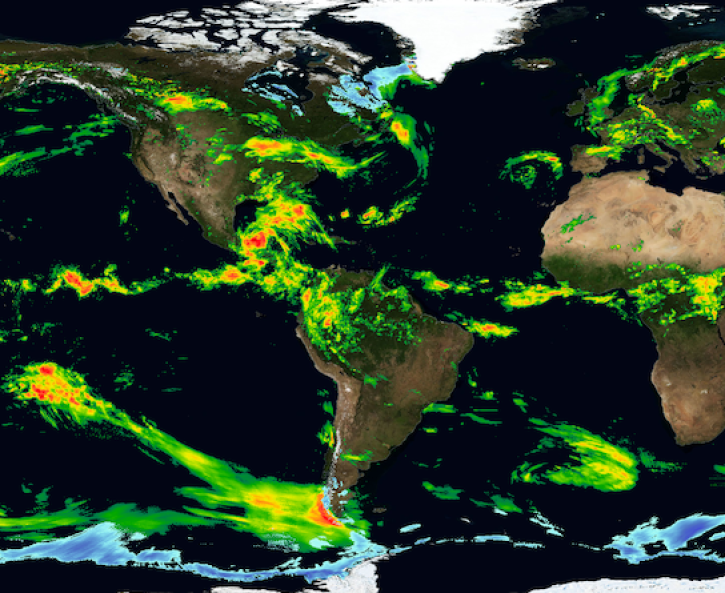
Keeping track of rainfall around the globe is important for environmental science, weather predictions, climate risk management, and countless other fields. The Global Precipitation Measurement (GPM) mission, a joint project between NASA and the Japanese Aerospace Exploration Agency (JAXA), is outfitted with a dual-frequency radar that can record a three-dimensional picture of rainfall moving through the atmosphere. GPM emits pulses of Ku- and Ka-band radar, and can use the timing at which those pulses are returned from water droplets to analyze the rate and type of precipitation.
The Suomi-NPP mission also observes global precipitation patterns in detail using the Advanced Technology Microwave Sounder (ATMS) and Cross-track Infrared Sounder (CrIS). These satellite rain data are also validated using rain gauges — instruments on Earth’s surface that measure the volume and frequency of rain over time.
How do Scientists Use Rain Data?
Rain data have varied and diverse uses, from helping to identify flood or drought conditions to supporting climate modeling to developing more robust weather forecasts.
NASA provides a wide range of tutorials, resources, and training on finding and using precipitation data, some of which can be accessed through the NASA Global Precipitation Mission homepage.