Digital Elevation Models, or DEMs, are three-dimensional models of the “bare earth” surface, showing elevation and topography without trees, buildings, or other objects. DEMs are important in many different applications, including predicting wildfire behavior, planning for ecological conservation, and creating realistic models of water flow and flood risk. 

DEMs are a synthesis of many different data sources, including traditional topographic maps, airborne missions, and satellite observations. For example, NASA’s Shuttle Radar Topography Mission (SRTM), a pair of radar antennas aboard the Space Shuttle Endeavour, collected topographic data for nearly 80% of Earth’s surface, forming the basis of near-global DEMs. Since then, these models have been further refined and expanded through additional NASA missions, like the Ice, Cloud and land Elevation Satellite (ICESat), the Terra satellite’s Advanced Spaceborne Thermal Emission and Reflection Radiometer (ASTER), and large-scale reprocessing efforts. Today, NASA partners with commercial satellite operators and academic research centers through the EarthDEM project, a coordinated effort to produce high-resolution terrain maps from the best available observations. 

NASA DEMs support the monitoring, study, and modeling of Earth’s natural resources and hazards. Continued innovation in elevation observations, such as the use of lidar to map terrain in more detail than ever before, continue to improve our models of Earth’s surface.  
Get Digital Elevation/Terrain Model Data

Access a range of datasets and data tools to further your digital elevation and terrain model research.

Learn How to Use Digital Elevation/Terrain Model (DEM) Data

Access a range of webinars, tutorials, data recipes, and data stories to enhance your knowledge of Earth Observation data.
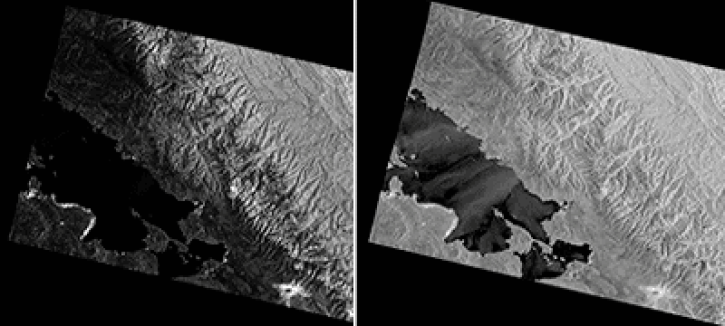
This image provides before and after RTC of the Bolivian mountains (left -before, right - after)
Radiometrically Terrain-Correct (RTC) Sentinel-1 Data Using GAMMA Software
This data recipe shows users how to use GAMMA software and scripts for high-quality results to correct distortions in SAR images.
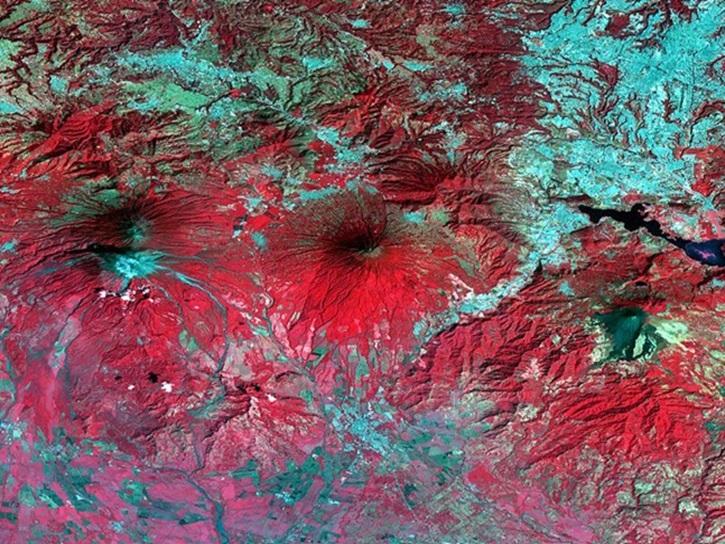
A segment of an image of ASTER registered radiance data over Guatemala on January 8, 2018
NASA Begins Final ASTER Data Processing Campaign
The final processing of Advanced Spaceborne Thermal Emission and Reflection Radiometer (ASTER) data will make its archive more accessible to users.
image of ASTER instrument data
Global Digital Elevation Models now available: ASTER, GDEM, and SRTM
These products are available globally at their full resolution of 30 meters per pixel.
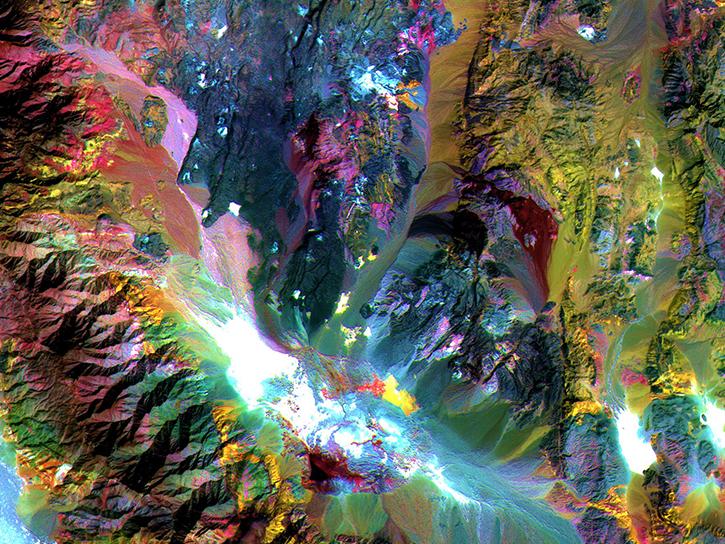
Shaded relief rendering of EarthDEM data showing the Virgin River, Nevada. DEM derived from Maxar imagery.
New in CSDA: High Resolution Digital Elevation Models
High-resolution Digital Elevation Models (DEM) for non-polar regions at two-meter spatial resolution are now available.
Discover and Visualize Digital Elevation/Terrain Model Data
NASA data help us understand Earth's changing systems in more detail than ever before, and visualizations bring these data to life, making Earth science concepts accessible, beautiful, and impactful.
Data visualization is a powerful tool for analysis, trend and pattern recognition, and communication. Our resources help you find world-class data visualizations to complement and enhance your research. We also have tools and tutorials to help you translate digital elevation and terrain model data into compelling visuals.
Image
NASA Shuttle Radar Topography Mission (SRTM) V3 Global 1 arc second hillshade image of the Mt Everest region
This is a Shuttle Radar Topography Mission (SRTM) hillshade image of the Mount Everest region. SRTM obtained elevation data across nearly 80% of Earth creating the first ever near-global DEM dataset. The data was captured in February 2000 using radar interferometry equipment operating from inside Space Shuttle Endeavour's payload bay.

Join Our Community of NASA Data Users

While NASA data are openly available without restriction, an Earthdata Login is required to download data and to use some tools with full functionality.

Learn About the Benefits of Earthdata Login

Frequently Asked Questions

Earthdata Forum

Our online forum provides a space for users to browse thousands of FAQs about research needs, data, and data applications. You can also submit new questions for our experts to answer.

Submit Questions to Earthdata Forumand View Expert Responses

Earthdata
Forum