Ocean waves range from tiny wind-driven capillary waves to massive tsunamis caused by crustal movements. Between these extremes are Rossby waves—slow-moving, 10cm-high undulations that form over decades and influence major climate patterns like El Niño.

Both tsunamis and Rossby waves are challenging to detect: tsunamis remain undetectable until dangerously large, while Rossby waves are too small and slow-moving to identify easily.

NASA's Surface Water and Ocean Topography (SWOT) mission addresses both challenges. SWOT uses radar pulses to measure ocean surface height with exceptional accuracy, detecting movements from tiny capillary waves to large-scale disturbances. The Jason satellite series, developed with the European Union, employs similar radar technology.

Combined with decades of satellite, buoy, and ship data, these missions provide comprehensive wave monitoring across multiple scales and timeframes. This detailed wave height data enables both tsunami detection and response, and helps scientists understand long-term climate and weather patterns.

Get Ocean Waves Data

Access datasets and data tools to further your research on ocean waves.

Learn How to Use Ocean Waves Data

Access a range of webinars, tutorials, data recipes, and data stories to enhance your knowledge of Earth Observation data.
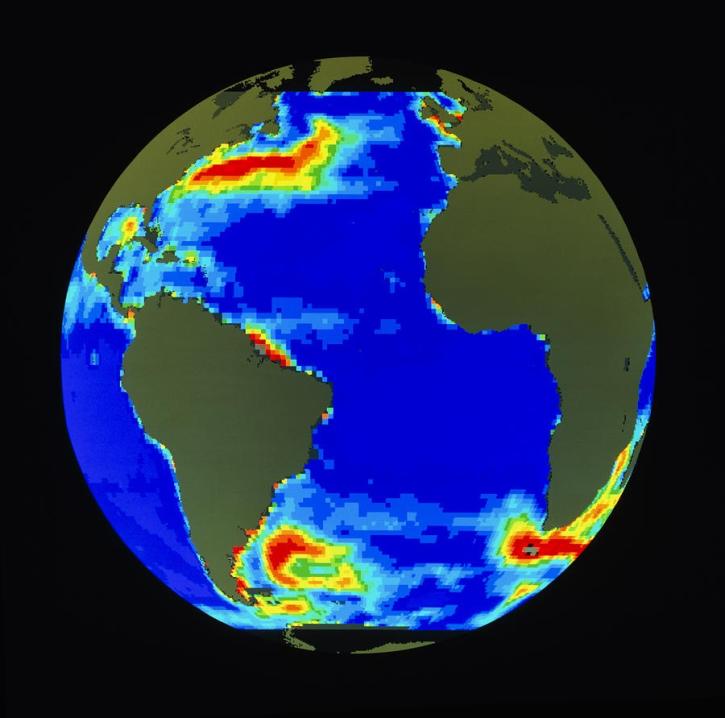
The Geosat image above shows ocean currents.
Oceanography Findings Make Waves
High-quality sea level data from TOPEX/Poseidon help scientist to observe Rossby waves.
Headshot of li outside with arctic ice behind him
Data User: Dr. Xiaofeng Li
Learn how NOAA scientist Dr. Xiaofeng Li uses NASA Earth science data to study atmospheric and oceanic processes.
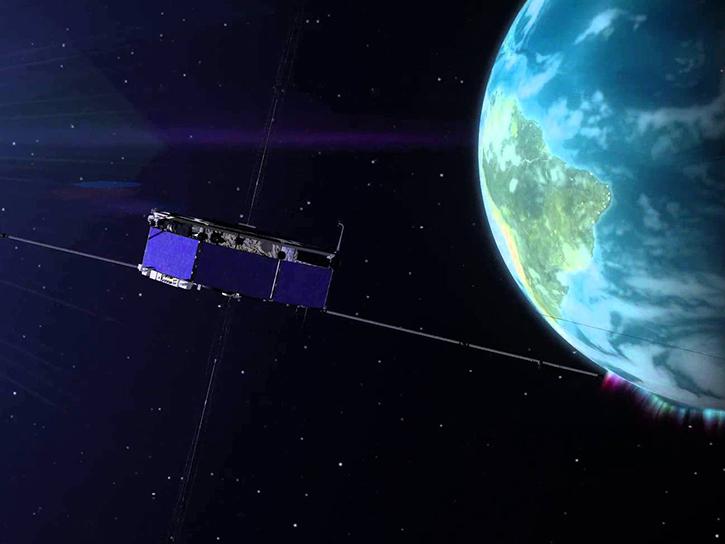
image of  GNSS satellite in orbit
Global Navigation Satellite System Data Brings Forth a GUARDIAN
The GNSS-based Upper Atmospheric Realtime Disaster Information and Alert Network (GUARDIAN) aims to enhance early warning of tsunamis.
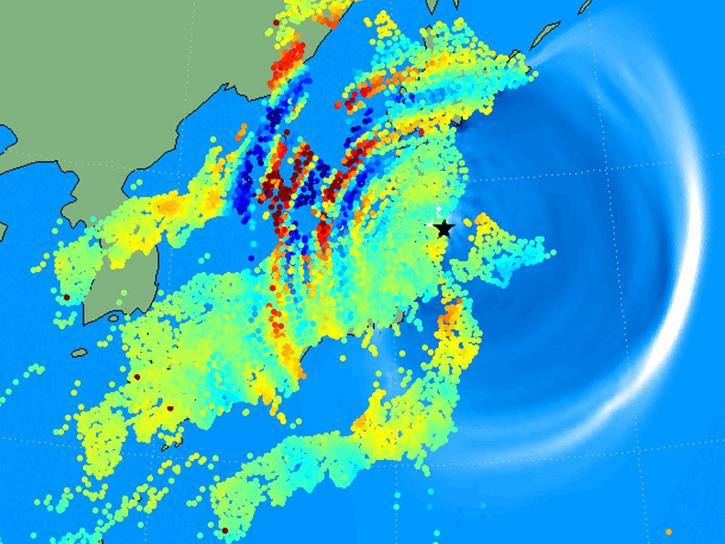
image of tsunami impact on the ionosphere
GUARDIAN — Monitoring Earth's Ionosphere for Natural Hazards in Near Real-Time
Learn how to use the GNSS-based Upper Atmospheric Realtime Disaster Information and Alert Network (GUARDIAN) ionospheric monitoring software to supplement early warning systems (EWS) detections of natural hazards such as tsunamis, volcanic eruptions, earthquakes, and geomagnetic and solar storms.
Discover and Visualize Ocean Waves Data
NASA data help us understand Earth's changing systems in more detail than ever before, and visualizations bring these data to life, making Earth science concepts accessible, beautiful, and impactful.
Data visualization is a powerful tool for analysis, trend and pattern recognition, and communication. Our resources help you find world-class data visualizations to complement and enhance your research. We also have tools and tutorials to help you translate ocean waves data into compelling visuals.
Image
This visualization is a series of images in strips assembled together to make a larger, composite image. Each strip is colored in shades of white and blue to show waves of different heights on the water.
This is close up view of Surface Water and Ocean Topography (SWOT) satellite data revealing internal solitary waves over the Mascarene Plateau in the Indian Ocean. Internal solitary waves are hump-shaped, large-amplitude waves that propagate horizontally within the ocean. Credit: Kel Elkins/NASA's Scientific Visualization Studio.

Join Our Community of NASA Data Users

While NASA data are openly available without restriction, an Earthdata Login is required to download data and to use some tools with full functionality.

Learn About the Benefits of Earthdata Login

Frequently Asked Questions

Earthdata Forum

Our online forum provides a space for users to browse thousands of FAQs about research needs, data, and data applications. You can also submit new questions for our experts to answer.

Submit Questions to Earthdata Forumand View Expert Responses

Earthdata
Forum