
Data in Action
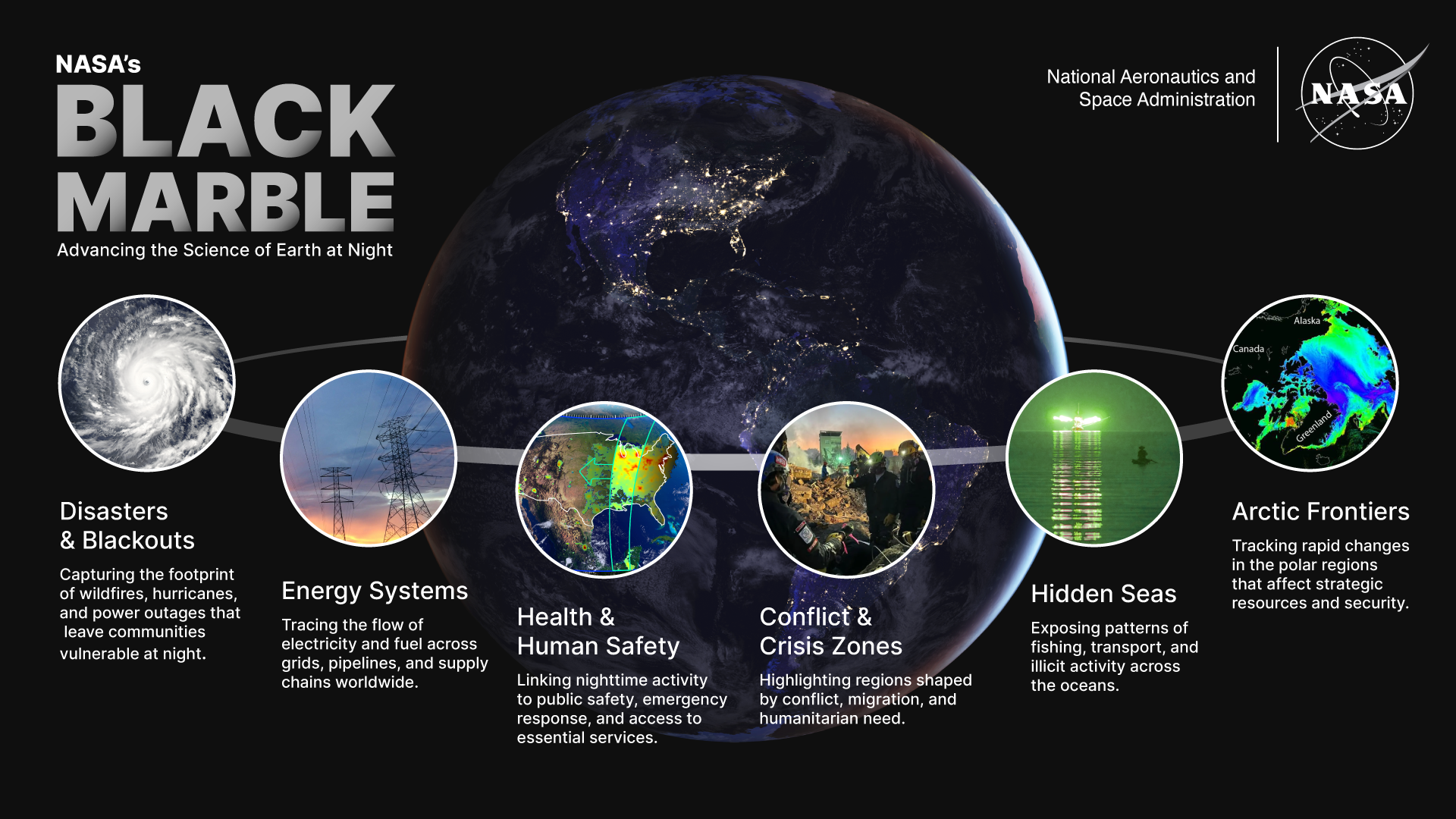
NASA's Black Marble enables a wide range of applications for a broad spectrum of data users. Along with their primary purpose of supporting the short-term weather prediction and disaster response communities, the data also contribute to new methods for tracking wildfires, waste natural gas flares, and light pollution. There are also numerous socioeconomic uses, including proxy economic activity, monitoring changes in energy infrastructure in urban areas, and providing data to humanitarian organizations in conflict areas.
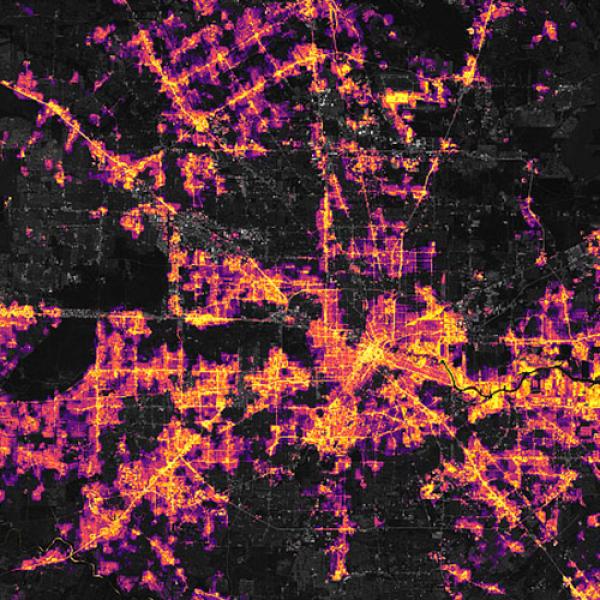
A wide variety of light sources impact the nighttime environment, including city lights, lightning, fishing fleet navigation lights, gas flares, lava flows, and even auroras. When partial to full illumination from the Moon is available, reflection of this lunar illumination off ice, snow, and other highly reflective surfaces enables the study of ocean, atmospheric, and terrestrial features.