The CAMP2Ex (Clouds, Aerosol and Monsoon Processes-Philippines Experiment) and PISTON (Propagation of Intra-Seasonal Tropical Oscillations) were two field studies conducted in Southeast Asia. While each study had its own set of science objectives, there were common and complementary instrument payloads. Consequently, a synergistic partnership was established at the beginning of the projects and a coordinated sampling strategy was developed to extend spatial coverage and obtain temporal context information, which benefits the analysis of both data sets.
CAMP2Ex was a NASA-funded field study with three main science objectives: aerosol effects on cloud microphysical and optical properties, aerosol and cloud influence on radiation and radiative feedback, and meteorology related effects on aerosol distribution and aerosol-cloud interactions. Such research requires a comprehensive characterization of aerosol, cloud, and precipitation properties, as well as the associated meteorological and radiative parameters. Trace gas measurements are also needed for airmass type analysis to characterize the role of anthropogenic and natural aerosols.
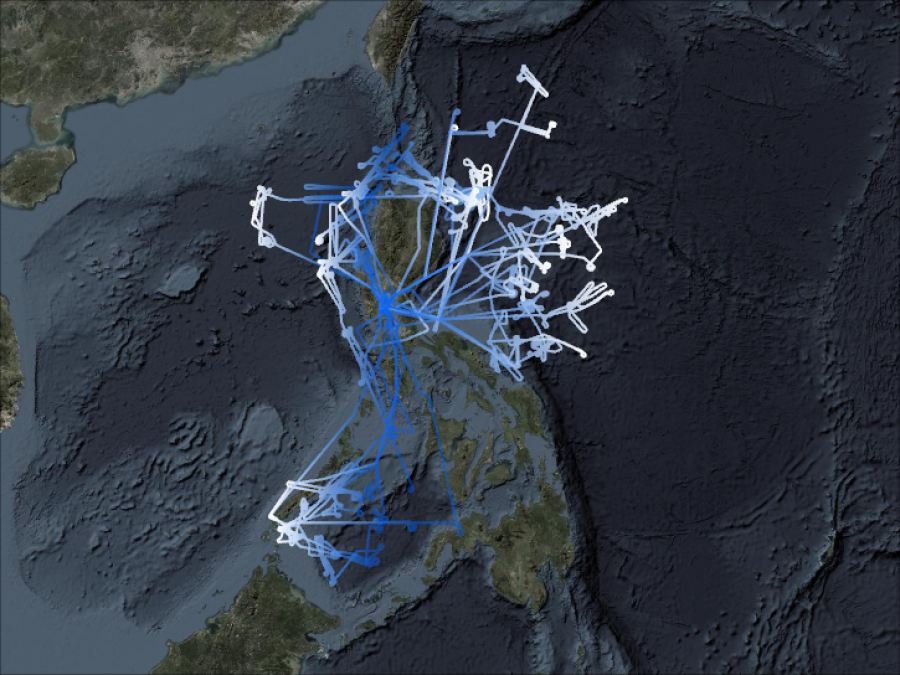
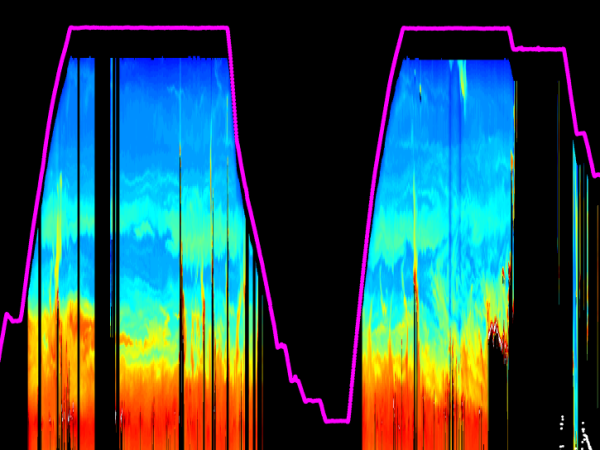
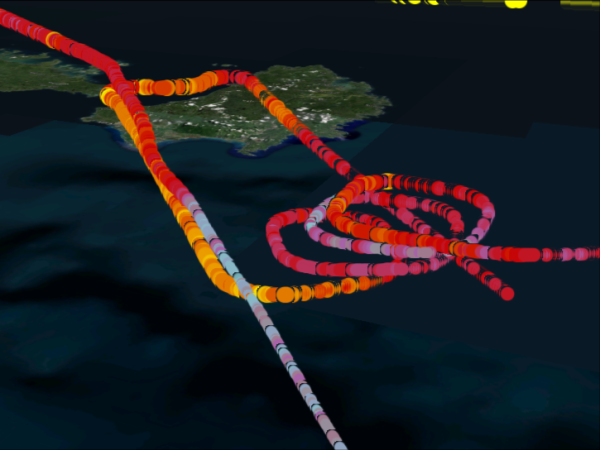
The CAMP2Ex observations were made from the NASA P-3B aircraft and the SPEC Learjet 35A. The sampling strategy allowed for coordinated flights of both aircraft to maximize the science return. The P-3B was used primarily to gather measurements of cloud and precipitation structure and aerosol layers and to take vertical profiles of aerosol and atmospheric state variables. The Learjet flew below the P-3B to obtain detailed cloud microphysical properties. During the 2019 field deployment (August 20 to October 10), the P-3B conducted 19 science flights and the SPEC Learjet conducted 11 flights in the vicinity of the Philippines. Three NASA P3B and seven SPEC Lear 35A flights were also flown in coordination with PISTON shipboard measurements. Ground-based aerosol observations were also recorded in 2018 and 2019.
CAMP2Ex was completed in partnership with Philippine research and operational weather communities. Measurements completed during CAMP2EX provide a 4-D observational view of the environment of the Philippines and its neighboring waters in terms of microphysical, hydrological, dynamical, thermodynamical, and radiative properties of the environment. The data target the environment of shallow cumulus and cumulus congestus clouds.
The PISTON field campaign, sponsored by U.S. Office of Naval Research, completed two shipboard deployments in the western Pacific north of Palau from early August to mid-October 2018 and in September 2019. There were two research vessels involved: R/V Thomas G.Thompson in 2018 and R/V Sally Ride in 2019. The second deployment coincided with the CAMP2Ex airborne deployment.
The overarching PISTON science objective was to gain understanding and enhance the prediction capability of multi-scale tropical convection and air-sea interaction in this region. Researchers targeted the Boreal Summer Intraseasonal Oscillation (BSISO), which defines the northward and eastward movement of convection associated with equatorial waves, the Madden Julian Oscillation, tropical cyclones, and the Maritime Continent monsoon during northern-hemispheric summertime.
The PISTON shipboard payload included dual-polarization Doppler radar and multiple vertically-pointing radars and lidars for characterization of cloud and precipitation. Radiosondes were launched for atmospheric profiling. Instruments were also deployed on the ship or towed from the ship to document surface meteorological conditions, air-sea fluxes, and upper-ocean variability. Two specialized moorings were deployed north of Palau from August 2018 to October 2019 to document ocean characteristics beneath typhoons and other tropical weather disturbances. A set of profiling ocean floats were also deployed ahead of typhoons in 2018. A forecast team analyzed and predicted conditions of the weather and ocean throughout the experiment, which were archived for future modeling and observational analysis studies. For more information about PISTON, please refer to the PISTON User Guide.