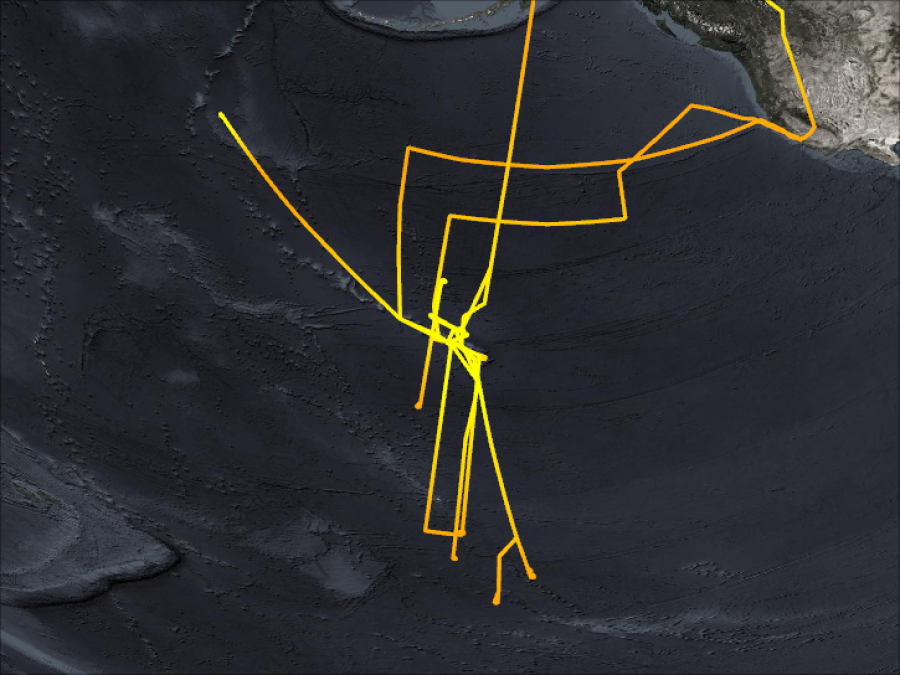
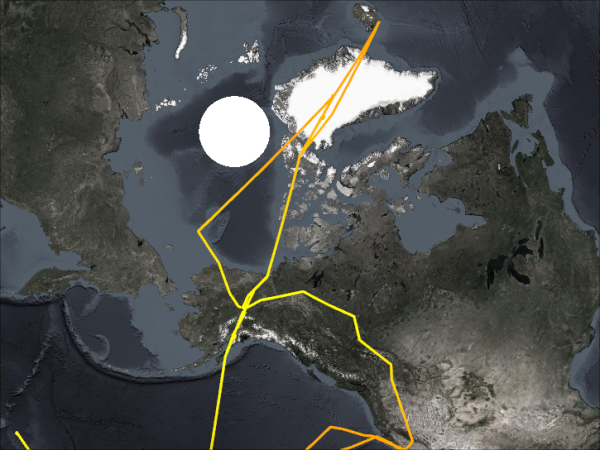
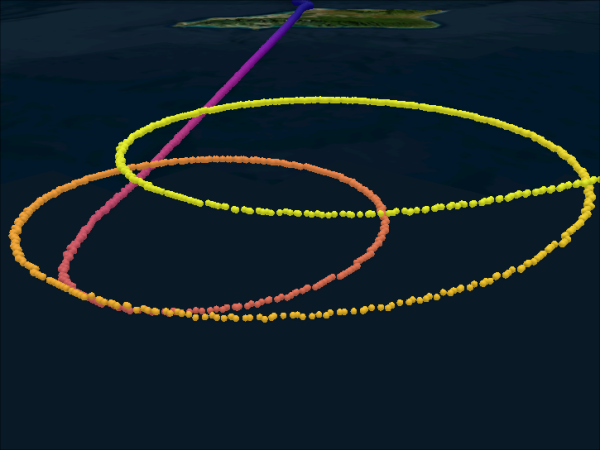
The Tropical Ozone Transport Experiment – Vortex Ozone Transport Experiment (TOTE-VOTE) campaign was conducted by NASA from December 1995 to February 1996. TOTE-VOTE took place in the Pacific region with the goal of gaining a better understanding of background transport processes from tropical/polar regions to midlatitudes.
Nineteen flights were conducted using the NASA DC-8 aircraft and balloon sondes with the purpose of measuring the transport of filaments of air moved in or out of the arctic polar vortex and the tropical stratospheric reservoir. TOTE-VOTE also utilized ground-based instruments along with aircrafts.
Various instrumentation was used during TOTE-VOTE in order to achieve the mission objectives. The DC-8 aircraft was equipped with the NCAR NOxyO3 instrument, the NASA Langley Airborne Differential Absorption Lidar (DIAL) system, the Forward Scattering Spectrometer Probe (FSSP), the Microwave Temperature Profiler (MTP), the Multiple-Angle Aerosol Spectrometer Probe (MASP), and the diode laser spectrometer system, historically known as the Differential Absorption Carbon monOxide Measurement (DACOM).
The NCAR NOxyO3 is a type of 4-channel chemiluminescence instrument that was used to quantify NOx (NO and NO2), NOy (total reactive nitrogen), and ozone (O3) in the air. The DIAL system used four lasers to make DIAL O3 profiles, along with collecting data on aerosol backscattering, aerosol depolarization ratio, aerosol extinction, and aerosol optical depth. The FSSP is an optical particle counter that measured particle size distribution.
The MTP is a passive microwave radiometer that measured natural thermal emissions and was used during TOTE-VOTE to record temperature. The MASP spectrometer collected in-situ measurements of particle concentration, particle size distribution, and particle extinction.
Along with the MASP's in-situ measurements, the DACOM spectrometer utilized three diode lasers at different wavelengths to take in-situ measurements of N2O, CO, CH4, and CO2 for TOTE-VOTE. Ground-based instruments collected lidar data while balloon sondes gathered information on wind direction, wind speed, atmospheric pressure, and air temperature.