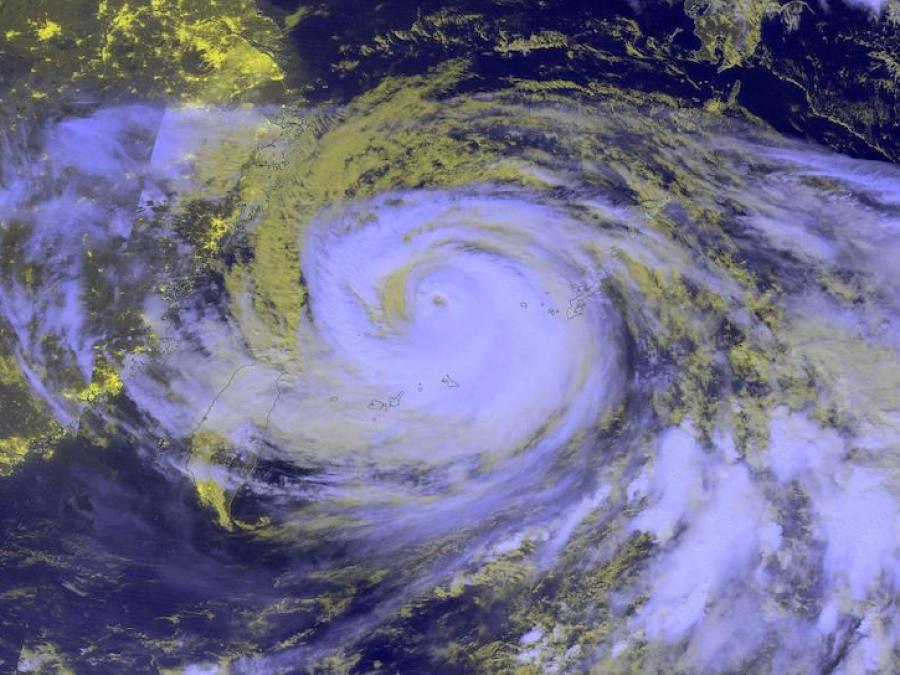
Black Marble Nighttime Blue/Yellow Composite (Day/Night Band) false-color image shows Typhoon Khanun nearing Taiwan on August 2, 2023.
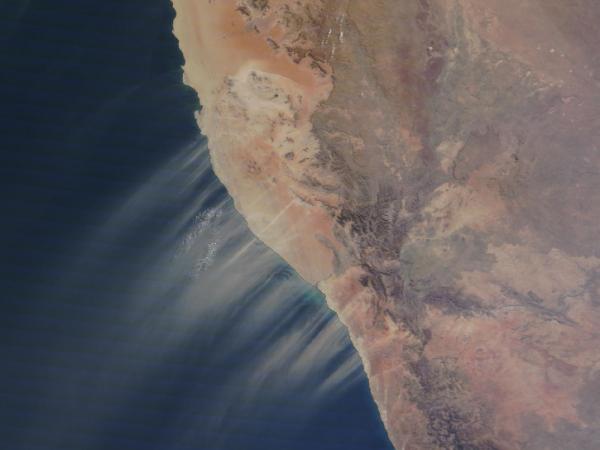
True color corrected reflectance image of dust blowing off the coast of Namibia and South Africa on June 27, 2022
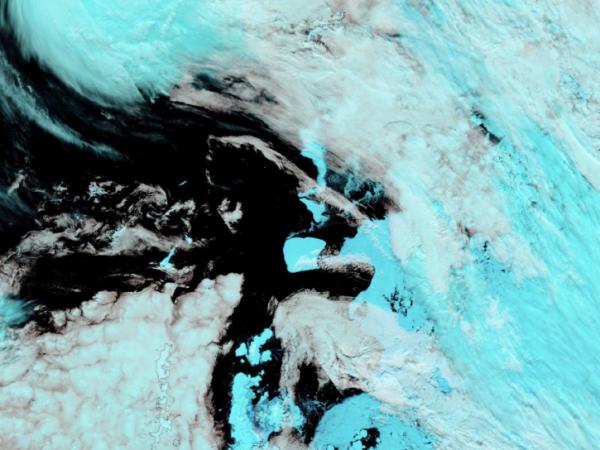
False-color (Bands 7-2-1) corrected reflectance image from the Moderate Resolution Imaging Spectroradiometer (MODIS) instrument aboard NASA's Terra satellite showing iceberg A23a in the Southern Ocean, Antarctica on November 15, 2023

LANCE

Land, Atmosphere Near real-time Capability for Earth observation

NASA's Land, Atmosphere Near real-time Capability for Earth observation (LANCE) supports users interested in monitoring a wide variety of natural and human-created phenomena using near real-time (NRT) data and imagery that are made available much quicker than routine processing allows.

Most LANCE data products are available within 3 hours from satellite observation, with imagery generally available 3 to 5 hours after an observation through Worldview and GIBS. If latency is not a primary concern, users are encouraged to use standard science products, which are created using the best available ancillary, calibration, and ephemeris information.

To access active fire/hotspot data, maps, and alerts, the Fire Information for Resource Management System (FIRMS) provides access, with minimal delay, to data and imagery that helps users identify the location, extent, and intensity of wildfire activity.

LANCE was established to meet the timely needs of applications such as facilitating numerical weather and climate prediction; forecasting and monitoring natural hazards, assessing ecological/invasive species, agriculture, and air quality; providing help with disaster relief; and ensuring homeland security.

Read an Earthdata article celebrating LANCE's Top 10 milestones over a decade of service.

History

NASA’s Earth Observing System Data and Information System (EOSDIS) provides a wealth of data and products supporting scientific research of the atmosphere, oceans, and land. Data from the Earth Observing System (EOS) instruments aboard the Terra, Aqua, and Aura platforms make global measurements daily. The measurements are processed into higher-level "standard" products within 8 to 40 hours of observation and then made available to users, primarily Earth science researchers.

However, application users, operational agencies, and even researchers require EOS products to support research and applications, such as numerical weather and climate prediction; forecasting and monitoring natural hazards, ecological/invasive species, agriculture, and air quality; providing help with disaster relief; and homeland security. These users often need data much sooner than routine science processing allows, usually within three hours, and are willing to trade science product quality for timely access. In response to this need, NASA developed LANCE.

Building on the existing EOSDIS near real-time (NRT) capabilities, NASA’s Earth Science Division sponsored the development of LANCE. LANCE consists of special processing elements, co-located with selected EOSDIS Distributed Active Archive Centers (DAACs) and processing facilities. These elements process expedited data from the Earth Observing System (EOS) Data and Operations System (EDOS) using optimized science algorithms to provide data in near real-time. LANCE development is jointly sponsored by the Flight, Research and Analysis, and Applied Sciences Programs within NASA’s Earth Science Division (ESD).

The Lightning Imaging Sensor (LIS) on the International Space Station was decommissioned on November 16, 2023. There will be no further near real-time data from this instrument. Please see the Earthdata article Lightning Imaging Sensor's Nearly 25-Year Data Record Ends.

The processing of Multi-angle Imaging SpectroRadiometer (MISR) NRT products has not resumed since the change in orbit altitude of NASA's Terra platform in October 2022, which required major updates to Level 1 and Level 2 products. The processing of MISR standard products resumed on November 1, 2023. These products are available through Earthdata search.

System Architecture

The LANCE architecture leverages existing near real-time satellite data processing systems that are managed by the Earth Science Data and Information System (ESDIS) Project at NASA's Goddard Space Flight Center.

LANCE elements are located at the following facilities:

  • Advanced Microwave Scanning Radiometer Science Investigator-led Processing System (AMSR SIPS) providing AMSR2 data and Lightning Information System (LIS) on the International Space Station (ISS)
  • Atmospheric Science Data Center (ASDC) providing Multi-angle Imaging SpectroRadiometer (MISR) data with support from the MISR Science Computing Facility at NASA's Jet Propulsion Laboratory (JPL)
  • Goddard Earth Sciences Data and Information Services Center (GES DISC) providing Atmospheric Infrared Sounder (AIRS), and Microwave Limb Sounder (MLS) data via the MLS SIPS at JPL
  • Moderate Resolution Imaging Spectroradiometer (MODIS) Adaptive Processing System (MODAPS) providing MODIS and Visible Infrared Imaging Radiometer Suite (VIIRS) data
  • Measurement of Pollution in the Troposphere SIPS (MOPITT SIPS) providing MOPITT data via the National Center for Atmospheric Research
  • Ozone Monitoring Instrument SIPS (OMI SIPS) providing OMI data
  • Suomi National Polar-orbiting Partnership (Suomi NPP) Ozone Mapping Profiler Suite (OMPS SIPS) providing OMPS data
  • Suomi NPP Land SIPS providing VIIRS Land data
  • Suomi NPP Atmosphere SIPS providing VIIRS Atmosphere data


Image
Image Caption

This overview of the LANCE architecture depicts the data flow from satellite to users.

Latency

LANCE MODIS and VIIRS Near Real Time (NRT) production operates 24 hours a day, 7 days a week, using two standalone systems on separate network routes. It is expected that this redundancy will reduce system downtime to less than 1%.

NRT production acquires session-based L0 files from the EOS Data and Operations System (EDOS); the end of a session is available within 10-30 minutes after real time. NRT production also acquires necessary ancillary products from ancillary data suppliers. However, production rules for some science codes have been relaxed with respect to these ancillary data to allow the data products to be generated within 3 hours of real time.

All of the Level 1 (L1), L2, and L3 products generated by NRT production have been modified to add "NRT" to the filenames to distinguish NRT products from the standard forward-processed products. In addition, Digital Object Identifier (DOI) metadata have been added to all NRT products.

Data products are archived in a rolling archive for 7+ days and are available for distribution by direct access to the NRT HTTPS sites.

NRT products can differ from standard science quality products. For details, refer to NRT vs Standard Products.

Flow

  1. The session based L0 data for MODIS are ingested from EDOS.
  2. Processed by PGE95 which removes duplicate packets, removes incorrectly time tagged data, and generates 5-minute L0 granules for processing by the standard PGE01 code (L1A and geolocation).
    1. TERRA - The entrained attitude and ephemeris from the L0 data are used.
      A special PGE97 is required to generate the metadata needed to enable the Terra ephemeris data to be ingested by PGE01.
    2. AQUA - The attitude and ephemeris GBAD data are ingested from the EDOS rate buffer.
      Processing through PGE96 which generates Aqua GBAD data in the L0 format and the toolkit format for PGE01.
  3. Both of these formats are archived for distribution.
  4. All EDOS data products are sent to the PDR server by EDOS and are ingested from there by LANCE-MODIS.

Distribution and Latency Metrics

Ingest, archive, and distribution logs are sent to the ESDIS Metrics System (EMS).

NASA supports full and open sharing of data. We ask that if you provide Land, Atmosphere Near real-time Capability for Earth observation (LANCE) data to a third party, you follow the guidelines below and replicate or provide a link to our disclaimer.  View LANCE's citation and acknowledgments as part of the broader Earth Science Data and Information System (ESDIS) Project Data Use Guidance.

Acknowledgments

We acknowledge the use of data and/or imagery from NASA's Land, Atmosphere Near real-time Capability for Earth observations (LANCE) (https://earthdata.nasa.gov/lance), part of NASA's Earth Science Data and Information System (ESDIS).

Disclaimer

LANCE is operated by the ESDIS Project. The information presented through LANCE, GIBS, Worldview, and FIRMS are provided “as is” and users bear all responsibility and liability for their use of data, and for any loss of business or profits, or for any indirect, incidental or consequential damages arising out of any use of, or inability to use, the data, even if NASA or ESDIS were previously advised of the possibility of such damages, or for any other claim by you or any other person. Due to the spatial resolution and other characteristics of these data, their use for tactical decision-making or informing about conditions at a local scale are not advised.

ESDIS makes no representations or warranties of any kind, express or implied, including implied warranties of fitness for a particular purpose or merchantability, or with respect to the accuracy of or the absence or the presence or defects or errors in data, databases of other information. The designations employed in the data do not imply the expression of any opinion whatsoever on the part of ESDIS concerning the legal or development status of any country, territory, city or area or of its authorities, or concerning the delimitation of its frontiers or boundaries. For more information please contact Earthdata Support.

Other NRT Data

The following NRT data are also available from NASA.

Rainfall estimates - IMERG

NASA's Integrated Multi-satellitE Retrievals for GPM (IMERG) algorithm combines data from all passive-microwave instruments in the (Global Precipitation Measurement) GPM Constellation to provide rainfall estimates.

Ocean Biology Ocean Biology Distributed Active Archive Center (OB.DAAC)

Managed by NASA's Ocean Biology Processing Group (OBPG), OB.DAAC is responsible for archiving satellite ocean biology data produced or collected under NASA’s Earth Observing System Data and Information System (EOSDIS). OB.DAAC's holdings include NRT data from both NASA and partner space organizations.

Physical Oceanography DAAC (PO.DAAC)

Visualize and download NRT data for ocean and climate research from the PO.DAAC web portal.