Vegetation indices are used to remotely examine vegetation over a given area. One commonly-used index is the Normalized Difference Vegetation Index (NDVI), which uses the difference between near-infrared (NIR) and red reflectance from the Earth's surface, divided by their sum. In healthy photosynthesizing plants, chlorophyll - the main pigment involved in photosynthesis - strongly reflects NIR light and absorbs most red light. If plants suffer from conditions like drought or disease, however, this ratio shifts, as more NIR light is absorbed and more red light is reflected. Examining the ratio of NIR to red reflectance thus makes it possible to quickly assess the condition of plants, to see if they’re thriving or showing signs of stress. NDVI values range from -1 to 1, with higher values indicating healthier vegetation, and lower values indicating stressed vegetation or barren areas like sand or snow. 

NASA derives NDVI assessments from instruments like the Visible and Infrared Imager/Radiometer Suite (VIIRS), which observes the earth in visible and infrared wavelengths on a daily basis. The VIIRS NDVI products also continue more than 20 years of global NDVI observations from the Moderate Resolution Imaging Spectroradiometer (MODIS), providing a detailed and continuous record of global vegetation change over time. 

NASA NDVI products provide daily, global assessments of vegetation health at high detail. These are useful in conservation and environmental research, drought monitoring and forecasting, and crop assessments, to name just a few examples. 

Get NDVI Data

Access a range of datasets and data tools to further your Normalized Difference Vegetation Index (NDVI) research.

Learn How to Use Normalized Difference Vegetation Index (NDVI) Data

Access a range of webinars, tutorials, data recipes, and data stories to enhance your knowledge of Earth Observation data.
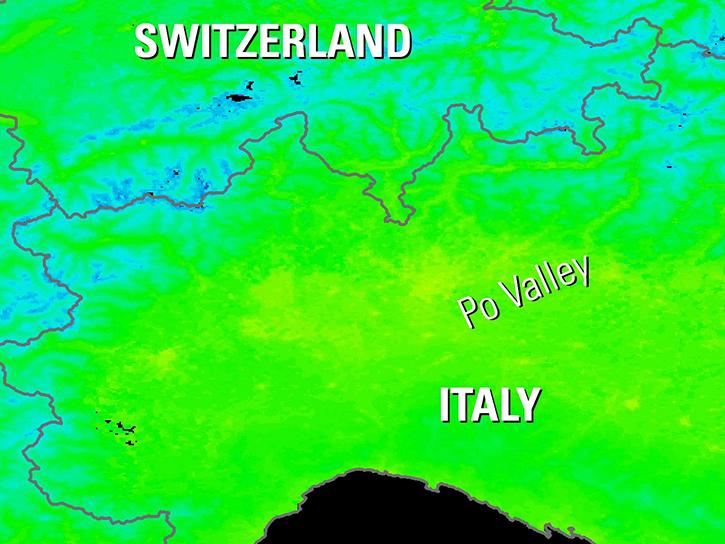
A Terra MODIS nighttime LST composite of the Po Valley, the research area of the Zullo and others (2019) study
Vegetation Trends, Urban Growth and Land Surface Temperature, and Geothermal Activity
Explore how NASA data helps track NDVI trends in Spain, analyze rising land surface temperatures in Italy, and detect geothermal anomalies in Turkey using MODIS and ASTER imagery.
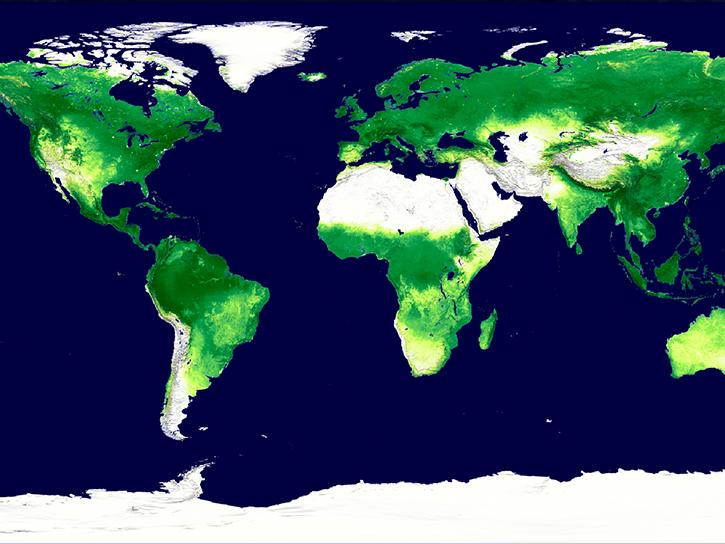
image of MODIS vegetation data
MODIS Global Vegetation Index Animation
Discover how MODIS data were used to depict cloud-free, global variations in vegetation cover.
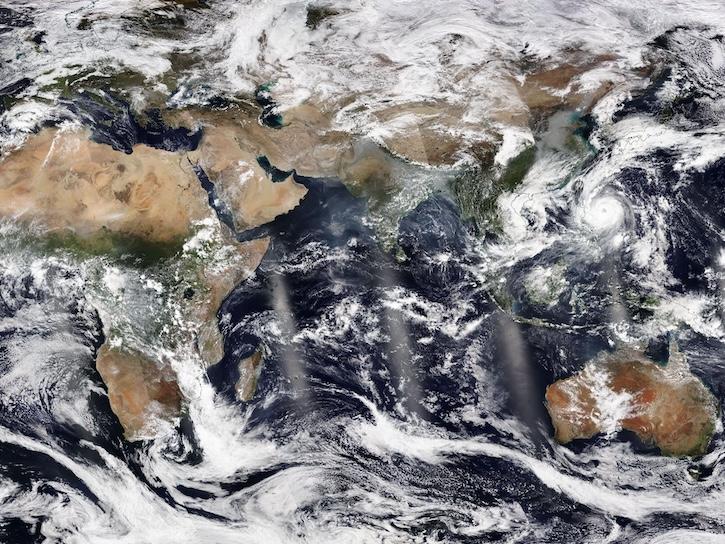
True color corrected reflectance image of Africa, Europe, and Asia from the VIIRS instrument aboard the NOAA-21 satellite
From MODIS to VIIRS: Continuing the Legacy
The Visible Infrared Imaging Radiometer Suite (VIIRS) will help ensure continuity of Earth observations after the upcoming retirement of the Moderate Resolution Imaging Spectroradiometer (MODIS).
Earthdata graphic identifier on patterned background
VIIRS-Land Near Real-Time Data
Near real-time land data from the Visible Infrared Imaging Radiometer Suite (VIIRS) are available through NASA's Land, Atmosphere Near real-time Capability for Earth observation (LANCE).
Discover and Visualize NDVI Data
NASA data help us understand Earth's changing systems in more detail than ever before, and visualizations bring these data to life, making Earth science concepts accessible, beautiful, and impactful.
Data visualization is a powerful tool for analysis, trend and pattern recognition, and communication. Our resources help you find world-class data visualizations to complement and enhance your research. We also have tools and tutorials to help you translate NDVI data into compelling visuals.
Image
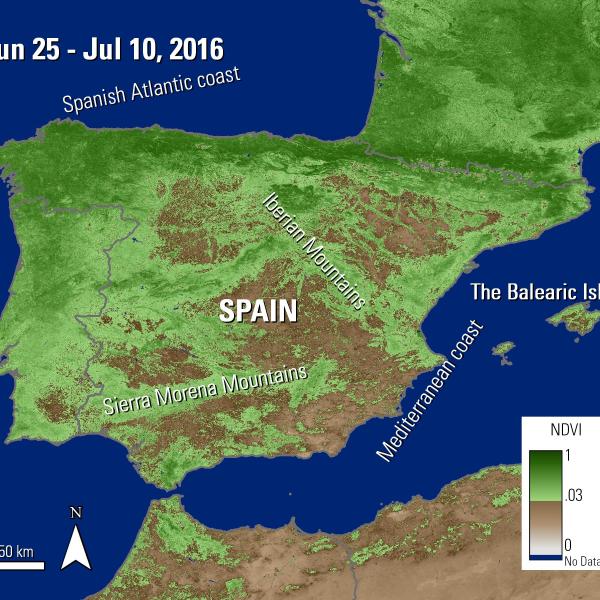
The MODIS NDVI layer over Spain and the Balearic Islands. Vegetation is shown in various shades from brown to dark green. Areas in north and western Spain are show as green, where as areas in southern and East Spain are more brown.
A view of Spain and the Balearic Islands, the study area from Novillo and others (2019). This image shows the Normalized Difference Vegetation Index (NDVI) layer from the Terra MODIS Vegetation Indices data product during the summer of 2016.

Join Our Community of NASA Data Users

While NASA data are openly available without restriction, an Earthdata Login is required to download data and to use some tools with full functionality.

Learn About the Benefits of Earthdata Login

Frequently Asked Questions

Earthdata Forum

Our online forum provides a space for users to browse thousands of FAQs about research needs, data, and data applications. You can also submit new questions for our experts to answer.

Submit Questions to Earthdata Forumand View Expert Responses

Earthdata
Forum